- Plants
- ›Vascular Plants
- ›flowering plants
- ›Dicots
- ›Legumes, Milkworts, and Allies
- ›Legumes
- ›Faboideae
- ›Podalyrieae
- ›Virgilia
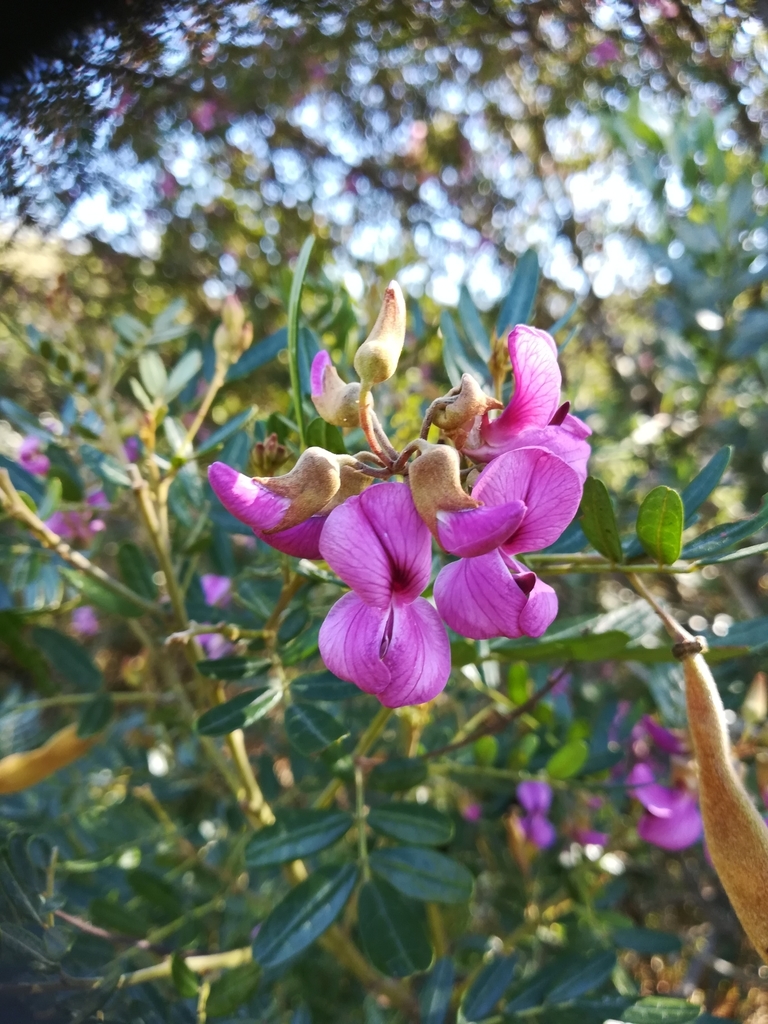
Cape Virgilia
Virgilia oroboides
Virgilia is a genus of Southern African trees in the family Fabaceae, having shiny to hairy pinnate leaves and attractive mauve to pink pea-shaped flowers followed by leathery pods. They are valued as useful ornamental trees by gardeners, particularly the well-known species Virgilia divaricata ('Tree in a Hurry', 'Cape Lilac', 'Blossom Tree') and Virgilia oroboides ('Pink Blossom Tree'), despite having a comparatively short life (15 years). They prefer well drained soils; some will then grow 2m...
From the article Virgilia (plant) on Wikipedia (CC BY-SA), quoted section by section
Description
These are small to medium sized trees, up to 15 to 20 meters tall, filling space easily in the garden. The tree has shiny green, fern-like, pinnate foliage and displays attractive pea-like, mauve/pink, fragrant flowers (which smell like bubblegum) during warmer months that will be followed by dark, leathery seed pods.
How it is grown
Growing in full sun to partially shade, they prefer well drained soils; some will then grow 2m in the first season. They will tolerate wind and have dense foliage growing close to the ground, so they are useful as pioneer species for privacy and wind protection, despite having a comparatively short life (15 years). Popular in the UK since the 18th century or so, they are also now commonly present in the USA and Australia.
Wikipedia: “Cultivation”
Where it lives
Recorded sightings
—
geo-referenced records in GBIF, from museums, herbaria and field observers.
Drag the globe to turn it. Dots are where records exist, not a range map; darker means more records.
In the stacks
Searching the stacks…
Every page naming Virgilia oroboides in the Biodiversity Heritage Library →
This page is assembled live from iNaturalist, GBIF, Wikipedia, the Source Library and the Internet Archive. It is not yet part of the hand-edited codex. iNaturalist taxon 406967.