- Animals
- ›Arthropods
- ›Hexapods
- ›Insects
- ›Winged and Once-winged Insects
- ›Beetles
- ›Water, Rove, Scarab, Long-horned, Leaf, and Snout Beetles
- ›Scarabaeiform Beetles
- ›Scarabs, Stag Beetles, and Allies
- ›Stag Beetles
- ›Lucaninae
- ›Lissapterini
- ›Geodorcus
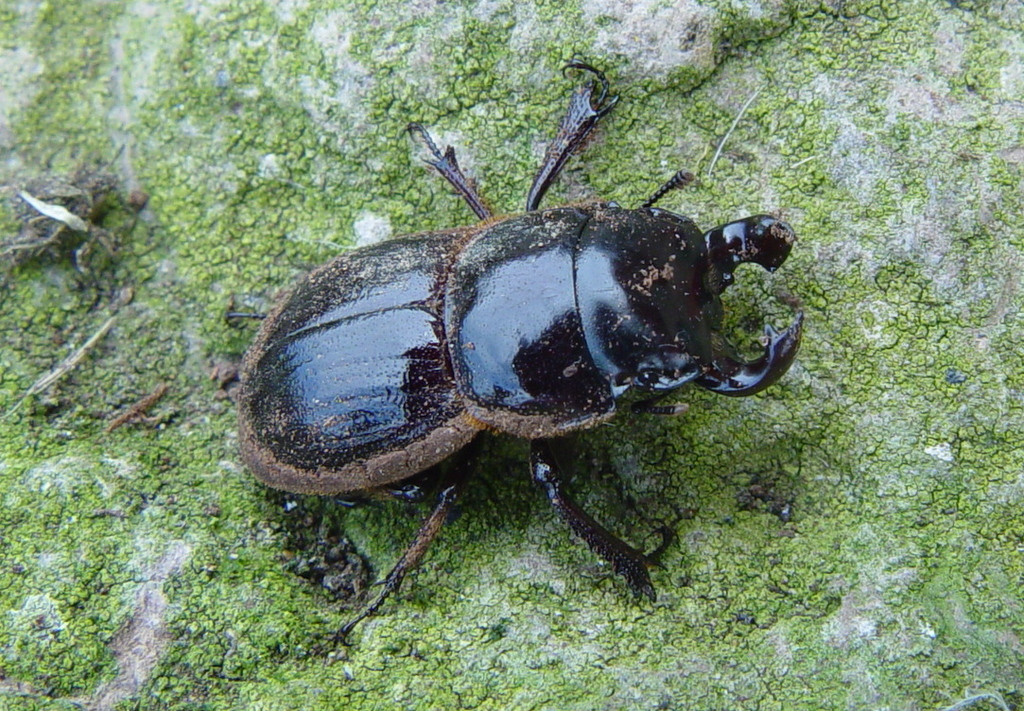
Geodorcus sororum
Geodorcus sororum is a large flightless species of stag beetle in the family Lucanidae. It was discovered in 1973 by Mr. A. Wright on an expedition to Middle Sister Island/Te Awanui, one of The Sisters Islands/Rangitatahi which are part of the Chatham Islands in New Zealand. This holotype specimen is held in the New Zealand Arthropod Collection. It is considered one of the rarest and most valuable species of Lucanidae. It was first described by Beverley Holloway in 2007. The name sororum is translated from Latin to mean "belonging to the sisters".
From the article Geodorcus sororum on Wikipedia (CC BY-SA), quoted section by section
Description
This beetle ranges in length (including mandibles) from 18.0 to 28.5 mm (males) and from 19.4 to 24 mm (females). It has a glossy exoskeleton which ranges in colour from reddish-black to black. Like Geodorcus servandus, its elytra are not distinctly ribbed. This is a feature that distinguishes G. sororum from G. capito which is also found in the Chatham Islands. They demonstrate sexual dimorphism with an overall size difference and obvious differences in mandible shape and size. The two species of Geodorcus beetle on the Chatham Islands share a common ancestor. Mitochondrial DNA analysis shows that G. capito and G. sororum are more closely related than either is to the other Geodorcus species found on mainland New Zealand. Individuals of G. sororum are very closely related to each other and have low genetic diversity.
Wikipedia: “Description and taxonomy”
Range & habitat
This species has only been observed on Middle Sister Island, which is located 19 km north-west of Chatham Island. Collections of the beetle have been made from near sea level to 40 m. This island is a breeding ground for large seabirds including northern royal albatross and Buller's albatross.
Wikipedia: “Distribution”
What it does
Geodorcus beetle larvae tend to feed on decaying wood or the fungi involved in decomposition. Geodorcus sororum larvae must consume an alternative, as the plant communities on Middle Sister Island consist only of small shrubs and herbs. The adult beetles must also consume an alternative food source to the other members of this genus, considering the absence of woody vegetation on this small island. The presence of a humus-rich soil should allow this species to complete its life cycle.
Wikipedia: “Diet”
Listen
Looking for field recordings…
Where it lives
Recorded sightings
—
geo-referenced records in GBIF, from museums, herbaria and field observers.
Drag the globe to turn it. Dots are where records exist, not a range map; darker means more records.
In the stacks
Searching the stacks…
Every page naming Geodorcus sororum in the Biodiversity Heritage Library →
This page is assembled live from iNaturalist, GBIF, Wikipedia, the Source Library and the Internet Archive. It is not yet part of the hand-edited codex. iNaturalist taxon 407774.