- Animals
- ›Arthropods
- ›Hexapods
- ›Insects
- ›Winged and Once-winged Insects
- ›Beetles
- ›Water, Rove, Scarab, Long-horned, Leaf, and Snout Beetles
- ›Staphyliniform Beetles
- ›Water Scavenger and Clown Beetles
- ›Water Scavenger Beetles
- ›Chaetarthriinae
- ›Anacaenini
- ›Horelophus
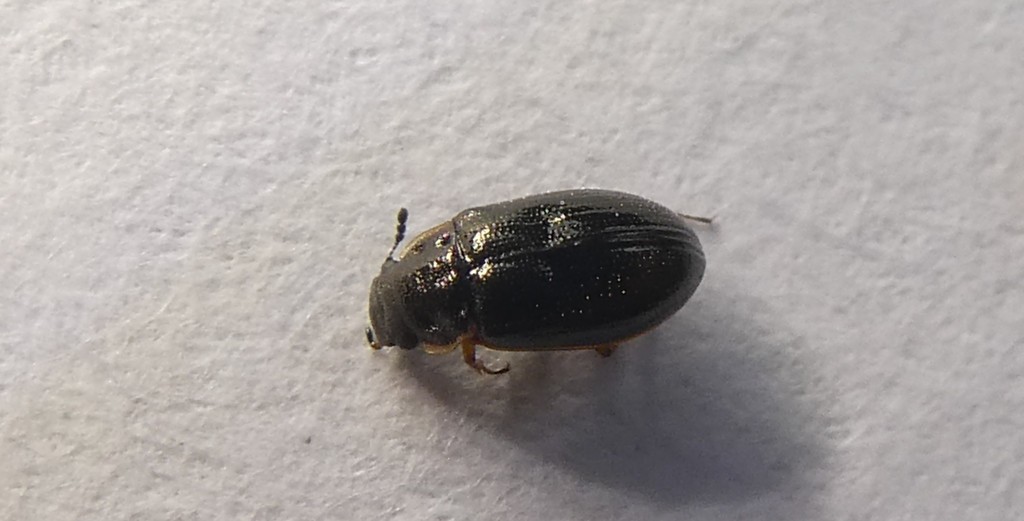
Horelophus walkeri
Horelophus walkeri is a small water scavenger beetle that is endemic to New Zealand. It is found in the South Island in the West Coast, Nelson, Buller and Marlborough regions. The preferred habitat of this species are the moss and crevices within the splash zone of waterfalls sourced from fast flowing, clear, cool waterways. The larvae of this species are carnivorous while the adults are herbivores or scavengers. In 2012 the Department of Conservation classified this beetle as Nationally Endangered.
From the article Horelophus walkeri on Wikipedia (CC BY-SA), quoted section by section
Description
This species was first described in 1913 by Armand d'Orchymont from two specimens collected in Reefton, New Zealand. The beetle is 2.1–3.1 mm long with a glossy brown to black body. The pronotum and elytra have translucent pale brown margins. Its small eyes are pale and protrude from its head. Its head, pronotum and elytra are covered in small and shallow punctures. The elytra have a distinctive depression. This species, was thought to have primitive characteristics, and originally placed in its own subfamily of Horelophinae. More recently, it was placed within the tribe Anacaenini, though H. walkeri remains the only species within the genus Horelophus
Range & habitat
Specimens have been collected from waterfalls at sunny sites in Nelson, Buller and Marlborough. Sites in Marlborough include Dead Horse Creek, near Canvastown and tributaries of the Pelorus River, near Pelorus Bridge. In Nelson, this beetle has been collected from Deepwater Creek, near Lyell and catchments flowing into the Wangapeka and Owen Rivers. All locations were waterways that were fast flowing, clear and cool. The riverbeds consisted of fine sedimentary rocks. The locations mostly have open canopies among beech forest. Horelophus walkeri can be found on wet rocks or hiding within moss, crevices and shaded areas within the spray zone of a waterfall. Commonly, it is found walking on wet rocks, rather than submerged like water scavenger beetles that live in similar habitats.
Wikipedia: “Distribution and habitat”
What it does
This species hides within moss and crevices in the splash zones of small waterfalls. It is likely that they feed on algae on the smooth and wet rock surfaces in these locations. Whilst adult water scavenger beetles are normally herbivores or scavengers, larvae are carnivorous. Considering that they are not found at sites with closed canopies, it is likely that they use polarised light, reflecting from the surfaces of rocks under waterfalls for finding suitable locations. Their long wings indicate that they are capable of flight.
Wikipedia: “Behaviour”
Listen
Looking for field recordings…
Where it lives
Recorded sightings
—
geo-referenced records in GBIF, from museums, herbaria and field observers.
Drag the globe to turn it. Dots are where records exist, not a range map; darker means more records.
In the stacks
Searching the stacks…
Every page naming Horelophus walkeri in the Biodiversity Heritage Library →
This page is assembled live from iNaturalist, GBIF, Wikipedia, the Source Library and the Internet Archive. It is not yet part of the hand-edited codex. iNaturalist taxon 408702.