- Animals
- ›Arthropods
- ›Hexapods
- ›Insects
- ›Winged and Once-winged Insects
- ›Beetles
- ›Water, Rove, Scarab, Long-horned, Leaf, and Snout Beetles
- ›Cucujiform Beetles
- ›Snout and Bark Beetles
- ›True Weevils
- ›Cyclominae
- ›Aterpini
- ›Aterpina
- ›Anagotus
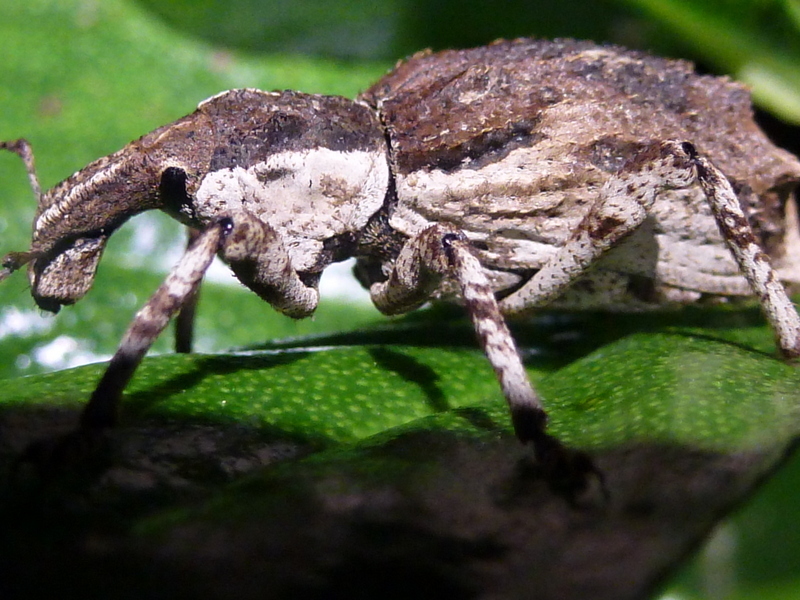
Stephens Island Weevil
Anagotus stephenensis
Anagotus stephenensis, commonly known as the ngaio weevil, is a large flightless weevil that is only found on Stephens Island in New Zealand. The ngaio weevil was discovered in 1916 by A.C. O'Connor on Stephens Island. Thomas Broun described it in 1921 as Phaeophanus oconnori after its collector. The weevils were observed at the time to be 'feeding on tall fescue and the leaves of trees'.
From the article Anagotus stephenensis on Wikipedia (CC BY-SA), quoted section by section
Description
This large weevil has a dark exoskeleton, covered in small hair-like coppery-brown scales. On the sides and posterior, the colouration is lighter with a prominent white streak along the centre of its thorax. It has obvious prominences on its sides and posterior. Its rostrum is as long as its thorax with a wide channel in the centre. Including the rostrum, its size ranges from 23 to 27 mm. This weevil is nocturnal and flightless. It is similar in colouration and size and closely related to the Turbott's weevil. The ngaio weevil was discovered in 1916 by A.C. O'Connor on Stephens Island. Thomas Broun described it in 1921 as Phaeophanus oconnori after its collector. The weevils were observed at the time to be 'feeding on tall fescue and the leaves of trees'. When this species was moved into the genus Anagotus Sharp, 1882, there were then two species with the name Anagotus oconnori so the ngaio weevil was renamed A. stephenensis.
Range & habitat
The ngaio weevil was historically present on at least the South Island, at least as far south as South Canterbury. The collection of elytra, heads and other body parts in seven cave deposits produced by the extinct laughing owl show it was once widespread and common. It has a relict population on Stephens Island.
Wikipedia: “Distribution”
Listen
Looking for field recordings…
Where it lives
Recorded sightings
—
geo-referenced records in GBIF, from museums, herbaria and field observers.
Drag the globe to turn it. Dots are where records exist, not a range map; darker means more records.
In the stacks
Searching the stacks…
Every page naming Anagotus stephenensis in the Biodiversity Heritage Library →
This page is assembled live from iNaturalist, GBIF, Wikipedia, the Source Library and the Internet Archive. It is not yet part of the hand-edited codex. iNaturalist taxon 409622.