- Plants
- ›Vascular Plants
- ›flowering plants
- ›Dicots
- ›Soapberries, Cashews, Mahoganies, and Allies
- ›soapberry family
- ›Aesculus
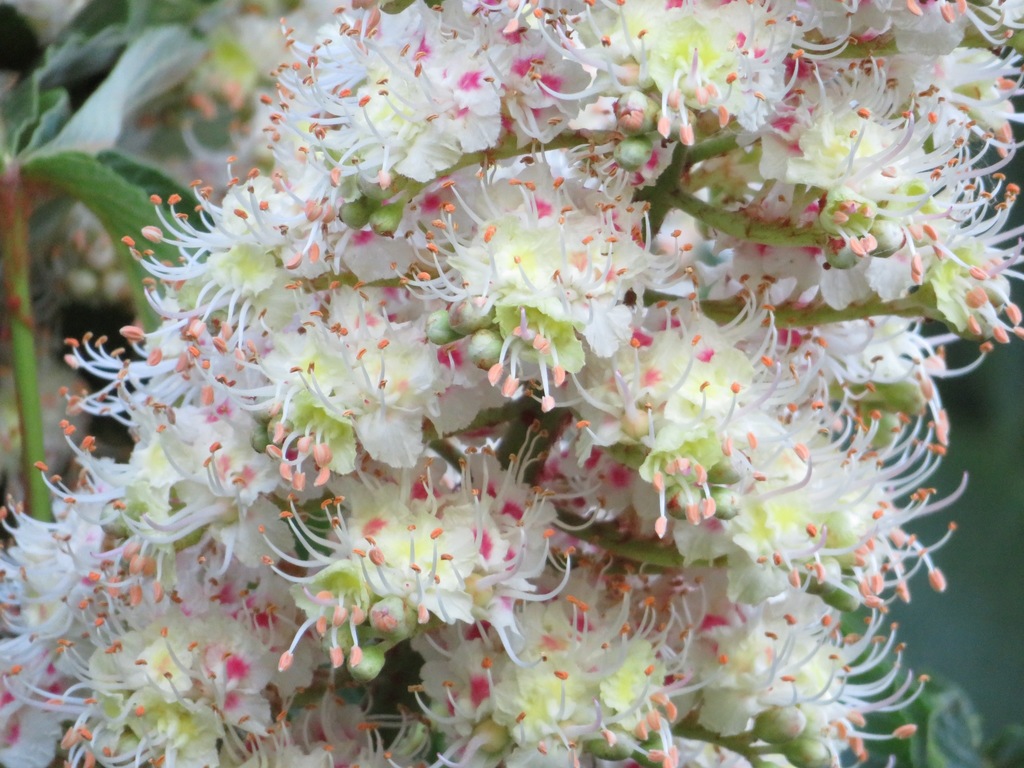
Japanese Horse-chestnut
Aesculus turbinata
Aesculus turbinata, common name Japanese horse-chestnut (tochinoki (トチノキ, 栃の木) or tochi (トチ, 栃, 橡)), is native to Japan but cultivated elsewhere. It is a tree up to 30 metres (98 feet) tall. Flowers are white to pale yellowish with red spots. Capsules are dark brown, obovoid to pyriform. The seeds were traditionally eaten, after leaching, by the Jōmon people of Japan over about four millennia, until 300 AD. Today the seeds are used in Japanese cuisine to prepare tochimochi.
From the article Aesculus turbinata on Wikipedia (CC BY-SA), quoted section by section
In human culture
Aesculus was named by Linnaeus, and the name is derived from the Roman name, aesculus, of the durmast oak. Turbinata means ‘conical’, ‘turbinate’, or ‘top-shaped’.
Wikipedia: “Etymology”
Where it lives
Recorded sightings
—
geo-referenced records in GBIF, from museums, herbaria and field observers.
Drag the globe to turn it. Dots are where records exist, not a range map; darker means more records.
In the stacks
Searching the stacks…
Every page naming Aesculus turbinata in the Biodiversity Heritage Library →
This page is assembled live from iNaturalist, GBIF, Wikipedia, the Source Library and the Internet Archive. It is not yet part of the hand-edited codex. iNaturalist taxon 410413.