- Plants
- ›Vascular Plants
- ›flowering plants
- ›Dicots
- ›Sunflowers, Bellflowers, Fanflowers, and Allies
- ›Sunflowers, Daisies, Asters, and Allies
- ›chicories, dandelions, and allies
- ›Lettuce, Chicory, Dandelion and Salsify Tribe
- ›dandelions, hawksbeards, and rattlesnake roots
- ›Taraxacum
- ›Spectabilia
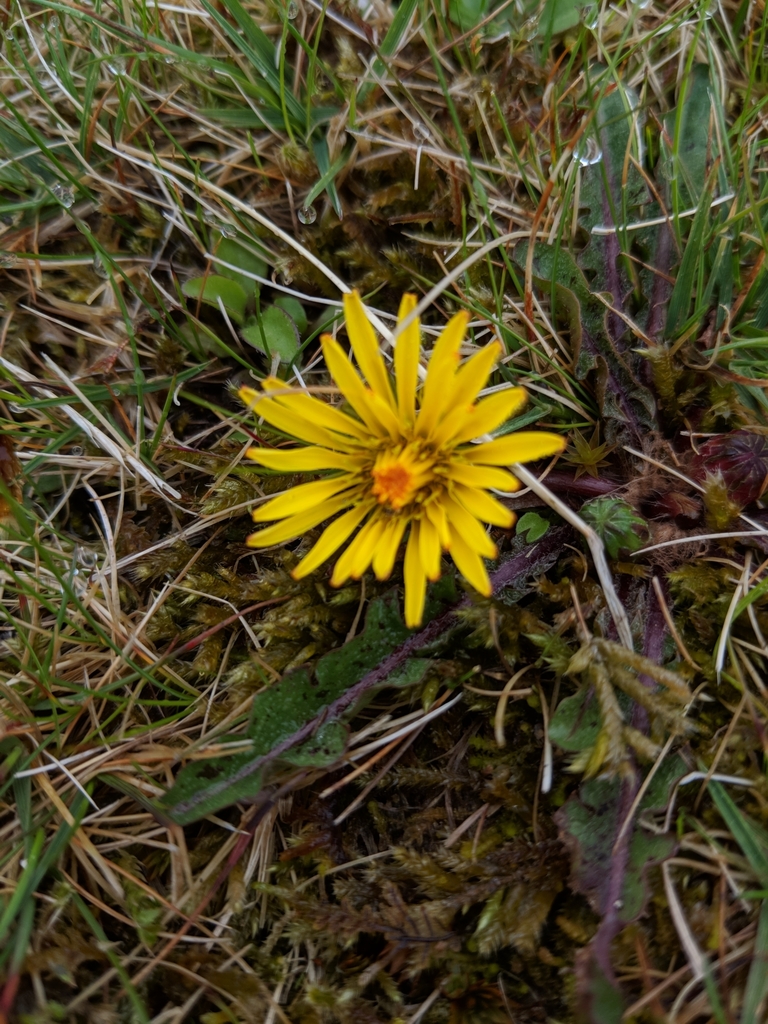
St Kilda Dandelion
Taraxacum pankhurstianum
Taraxacum pankhurstianum, also known as the St Kilda dandelion, is a species of dandelion that was identified as new in 2012 after being cultivated at the Royal Botanic Garden Edinburgh from seeds collected two years previously on the island of Hirta, the largest island in the St Kilda archipelago, on the western edge of Scotland.
From the article Taraxacum pankhurstianum on Wikipedia (CC BY-SA), quoted section by section
Description
Taraxacum pankhurstianum is a small to medium-sized herb with many leaves that lie along the ground or point upward. The leaves can grow to a length of 10 cm and width of 3 cm, but are typically smaller. They are leathery and have a rounded tip, with the end joining the stem being more pointed. The upper surface is rough, hairy, and dark bluish-green with brownish-purple splotches.The species can be distinguished from the more widespread T. faeroense by its hairy exterior bracts, more leathery and hairy leaves, rose-pink stripes on the ligules, and longer achenes.
Range & habitat
The type specimens of the species were collected from an acidic grassland near Village Bay, at an elevation of 75 m. Other dandelions closely related to T. pankhurstianum are typically found in damp areas with acidic soil, growing in montane or submontane regions.
Wikipedia: “Distribution and habitat”
Where it lives
Recorded sightings
—
geo-referenced records in GBIF, from museums, herbaria and field observers.
Drag the globe to turn it. Dots are where records exist, not a range map; darker means more records.
In the stacks
Searching the stacks…
Every page naming Taraxacum pankhurstianum in the Biodiversity Heritage Library →
This page is assembled live from iNaturalist, GBIF, Wikipedia, the Source Library and the Internet Archive. It is not yet part of the hand-edited codex. iNaturalist taxon 415515.