- Animals
- ›Arthropods
- ›Hexapods
- ›Insects
- ›Winged and Once-winged Insects
- ›Flies
- ›Brachyceran Flies
- ›Cyclorrhaphan Flies
- ›Schizophoran Flies
- ›Calyptrate Flies
- ›Muscoid Flies
- ›House Flies and Allies
- ›Atherigoninae
- ›Atherigona
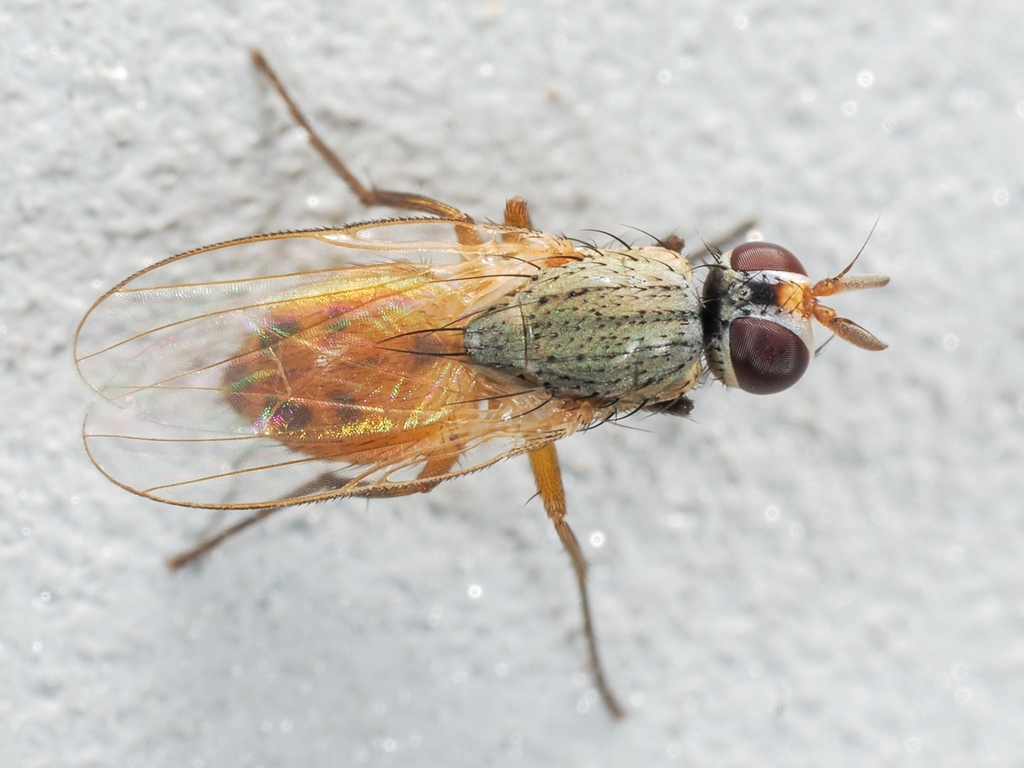
Bermudagrass Stem Maggot
Atherigona reversura
Atherigona reversura, the bermudagrass stem maggot, is a shoot fly (genus Atherigona) in the family Muscidae. The genus comprises around 300 species, and some of them are very damaging pests in agriculture. The bermudagrass stem maggot takes its name from its host preference for bermudagrass (Cynodon dactylon) and stargrass (Cynodon nlemfuensis).
From the article Atherigona reversura on Wikipedia (CC BY-SA), quoted section by section
Description
This small fly has an angular head, transparent wings, and the adult fly is colored between gray and yellow. Males have a rounded abdomen and are smaller than females. The abdomen in the females is larger and pointed. The larvae are cylindrical, white and have mouthhooks that are used to masticate the tender parts of the new shoots.
What it does
Little is known about the life cycle of Atherigona reversura, nevertheless, it has been reported that the eggs are laid in the underside of the leaf in bermudagrass. After 2.5 days the larva emerge and move to the node where the stem emerges. The larva feed from the node causing the death of the leaf. After 1 to 3 days the feeding damage is evident, the larvae leave the stem, and move to the ground for pupation, where after 7 or 10 days the flies emerge. Adult flies can survive approximately 21 to 28 days producing many offspring during its adult life,. The populations of the bermudagrass stem maggot increase from south to north gradually, with populations picking up in mid-June in Central Florida and late July in North Georgia. In general all the bermudagrass cultivars have been susceptible to stem maggot damage, but cultivars with high number of shoots, small shoot diameter and narrow leaves show higher preference by the fly. Currently the recommendations to suppress infestations in the crops are to harvest the grass to help break the life cycle and to apply pyrethroid insecticides after grass regrowth, approximately 7 to 10 days after cutting, Current research focuses on improving understanding of the behavior, biology and ecology of this insect pest.
== References ==
Wikipedia: “Life cycle”
Listen
Looking for field recordings…
Where it lives
Recorded sightings
—
geo-referenced records in GBIF, from museums, herbaria and field observers.
Drag the globe to turn it. Dots are where records exist, not a range map; darker means more records.
In the stacks
Searching the stacks…
Every page naming Atherigona reversura in the Biodiversity Heritage Library →
This page is assembled live from iNaturalist, GBIF, Wikipedia, the Source Library and the Internet Archive. It is not yet part of the hand-edited codex. iNaturalist taxon 418263.