- Animals
- ›Chordates
- ›Vertebrates
- ›Mammals
- ›Therians
- ›Placental Mammals
- ›Ungulates, Carnivorans, and Allies
- ›Even-toed Ungulates and Cetaceans
- ›Ruminants
- ›Bovids
- ›Antelopes, Goats, and Sheep
- ›Typical Antelopes

Erect-tailed Antelopes
Ammodorcas
The dibatag (Ammodorcas clarkei), or Clarke's gazelle, is a medium-sized slender antelope native to Ethiopia and Somalia. Though not a true gazelle, it is similarly marked, with long legs and neck. It is often confused with the gerenuk due to their striking resemblance. The typical head-and-body length is about 103 to 117 cm (41 to 46 in). They stand up to about 80 to 90 cm (31 to 35 in). Male dibatag weigh between 20 and 35 kg (44 and 77 lb), whereas females range from 22 and 29 kg (49 and 64 lb). The length of the curved horns, present only on males, is typically between 10 and 25 cm (3.9 and 9.8 in). The upper parts are gray to fawn, while the dorsal and lateral areas are cinnamon to rufous (reddish brown). The underparts, rump and the insides of the legs are all white. While markings are visible on the face, there are none on the flanks or the buttocks.
Dibatag are alert and secretive, and their brown coat provides an excellent camouflage, making the dibatag one of the antelopes most difficult to hunt. They are diurnal animals, and navigate in very small herds. Both sexes attain sexual maturity at 12 to 18 months. The species is polygynous. After a gestational period of six to seven months, a single offspring is born. Parturition usually occurs from September to November. The lifespan typically averages 10 to 12 years. Dibatag may maintain temporary territories demarcated by preorbital gland secretions, urine or feces. Primarily browsers, the dibatag feed on foliage and young shoots and shrubs.
1 branches of this genus, most-observed first · about 1 known species
See this branch on the Wheel of Life →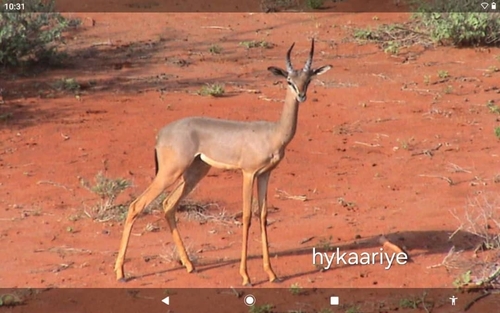
Where it lives
Recorded sightings
—
geo-referenced records in GBIF, from museums, herbaria and field observers.
Drag the globe to turn it. Dots are where records exist, not a range map; darker means more records.
In the stacks
Searching the stacks…
Every page naming Ammodorcas in the Biodiversity Heritage Library →
This page is assembled live from iNaturalist, GBIF, Wikipedia, the Source Library and the Internet Archive. It is not yet part of the hand-edited codex. iNaturalist taxon 42271.