- Plants
- ›Vascular Plants
- ›flowering plants
- ›Dicots
- ›Gentians, Dogbanes, Madders, and Allies
- ›Dogbane Family
- ›Rauvolfioideae
- ›Aspidospermateae
- ›Aspidosperma
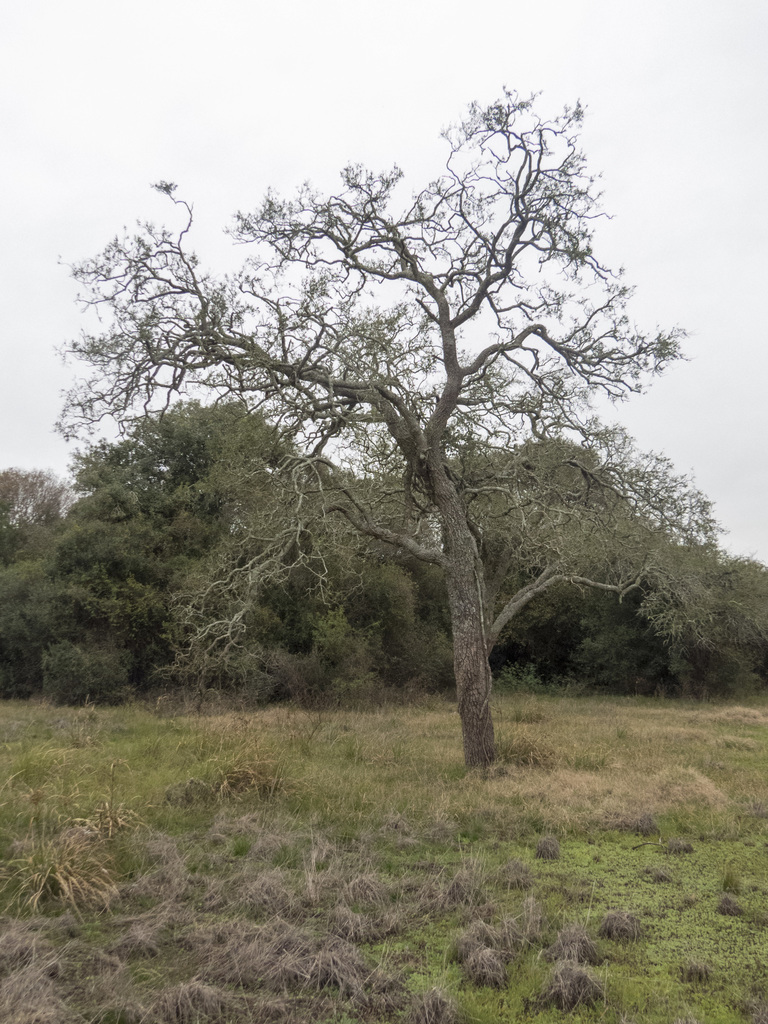
Common White Quebracho
Aspidosperma quebracho-blanco
Aspidosperma quebracho-blanco, commonly known as Quebracho blanco, kebrako, or white quebracho, is a South American tree species, native to Brazil, northern Argentina, Bolivia, Paraguay, and Uruguay. It must not be confused with other species also known as quebracho, but belonging to the genus Schinopsis.
From the article Aspidosperma quebracho-blanco on Wikipedia (CC BY-SA), quoted section by section
Description
Aspidosperma quebracho-blanco is an evergreen tree. It reaches 20 to 30 meters in height in the Humid Chaco, and 8 to 12 meters in the Dry Chaco. The foliage is sclerophyllous.
Range & habitat
Aspidosperma quebracho-blanco is generally found in dry deciduous forests, where it grows on clay soils. It is most common in the Gran Chaco, Humid Chaco, Argentine Espinal, and Bolivian montane dry forests ecoregions of Paraguay, Argentina, Bolivia, and Brazil. Its range extends to adjacent ecoregions, including the Uruguayan savanna, Paraná flooded savanna, Southern Cone Mesopotamian savanna, Southern Andean Yungas, Cerrado, Pantanal, Central Andean puna, Chiquitano dry forests, and Beni savanna.
Wikipedia: “Habitat and range”
Where it lives
Recorded sightings
—
geo-referenced records in GBIF, from museums, herbaria and field observers.
Drag the globe to turn it. Dots are where records exist, not a range map; darker means more records.
In the stacks
This page is assembled live from iNaturalist, GBIF, Wikipedia, the Source Library and the Internet Archive. It is not yet part of the hand-edited codex. iNaturalist taxon 424095.