- Plants
- ›Vascular Plants
- ›flowering plants
- ›monocots
- ›Agaves, Orchids, Irises, and Allies
- ›iris family
- ›Geosiridoideae
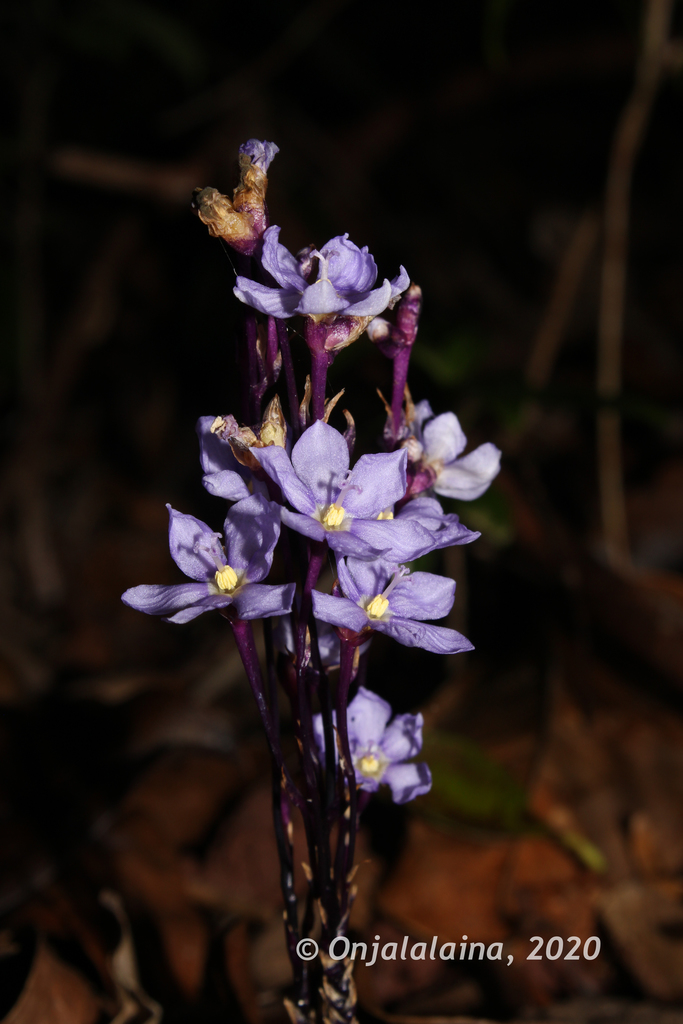
Earth Irises
Geosiris
Geosiris is a genus in the flowering plant family Iridaceae, first described in 1894. It was thought for many years to contain only one species, Geosiris aphylla, endemic to Madagascar. But then in 2010, a second species was described, Geosiris albiflora, from Mayotte Island in the Indian Ocean northwest of Madagascar. In 2017, a third species was found in Queensland, Australia, Geosiris australiensis.
Geosiris aphylla is sometimes called the "earth-iris." It is a small myco-heterotroph lacking chlorophyll and obtaining its nutrients from fungi in the soil. The genus name is derived from the Greek words geos, meaning "earth", and iris, referring to the Iris family of plants.
3 branches of this genus, most-observed first
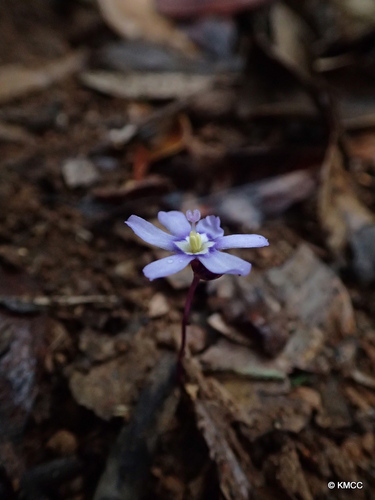
Geosiris aphylla
speciesGeosiris aphylla

Geosiris albiflora
speciesGeosiris albiflora

Geosiris australiensis
speciesGeosiris australiensis
Where it lives
Recorded sightings
—
geo-referenced records in GBIF, from museums, herbaria and field observers.
Drag the globe to turn it. Dots are where records exist, not a range map; darker means more records.
In the stacks
Searching the stacks…
Every page naming Geosiris in the Biodiversity Heritage Library →
This page is assembled live from iNaturalist, GBIF, Wikipedia, the Source Library and the Internet Archive. It is not yet part of the hand-edited codex. iNaturalist taxon 424618.