- Plants
- ›Vascular Plants
- ›flowering plants
- ›Dicots
- ›Heathers, Balsams, Primroses, and Allies
- ›symplocos family
- ›Symplocos
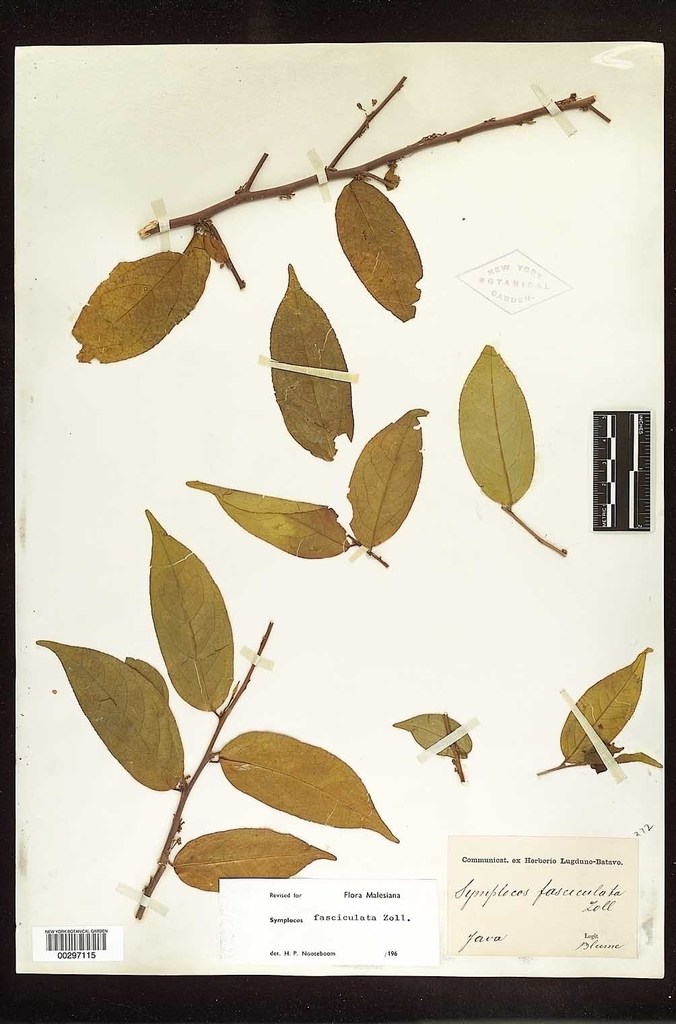
Symplocos fasciculata
Symplocos fasciculata is a tree in the family Symplocaceae, native to tropical Asia. The specific epithet fasciculata means 'bundled' and refers to the inflorescence.
From the article Symplocos fasciculata on Wikipedia (CC BY-SA), quoted section by section
Description
Symplocos fasciculata grows up to 23 metres (80 ft) tall, occasionally to 35 m (115 ft), with a trunk diameter of up to 45 cm (18 in). The smooth bark may be brown or grey, occasionally green. The twigs are somewhat zig-zag. The papery leaves, of varying shapes, measure up to 16.5 cm (6 in) long. The inflorescences feature fascicles of bundled racemes bearing white flowers.
Range & habitat
Symplocos fasciculata is native to the Nicobar Islands, Peninsular Malaysia, Sumatra, Borneo, Java, the Philippines and Sulawesi. Its habitat is kerangas and mixed dipterocarp forests, at elevations to 1,700 m (5,600 ft).
Wikipedia: “Distribution and habitat”
At the table
In Java, the bark and leaves of Symplocos fasciculata are used to make dyes, including for batik. In local medicine, a powdered form of the bark is used as a remedy for sore eyes.
== References ==
Wikipedia: “Uses”
Where it lives
Recorded sightings
—
geo-referenced records in GBIF, from museums, herbaria and field observers.
Drag the globe to turn it. Dots are where records exist, not a range map; darker means more records.
In the stacks
Searching the stacks…
Every page naming Symplocos fasciculata in the Biodiversity Heritage Library →
This page is assembled live from iNaturalist, GBIF, Wikipedia, the Source Library and the Internet Archive. It is not yet part of the hand-edited codex. iNaturalist taxon 426737.