- Plants
- ›Vascular Plants
- ›flowering plants
- ›Dicots
- ›Woodsorrels, Quandongs, and Allies
- ›quandong family
- ›Elaeocarpus
Common Elaeocarpus
Elaeocarpus decipiens
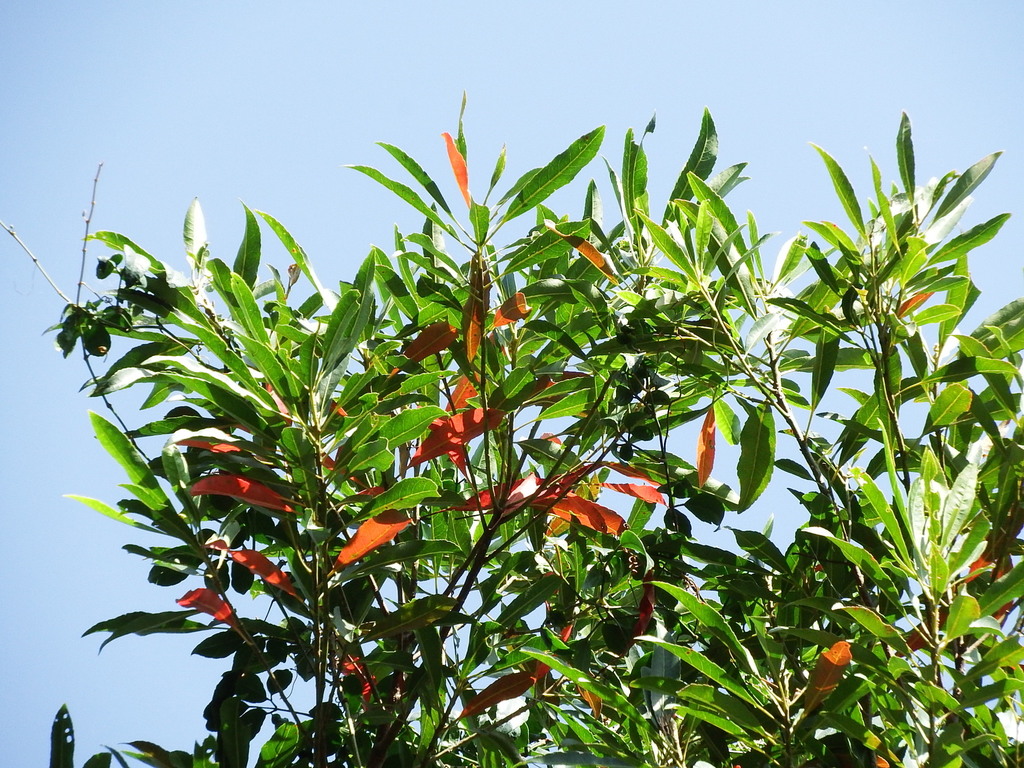
Elaeocarpus decipiens, commonly known as Japanese blueberry tree, is a species of flowering tree in the family Elaeocarpaceae. It has red, brown, and green leaves that are typically egg-shaped, 5-petaled flowers ranging in color from cream to light pink, and small drupe fruit.
From the article Elaeocarpus decipiens on Wikipedia (CC BY-SA), quoted section by section
Description
Elaeocarpus decipiens typically grows to 30 to 40 feet (9.1 to 12.2 m) in height. Flowers bloom from late spring to early summer. These flowers can be white, cream, and light pink. Flowers are typically one inch or less in size and are often hidden within the foliage. The fruits are olive-shaped drupe fruits that are dark blue to black in color. The fruit is inedible and is less than one inch long. The leaves are egg-shaped. New foliage tends to be more red, while older foliage is closer to green.
Range & habitat
Elaeocarpus decipiens originates from East Asia. The native range includes Southern China, Vietnam, Japan, Korea, and Taiwan. The plant does well in USDA hardiness zones 8B to 10B and has a very high drought tolerance.
== References ==
Wikipedia: “Distribution and habitat”
Where it lives
Recorded sightings
—
geo-referenced records in GBIF, from museums, herbaria and field observers.
Drag the globe to turn it. Dots are where records exist, not a range map; darker means more records.
In the stacks
Searching the stacks…
Every page naming Elaeocarpus decipiens in the Biodiversity Heritage Library →
This page is assembled live from iNaturalist, GBIF, Wikipedia, the Source Library and the Internet Archive. It is not yet part of the hand-edited codex. iNaturalist taxon 428622.