- Plants
- ›Vascular Plants
- ›flowering plants
- ›Dicots
- ›Roses, Elms, Figs, and Allies
- ›rose family
- ›Amygdaloideae
- ›Maleae
- ›Sorbus
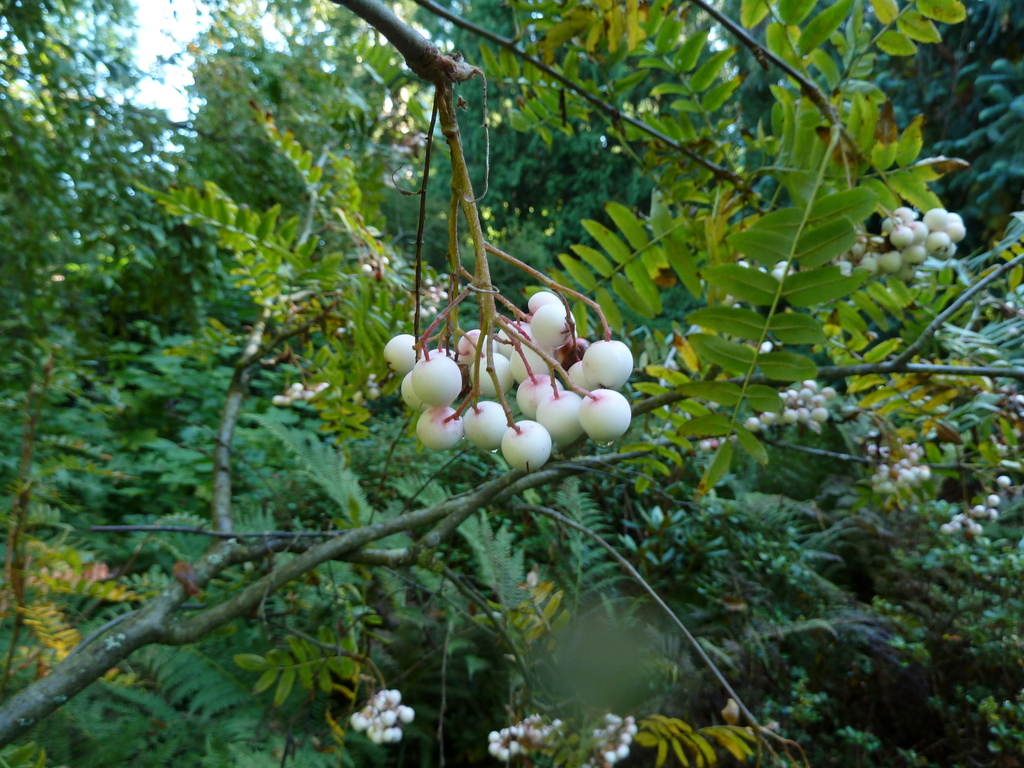
Kashmir Rowan
Sorbus cashmiriana
Sorbus cashmiriana, the Kashmir rowan, is a species of flowering plant in the family Rosaceae, native to the western Himalayas, including Kashmir.
It is a small, usually short-lived deciduous tree growing to 6–8 m (20–26 ft), with a trunk up to 25 cm (10 in) in diameter. The bark is smooth grey or red-grey. The leaves are 15–23 cm (6–9 in) long, pinnate, with 15–21 leaflets, dark green on top and lighter green underneath, the petiole reddish, the leaflets 3–5.5 cm (1–2 in) long and 1.5–2 cm broad, with serrated margins. The flowers are 7–10 mm in diameter, with five very pale pink petals and pale yellowish stamens, produced in corymbs in the spring. Pollination is by insects. The fruit is a white to whitish-pink pome 12–15 mm in diameter, ripening in the autumn and often persisting long after the leaf fall into winter.
From the article Sorbus cashmiriana on Wikipedia (CC BY-SA), quoted section by section
How it is grown
It is a popular ornamental tree, grown for its clusters of white fruit. It has gained the Royal Horticultural Society's Award of Garden Merit.
== References ==
Wikipedia: “Cultivation”
Where it lives
Recorded sightings
—
geo-referenced records in GBIF, from museums, herbaria and field observers.
Drag the globe to turn it. Dots are where records exist, not a range map; darker means more records.
In the stacks
Searching the stacks…
Every page naming Sorbus cashmiriana in the Biodiversity Heritage Library →
This page is assembled live from iNaturalist, GBIF, Wikipedia, the Source Library and the Internet Archive. It is not yet part of the hand-edited codex. iNaturalist taxon 429803.