- Plants
- ›Vascular Plants
- ›flowering plants
- ›Dicots
- ›magnolias, nutmegs, and allies
- ›magnolia family
- ›Magnolioideae
- ›Magnolia
- ›Splendentes
- ›Splendentes
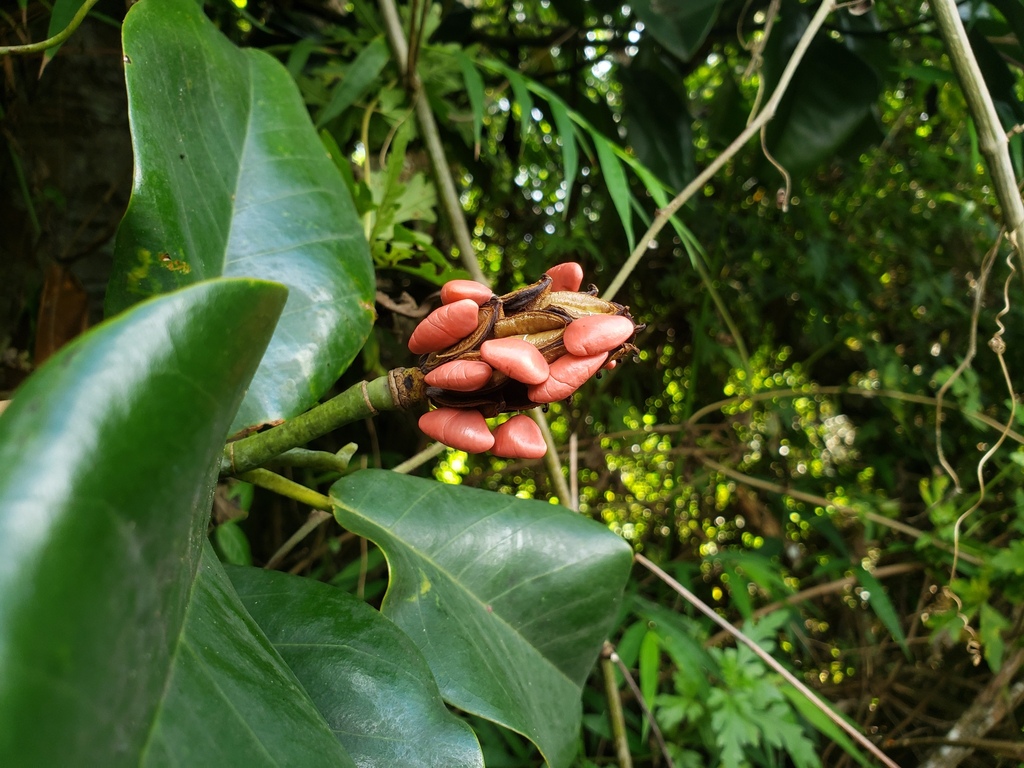
Magnolia portoricensis
Magnolia portoricensis is a tree of the Caribbean region. Its vernacular names include jagüilla and Puerto Rico magnolia. It is native to Puerto Rico and it is found in the Toro Negro State Forest. It is an endangered tree and endemic to Puerto Rico. It is a dicot and a part of the family Magnoliaceae. It is an uncommon tree, found primarily in the central and western mountains at 500 to 925 m above sea level.
From the article Magnolia portoricensis on Wikipedia (CC BY-SA), quoted section by section
Range & habitat
Magnolia portoricensis is a fairly large evergreen tree that can grow as tall as 25 m. In Puerto Rico it can be found specifically in state forests of the central region such as Carite, Toro Negro, Guilarte West and Maricao, and in higher elevation areas like Ciales, Jayuya and Adjuntas. This tree grows in cloud forests with about 2000 to 4000 mm of rainfall per year. It is found mostly on the peaks and slopes of mountains, thriving best in volcanic areas. These soils are derived from igneous rocks (including serpentine), have high clay content, and are moderately well drained, with pH between 5 and 7.5. Abundant moisture in the soil is typical and may be essential for the development of the jaguilla.
Wikipedia: “Habitat and ecology”
At the table
The jaguilla has high wood quality so it is used for furniture and lumber. Previously it had been used to shade high-altitude coffee plantations that have since been abandoned. The oil of the Magnolia is an ingredient in soap, lotions and perfumes
Wikipedia: “Plant uses”
Where it lives
Recorded sightings
—
geo-referenced records in GBIF, from museums, herbaria and field observers.
Drag the globe to turn it. Dots are where records exist, not a range map; darker means more records.
In the stacks
Searching the stacks…
Every page naming Magnolia portoricensis in the Biodiversity Heritage Library →
This page is assembled live from iNaturalist, GBIF, Wikipedia, the Source Library and the Internet Archive. It is not yet part of the hand-edited codex. iNaturalist taxon 430200.