- Animals
- ›Chordates
- ›Vertebrates
- ›Mammals
- ›Therians
- ›Placental Mammals
- ›Primates, Rodents, and Allies
- ›Lagomorphs
- ›Hares and Rabbits
- ›Lepus
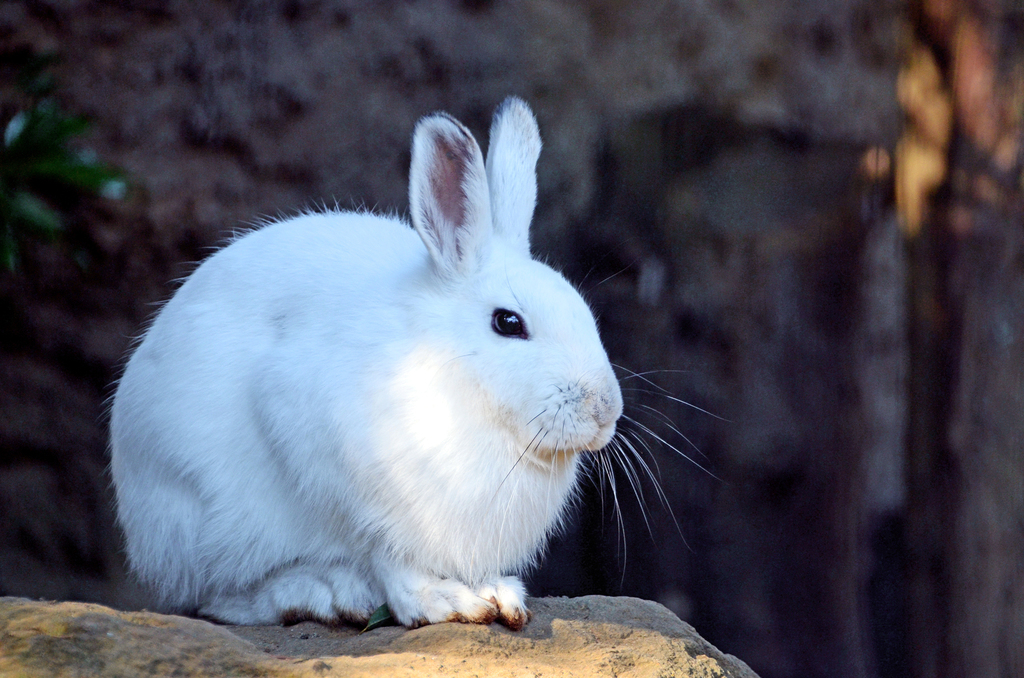
Japanese Hare
Lepus brachyurus
The Japanese hare (Lepus brachyurus) is a species of hare endemic to Japan. In Japanese, it is called the Nousagi (Japanese: 野兎), meaning "field rabbit".
From the article Japanese hare on Wikipedia (CC BY-SA), quoted section by section
Description
The Japanese hare is reddish-brown to dark brown-grey and variable amounts of white on the head and legs. Its body length ranges from 45 to 54 cm, and it has a body weight of 2.1-2.6 kg (4.6-5.7 lb). Its tail grows to lengths of 2-5 cm and its back legs are 12-15 cm long. The ears grow to be 7.6-8.3 cm long. Its front legs can be from 10-15 cm long. In areas of northern Japan, especially the island of Sado, the Japanese hare loses its coloration in the autumn, remaining white until spring, when the brown fur returns. They change into their white winter coat from mid-September to the end of November and back into their brown summer coat from the end of January to May.
Range & habitat
The Japanese hare is found across Honshu, Shikoku, and Kyushu, that is, all the main islands of Japan except Hokkaido, where it is replaced by the related mountain hare (Lepus timidus). It occurs up to an altitude of 2,700 metres (8,900 ft). It is mostly found in mountains or hilly areas. It also inhabits forests or brushy areas. Japanese hares have been able to adapt to and thrive in and around urban environments following encroachment by human settlements, so much so that it has become a nuisance in some places.
Wikipedia: “Habitat”
What it does
The litter size of the Japanese hare varies. Animals living in the north of their range typically give birth to one to four young (called leverets), while animals in the south have litters of one to three. In the North the breeding season last from February to July with a gestation period from 42 to 43 days and a birth weight of 77 to 165 grams (2.7 to 5.8 oz). In the South of Japan breeding occurs all year round with a gestation period of 45 to 48 days and a birth weight of 125 to 150 grams (4.4 to 5.3 oz). Young leverets can run within one hour after birth. They get nursed only once per day at around midnight and start feeding on vegetation on day eight. Weaning takes place at the age of four weeks. Females reach sexual maturity at eight to ten months old. Several litters are born each year. Mating is promiscuous; males chase females, and box to repel rivals.
Wikipedia: “Reproduction”
At the table
Japanese hares feed on more than 150 different plant species including grasses, herbs, twigs, and shoots. Furthermore, they are known to eat the bark of larger twigs. They eat 200 to 500 grams (7.1 to 17.6 oz) of plant matter every day, which makes up 10 to 20% of their body weight. Additionally, they eat their own feces to recover nitrogen.
Wikipedia: “Food”
Listen
Looking for field recordings…
Where it lives
Recorded sightings
—
geo-referenced records in GBIF, from museums, herbaria and field observers.
Drag the globe to turn it. Dots are where records exist, not a range map; darker means more records.
In the stacks
Searching the stacks…
Every page naming Lepus brachyurus in the Biodiversity Heritage Library →
This page is assembled live from iNaturalist, GBIF, Wikipedia, the Source Library and the Internet Archive. It is not yet part of the hand-edited codex. iNaturalist taxon 43139.