- Animals
- ›Chordates
- ›Vertebrates
- ›Mammals
- ›Therians
- ›Placental Mammals
- ›Primates, Rodents, and Allies
- ›Lagomorphs
- ›Hares and Rabbits

Hares and Jackrabbits
Lepus
Hares are mammals belonging to the genus Lepus. They are herbivores and live solitarily or in pairs. They nest in depressions in the ground called forms, and their young are able to fend for themselves shortly after birth. The genus includes the largest lagomorphs. Most are fast runners with long, powerful hind legs, and large ears that dissipate body heat. Hare species are native to Africa, Eurasia and North America. A hare less than one year old is called a leveret. A group of hares may be called either a husk or a down.
Members of the Lepus genus are considered true hares, distinguishing them from rabbits which make up the rest of the Leporidae family. There are five species with common names that include the word "hare" which are not considered true hares: the hispid hare, and four species known as red rock hares (belonging to the genus Pronolagus). Conversely, several Lepus species are called "jackrabbits", but classed as hares rather than rabbits. The pet known as the Belgian hare is a domesticated European rabbit which has been selectively bred to resemble a hare.
25 branches of this genus, most-observed first · about 35 known species
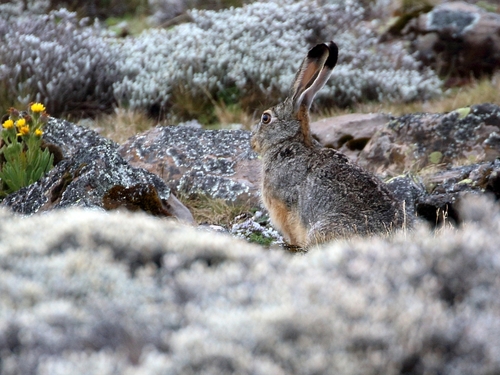
Old World Hares
subgenusEulagos
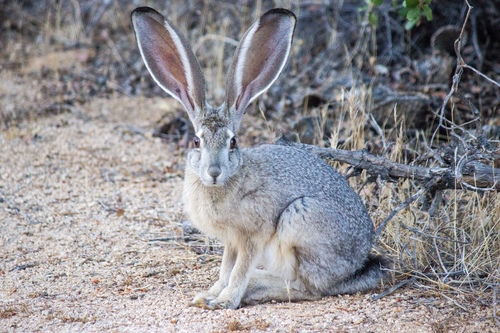
Black-tailed Jackrabbit
speciesLepus californicus

New World Hares
subgenusPoecilolagus
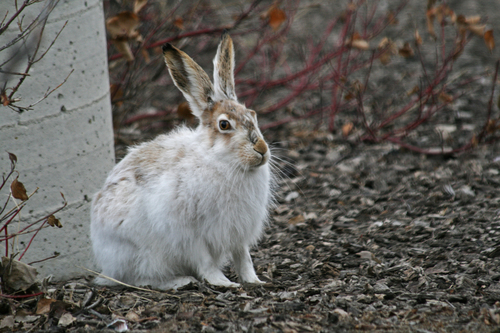
White-tailed Jackrabbit
speciesLepus townsendii

Snow Hares
subgenusLepus
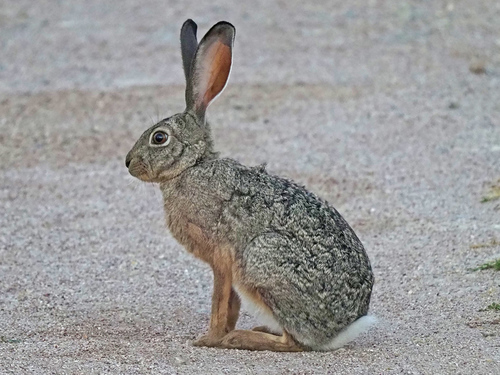
Scrub Hare
speciesLepus saxatilis
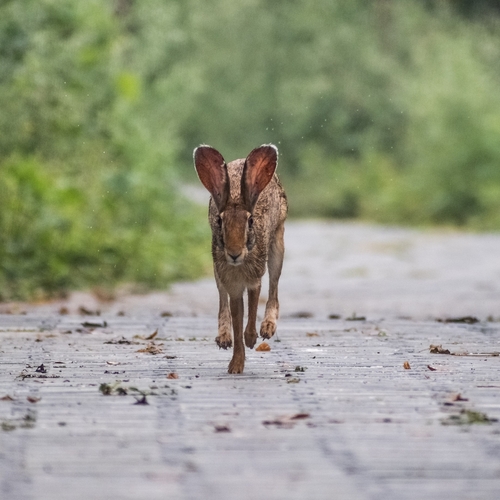
Indian Hares
subgenusIndolagus
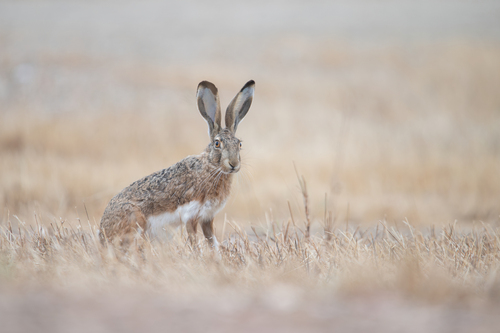
Granada Hare
speciesLepus granatensis
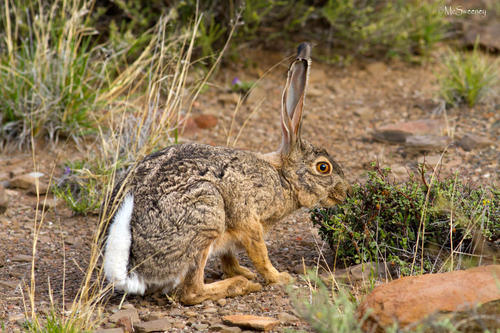
Cape Hare
speciesLepus capensis

Mexican Jackrabbits
subgenusMacrotolagus
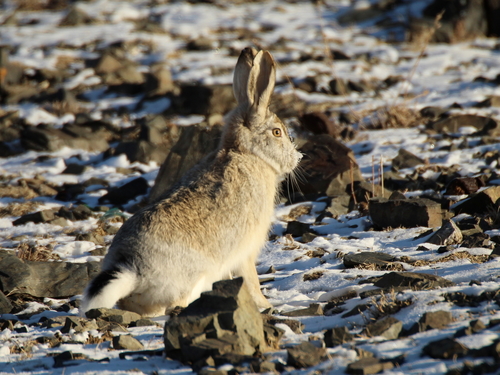
Desert and Tolai Hares
subgenusProeulagus
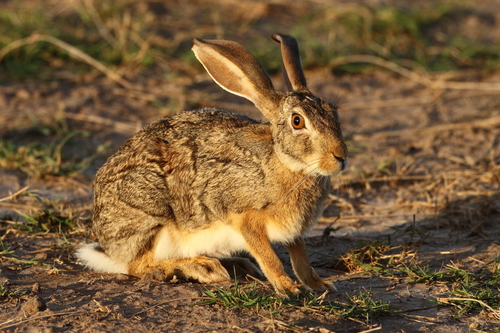
African Savanna Hare
speciesLepus microtis
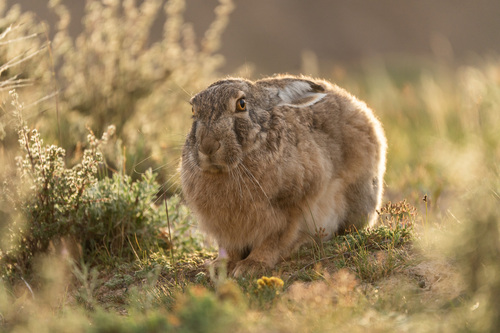
Woolly Hare
speciesLepus oiostolus

East Asian Hares
subgenusSinolagus
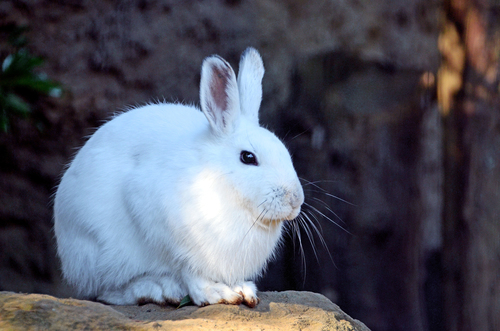
Japanese Hare
speciesLepus brachyurus
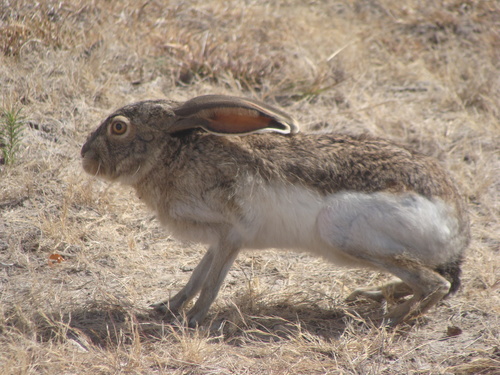
White-sided Jackrabbit
speciesLepus callotis

Apennine Hare
speciesLepus corsicanus
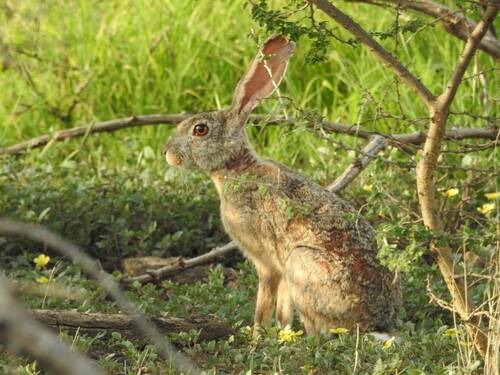
Abyssinian Hare
speciesLepus habessinicus

Alta Mira Jackrabbit
speciesLepus altamirae
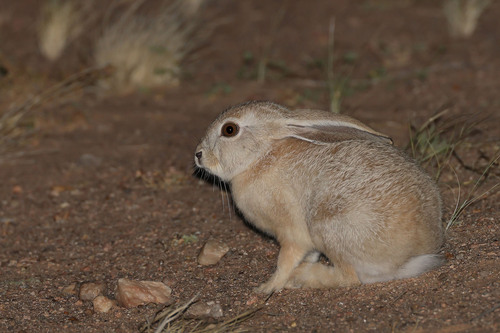
West Sahara hare
speciesLepus saharae
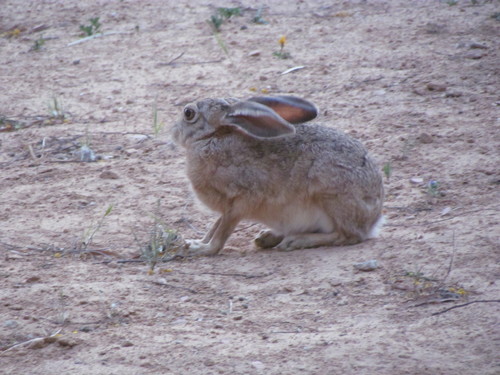
Mediterranean hare
speciesLepus mediterraneus
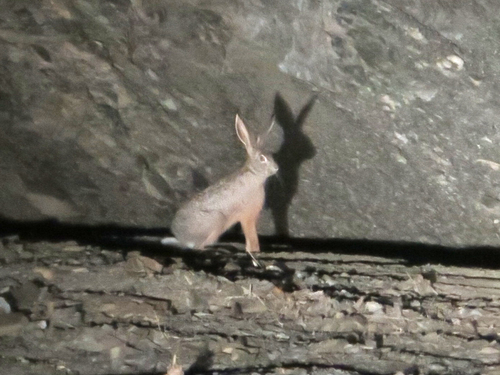
Moroccan Hare
speciesLepus schlumbergeri

African Savannah and Ethiopian Hares
subgenusSabanalagus

Tehuantepec jackrabbit
speciesLepus flavigularis

Tarim Hares
subgenusTarimolagus
Where it lives
Recorded sightings
—
geo-referenced records in GBIF, from museums, herbaria and field observers.
Drag the globe to turn it. Dots are where records exist, not a range map; darker means more records.
In the old herbals & bestiaries

De rerum varietate
Cardano, Girolamo · 1557 · p.443

Garden of Health
1507 · p.571

Commentaries on the Six Books of Dioscorides
Pietro Andrea Mattioli · 1560 · p.313

Commentaries on the Six Books of Dioscorides on Medical Matter
Pietro Andrea Mattioli · 1563 · p.298

Garden of Health (Hortus Sanitatis)
Jacob Meydenbach · 1491 · p.629

Ortus sanitatis
1491 · p.702

Books on Marine Fishes
Guillaume Rondelet · 1554 · p.547

Books on Marine Fishes
Guillaume Rondelet · 1554 · p.541

Commentaries on the Six Books of Pedanius Dioscorides on Medical Matter
Pietro Andrea Mattioli · 1565 · p.500

History of Animals, Book II: On Oviparous Quadrupeds
Conrad Gessner · 1586 · p.561
In the stacks
Searching the stacks…
Every page naming Lepus in the Biodiversity Heritage Library →
This page is assembled live from iNaturalist, GBIF, Wikipedia, the Source Library and the Internet Archive. It is not yet part of the hand-edited codex. iNaturalist taxon 43117.