- Plants
- ›Vascular Plants
- ›flowering plants
- ›Dicots
- ›Mints, Plantains, Olives, and Allies
- ›Mint Family
- ›Nepetoideae
- ›Ocimeae
- ›Plectranthinae
- ›Plectranthus
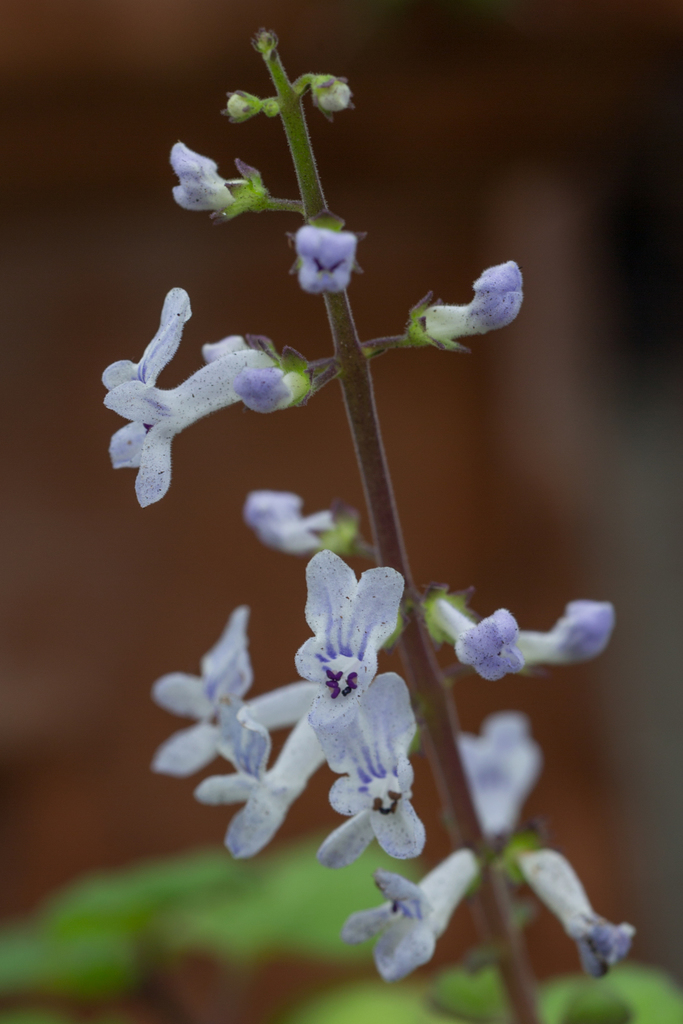
Bonsai Mint
Plectranthus ernstii
Plectranthus ernstii, often called bonsai mint or bonsai spurflower, is a plant in the family Lamiaceae (Labiatae), genus Plectranthus. It is a semisucculent subshrub native to the Eastern Cape and KwaZulu-Natal provinces of South Africa. The plant is named after South African botanist Ernst Jacobus van Jaarsveld.
From the article Plectranthus ernstii on Wikipedia (CC BY-SA), quoted section by section
Description
A small perennial species originating from South Africa, the bonsai mint has fleshy, slightly pubescent leaves with a noticeable fragrance similar to other members of the Lamiaceae family. The stems grow in segments, which quickly harden, enhancing the bonsai-like appearance. They appear woody and trunk-like as they grow, and they can split if they thicken too quickly. Bonsai mint typically stays fairly small, growing to a height of 15–25 in (380–640 mm), and are hardy to a very light frost. Ernstii blooms throughout the warmer months and puts out a spike of small, light purple flowers. These flowers are edible, with a slightly sweet flavor.
Range & habitat
First collected in South Africa in 1977 by Ernst and Erma van Jaarsveld, Plectranthus ernstii is classified as “Near Threatened” by the Red List of South African Plants, with fewer than 10 natural locations known, and even those are being threatened by invasive plant species. It is native to the rocky cliffsides of Scarp Forest, where it grows out of reach of most predators.
== References ==
Wikipedia: “Distribution”
Where it lives
Recorded sightings
—
geo-referenced records in GBIF, from museums, herbaria and field observers.
Drag the globe to turn it. Dots are where records exist, not a range map; darker means more records.
In the stacks
Searching the stacks…
Every page naming Plectranthus ernstii in the Biodiversity Heritage Library →
This page is assembled live from iNaturalist, GBIF, Wikipedia, the Source Library and the Internet Archive. It is not yet part of the hand-edited codex. iNaturalist taxon 431478.