- Animals
- ›Arthropods
- ›Crustaceans
- ›Typical Crustaceans
- ›Malacostracans
- ›Decapods, Isopods, and allies
- ›Decapods and Krill
- ›Decapods
- ›Crabs, Lobsters, Shrimps, and Allies
- ›Caridean Shrimps
- ›Palaemonoidea
- ›Typhlocarididae
- ›Typhlocaris
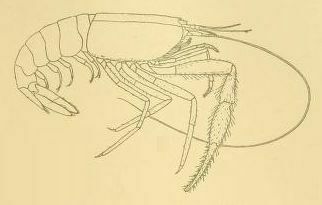
Typhlocaris galilea
Typhlocaris galilea is a species of troglobitic shrimp in the genus Typhlocaris, and is endemic to one pool and spring that feeds it, at Tabgha in Israel. The species is critically endangered and a conservation programme to conserve the species has begun.
From the article Typhlocaris galilea on Wikipedia (CC BY-SA), quoted section by section
Description
The relict species was first described in 1909, by William Thomas Calman. The shrimp are semi-transparent and blind. Adult specimens are approximately 3 inches (7.6 cm) long. Their diet probably consists mainly of a small red tubificid worm, Isochaeta israelis.
Range & habitat
The shrimp is endemic to one chamber of a Roman cistern, Ein-Nur octagonal pool (the private property of a monastery, at 32.8736°N 35.5493°E / 32.8736; 35.5493), and a warm (27 °C or 81 °F), sulphuric, saline subterranean spring that feeds it, at Tabgha, on the north shore of the Sea of Galilee in Israel.
Wikipedia: “Distribution”
Where it lives
Recorded sightings
—
geo-referenced records in GBIF, from museums, herbaria and field observers.
Drag the globe to turn it. Dots are where records exist, not a range map; darker means more records.
In the stacks
Searching the stacks…
Every page naming Typhlocaris galilea in the Biodiversity Heritage Library →
This page is assembled live from iNaturalist, GBIF, Wikipedia, the Source Library and the Internet Archive. It is not yet part of the hand-edited codex. iNaturalist taxon 435304.