- Plants
- ›Vascular Plants
- ›flowering plants
- ›monocots
- ›Agaves, Orchids, Irises, and Allies
- ›agave and allies
- ›Hyacinth subfamily
- ›hyacinth tribe
- ›Scilla
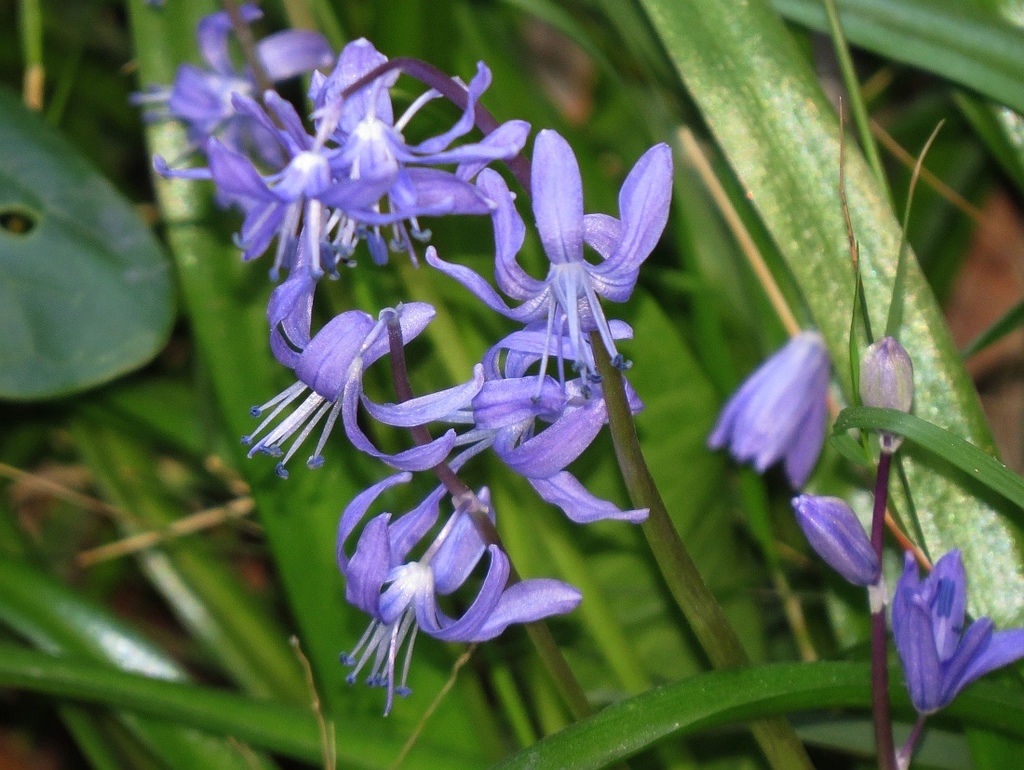
Pallid Squill
Scilla morrisii
Scilla morrisii, commonly known as the Morris squill or pallid squill, is a critically endangered species of plant in the family Asparagaceae. It is endemic to Mediterranean-type shrubby vegetation on the island of Cyprus.
From the article Scilla morrisii on Wikipedia (CC BY-SA), quoted section by section
Description
The Morris squill is a perennial herb that grows up to 35 cm tall. It has 3-6 thick, straight leaves measuring up to 70 cm long and 0.5 to 1.5 cm wide. The flowers are star-shaped, small and usually coloured purple, blue or white. The flowering period is between March and April. As a perennial, it overwinters as a bulb which stores nutrients. Like all species in this genus it is somewhat toxic.
Range & habitat
The species is endemic to the north-western part of Cyprus and known from only three locations (two near the village of Panagia and one is near the Aghios Neophytos monastery). It appears to prefer an altitude of 250–900 m, where it grows in moist crevices, frequently under old oaks and terebinths.
Wikipedia: “Distribution and habitat”
Where it lives
Recorded sightings
—
geo-referenced records in GBIF, from museums, herbaria and field observers.
Drag the globe to turn it. Dots are where records exist, not a range map; darker means more records.
In the stacks
Searching the stacks…
Every page naming Scilla morrisii in the Biodiversity Heritage Library →
This page is assembled live from iNaturalist, GBIF, Wikipedia, the Source Library and the Internet Archive. It is not yet part of the hand-edited codex. iNaturalist taxon 437001.