 NL·0482
Herbarium of the Nature Library
- Name
- Heterocephalus glaber
- Family
- Heterocephalidae
- Native to
- Arid grasslands of Somalia, Ethiopia and Kenya
- Habitat
- Arid grassland, Semi-desert, Underground burrows
Naked mole-rat
Heterocephalus glaber
Also calledRat-taupe nu (French) · Luǒ yǎnshǔ 裸鼹鼠 (Chinese) · Nacktmull (German)
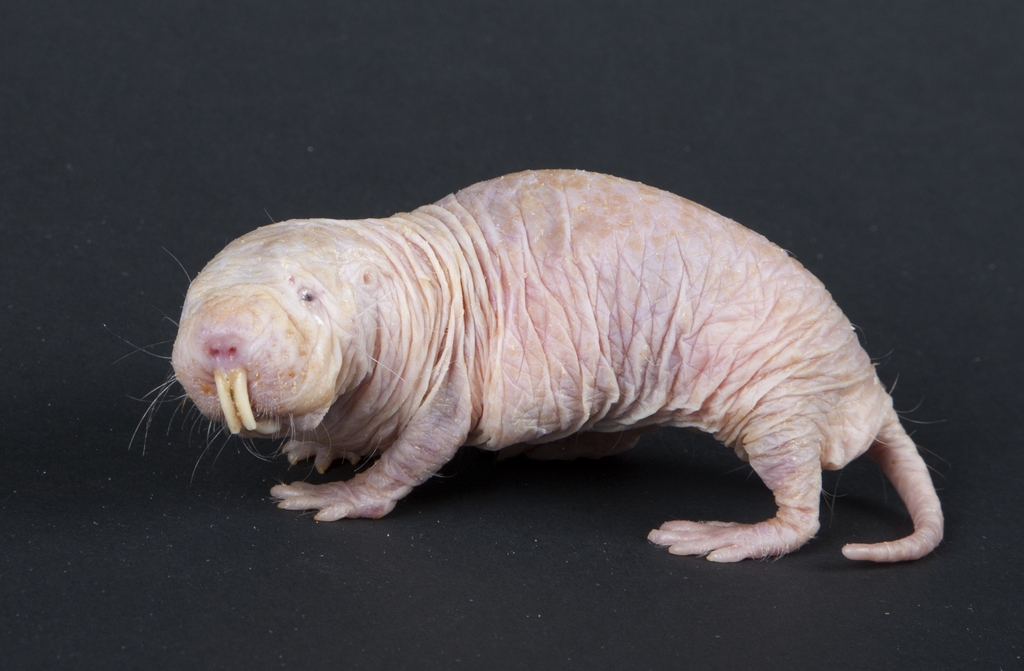
A nearly hairless, buck-toothed rodent that lives underground in East Africa in colonies run like an insect hive, with a single breeding queen. It is also extraordinarily long-lived and resistant to cancer, making it a major subject of ageing research.
The naked mole-rat, also known as the sand puppy, is a burrowing rodent native to the Horn of Africa and parts of Kenya, notably in Somali regions. It is the only species in the genus Heterocephalus. Wikipedia
What it can do
- iLives more than 37 years, about ten times longer than a similar-sized mouse
- iiSurvives about 18 minutes without oxygen by switching to fructose-based metabolism
- iiiVery rarely develops cancer
- ivFeels no pain from acid or from capsaicin, the burning compound in chilli
- vDigs tunnels with its large front teeth, which sit outside its lips so it can dig without swallowing soil
In the field
Field marks
- aAlmost hairless, wrinkled pink skin
- bLarge protruding front teeth
- cTiny eyes
- dLives underground in colonies
- Voice
- Chirps and squeaks; a rich vocal repertoire
- When
- Resident; almost never seen above ground
Listen
Looking for field recordings…
Life & habits
- Diet
- Herbivore: large underground tubers and roots
- Habitat
- Underground tunnel systems up to several kilometres long in hard, dry soil
- Size
- 8–10 cm; 30–35 g (queens larger)
- Lifespan
- Up to 37+ years
A colony of up to ~300 has one queen and a few breeding males; the rest are workers and soldiers. Each colony has its own dialect of chirps.
Where it lives
Recorded sightings
—
geo-referenced records in GBIF, from museums, herbaria and field observers.
Native range
Arid grasslands of Somalia, Ethiopia and Kenya
Drag the globe to turn it. Dots are where records exist, not a range map; darker means more records.
In the stacks
Searching the stacks…
Every page naming Heterocephalus glaber in the Biodiversity Heritage Library →
Marginalia
Eduard Rüppell described the species in 1842. In 1981 Jennifer Jarvis showed that it is eusocial, the first mammal shown to live like social insects.
Curiosity
Unlike most mammals, it can barely regulate its own body temperature, so colonies huddle together or move to warmer tunnels.
Kinship





Photographs: iNaturalist contributors under the licences shown. Records: GBIF.org. Historical plates: Source Library (CC BY-SA 4.0; originals public domain). Summary text: Nature Library editors and Wikipedia (CC BY-SA). Medicinal and edibility notes are historical and educational, not advice. iNaturalist taxon 43746.