- Animals
- ›Chordates
- ›Vertebrates
- ›Mammals
- ›Therians
- ›Placental Mammals
- ›Primates, Rodents, and Allies
- ›Rodents
- ›Ctenohystricans
- ›Hystricognaths
- ›Degus, Hutias, Tuco-tucos, and Allies
- ›Spiny Rats and Hutias
- ›Hutias
- ›Hispaniolan Hutias
- ›Plagiodontia
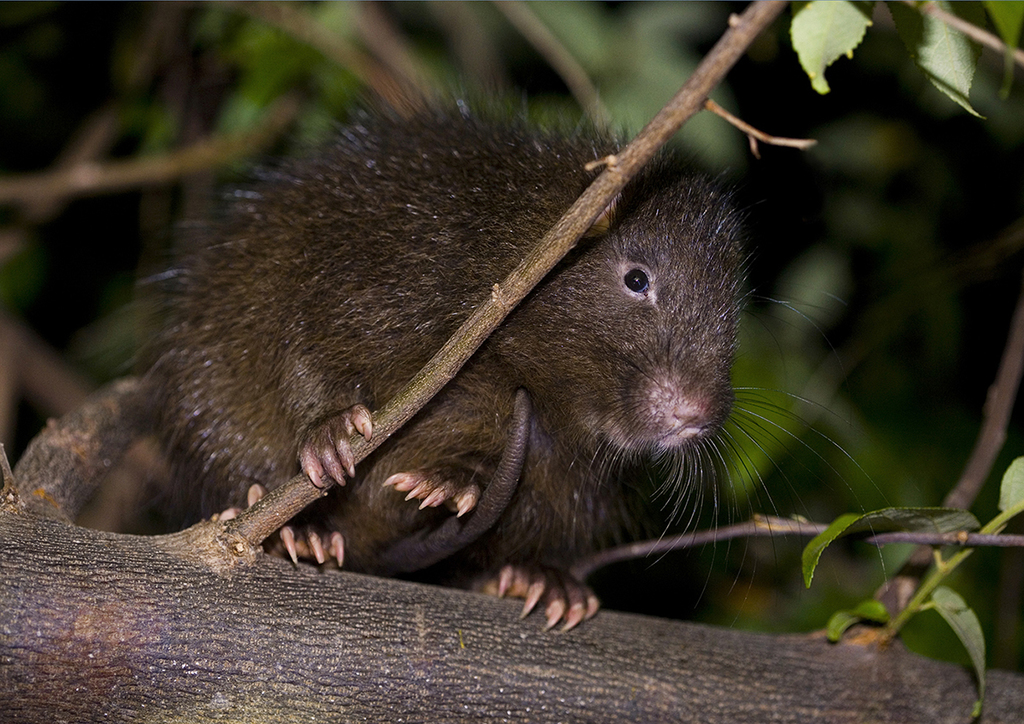
Hispaniolan Hutia
Plagiodontia aedium
The Hispaniolan hutia (Plagiodontia aedium) is one of several hutia (also called zagouti, and jutía in Spanish) species to have inhabited at some time the island of Hispaniola (island shared by Haiti and the Dominican Republic). The P. aedium is the only scientifically confirmed extant species of the genus Plagiodontia; other species are either extinct or being debatedly catalogued as P. aedium subspecies. The name Plagiodontia means "oblique tooth" in Greek.
Listen
Looking for field recordings…
Where it lives
Recorded sightings
—
geo-referenced records in GBIF, from museums, herbaria and field observers.
Drag the globe to turn it. Dots are where records exist, not a range map; darker means more records.
In the stacks
Searching the stacks…
Every page naming Plagiodontia aedium in the Biodiversity Heritage Library →
This page is assembled live from iNaturalist, GBIF, Wikipedia, the Source Library and the Internet Archive. It is not yet part of the hand-edited codex. iNaturalist taxon 43774.