- Plants
- ›Vascular Plants
- ›flowering plants
- ›Dicots
- ›Soapberries, Cashews, Mahoganies, and Allies
- ›mahogany family
- ›Cedreloideae
- ›Cedreleae
- ›Khaya
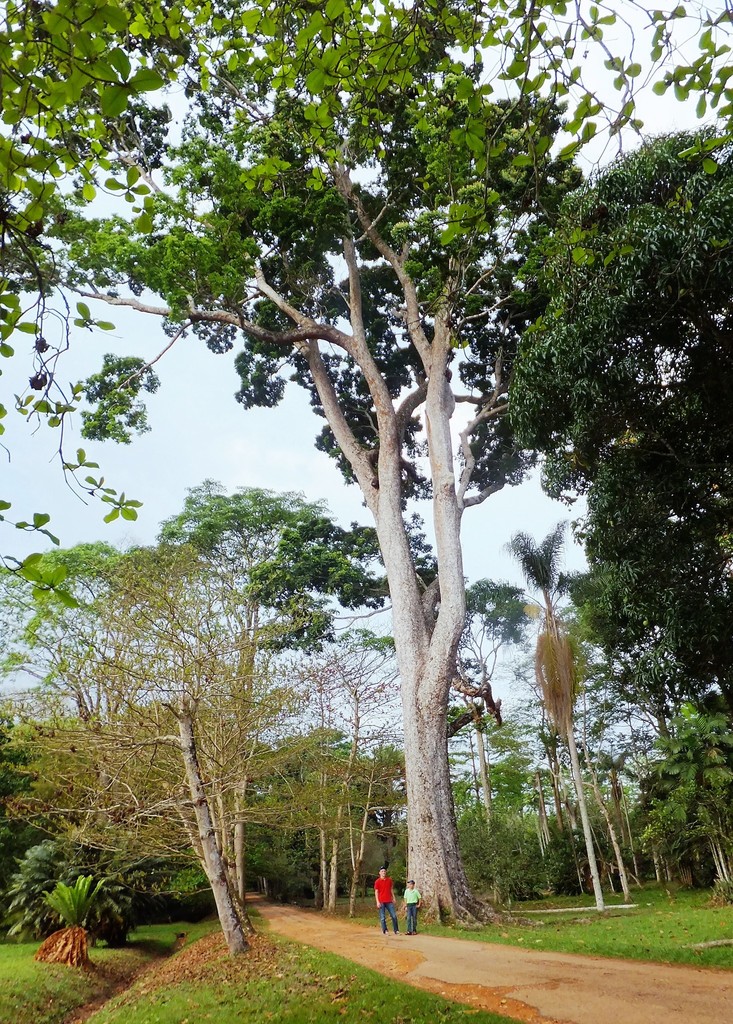
Lagos mahogany
Khaya ivorensis
Khaya ivorensis, also called African mahogany or Lagos mahogany, is a tall forest tree with a buttressed trunk in the family Meliaceae. It is found in Angola, Cameroon, Côte d'Ivoire, Gabon, Ghana, Liberia, and Nigeria where it grows primarily in lowland tropical rainforests. It is threatened by habitat loss.
Khaya ivorensis is a species in the African mahogany family. Other common names are Gold Coast mahogany, Ivory Coast mahogany, Nigerian mahogany. It grows to be about 40–50 m high. It has thick and reddish brown bark. It grows many white flowers at the end of its branches. Its woody fruit is slightly thinner than those of Khaya grandifoliola.
From the article Khaya ivorensis on Wikipedia (CC BY-SA), quoted section by section
Range & habitat
Khaya ivorensis typically grows in drier climates. It can be found in lowland rainforest that have a short dry season. It grows in groups or singly. It does not have many demands to survive because it can tolerate some shade and short periods of flood during rainy seasons. It is mostly found in West Africa and southern Nigeria.
Wikipedia: “Distribution and habitat”
At the table
Its wood is durable and is used to make many things such as furniture and paneling. The tree's bark is bitter and can be used as a natural remedy for coughs and whooping cough. Some find that when mixed with black peppercorns it can be used to treat diarrhea and dysentery. A bark concoction is used as a drink or bath for back pains and as a lotion for rheumatism. Planting the tree improves and enriches the soil, so many people use the tree for that as well.
Wikipedia: “Uses”
Where it lives
Recorded sightings
—
geo-referenced records in GBIF, from museums, herbaria and field observers.
Drag the globe to turn it. Dots are where records exist, not a range map; darker means more records.
In the stacks
Searching the stacks…
Every page naming Khaya ivorensis in the Biodiversity Heritage Library →
This page is assembled live from iNaturalist, GBIF, Wikipedia, the Source Library and the Internet Archive. It is not yet part of the hand-edited codex. iNaturalist taxon 439305.