- Plants
- ›Vascular Plants
- ›flowering plants
- ›Dicots
- ›pinks, cactuses, and allies
- ›pink family
- ›Caryophylloideae
- ›Sileneae
- ›Petrocoptis
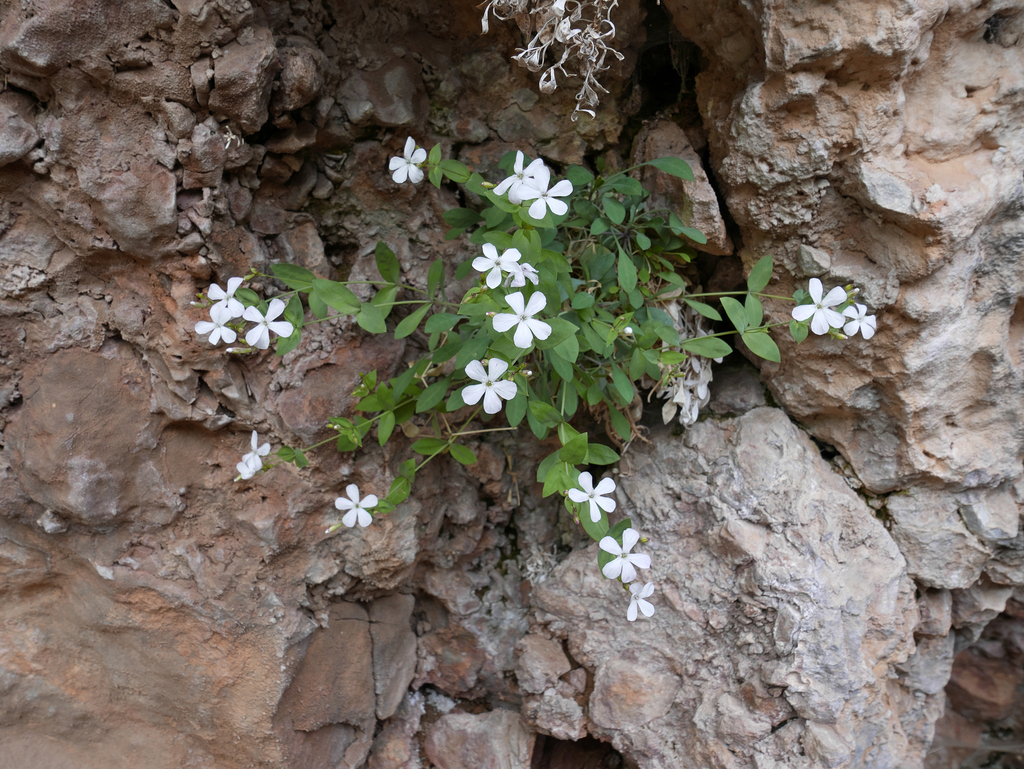
Petrocoptis pseudoviscosa
Petrocoptis pseudoviscosa, commonly known as falguera, is a species of plant in the family Caryophyllaceae. It is endemic to the Spanish province of Huesca, where it is only known from the Valle del Ésera in the Pyrenees. Its natural habitat is calcareous cliffs, crags and caves.
From the article Petrocoptis pseudoviscosa on Wikipedia (CC BY-SA), quoted section by section
Range & habitat
Petrocoptis pseudoviscosa is known from a single valley on the Spanish side of the Pyrenees Mountains. The total area of occupancy of the plant is about 11 km2 (4 mi2) with locations scattered along about 20 km (12 mi) of the valley at altitudes varying between 700 and 1,600 m (2,300 and 5,200 ft). The plants grow in crevices in inaccessible rocky outcrops, cliffs and caves. There are five populations, varying in size from about a hundred plants to a few thousands.
Wikipedia: “Distribution and habitat”
What it does
Although cross pollination is normal in this species, the flowers can self-pollinate, and the seeds produced by this process have been found to germinate equally well as those from cross-fertilised flowers. Other plants growing in close vicinity to Petrocoptis pseudoviscosa include the ferns Cystopteris fragilis, Asplenium ruta-muraria, Asplenium fontanum and Asplenium csikii, as well as the herbs Lonicera pyrenaica, Saxifraga longifolia, Chaenorhinum origanifolium, Sarcocapnos enneaphylla, Hieracium phlomoides and Bupleurum angulosum.
Wikipedia: “Ecology”
Where it lives
Recorded sightings
—
geo-referenced records in GBIF, from museums, herbaria and field observers.
Drag the globe to turn it. Dots are where records exist, not a range map; darker means more records.
In the stacks
Searching the stacks…
Every page naming Petrocoptis pseudoviscosa in the Biodiversity Heritage Library →
This page is assembled live from iNaturalist, GBIF, Wikipedia, the Source Library and the Internet Archive. It is not yet part of the hand-edited codex. iNaturalist taxon 441969.