- Plants
- ›Vascular Plants
- ›flowering plants
- ›Dicots
- ›Gentians, Dogbanes, Madders, and Allies
- ›Dogbane Family
- ›Rauvolfioideae
- ›periwinkles, devil peppers and kin
- ›Periwinkles and allies
- ›Catharanthus
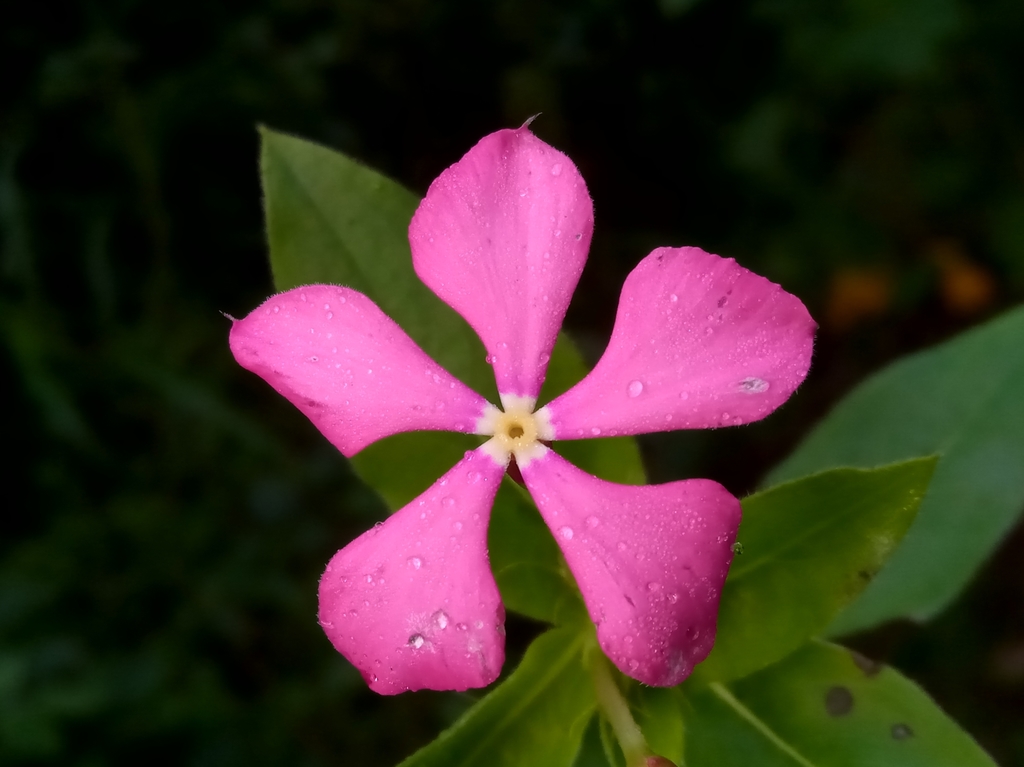
Catharanthus trichophyllus
Catharanthus trichophyllus is a species of flowering plant in the dogbane family, Apocynaceae. It is endemic to Madagascar, where it is most common in northern regions.
From the article Catharanthus trichophyllus on Wikipedia (CC BY-SA), quoted section by section
Description
This is a perennial herb growing up to one meter tall. It has an unpleasant scent. It contains a white latex. The stems and branches are squared, winged, and reddish or purplish in color. The oppositely arranged leaves have hairy, pointed oval blades up to 8.5 centimeters long. They are each accompanied by several stipules. Flowers occur singly or in pairs in the leaf axils. The calyx is up to a centimeter long and has five long, narrow lobes. The corolla has a tubular throat over 2 centimeters long opening into five lobes each up to 1.8 centimeters long. The flowers may be white, pink, red, or purple, with yellowish centers. The fruit is a pair of greenish or purplish follicles up to 7 centimeters long. Each contains 10 to 20 seeds.
What it does
The plant grows in humid and dry climates in many habitat types, including forest edges and openings, riverbanks, and disturbed areas such as roadsides.
Wikipedia: “Ecology”
At the table
The plant is used in traditional medicine to treat a variety of conditions, including sexually transmitted diseases, impotency, back pain, toothache, fever, dysentery, bleeding, and liver diseases. It is used as a stimulant, an aphrodisiac, and an appetite suppressant.
Wikipedia: “Uses”
Where it lives
Recorded sightings
—
geo-referenced records in GBIF, from museums, herbaria and field observers.
Drag the globe to turn it. Dots are where records exist, not a range map; darker means more records.
In the stacks
Searching the stacks…
Every page naming Catharanthus trichophyllus in the Biodiversity Heritage Library →
This page is assembled live from iNaturalist, GBIF, Wikipedia, the Source Library and the Internet Archive. It is not yet part of the hand-edited codex. iNaturalist taxon 446827.