- Plants
- ›Vascular Plants
- ›flowering plants
- ›Dicots
- ›Buttercups, Poppies, and Allies
- ›buttercup family
- ›Anemones, buttercups, larkspurs and allies
- ›larkspurs and monkshoods
- ›Aconitum
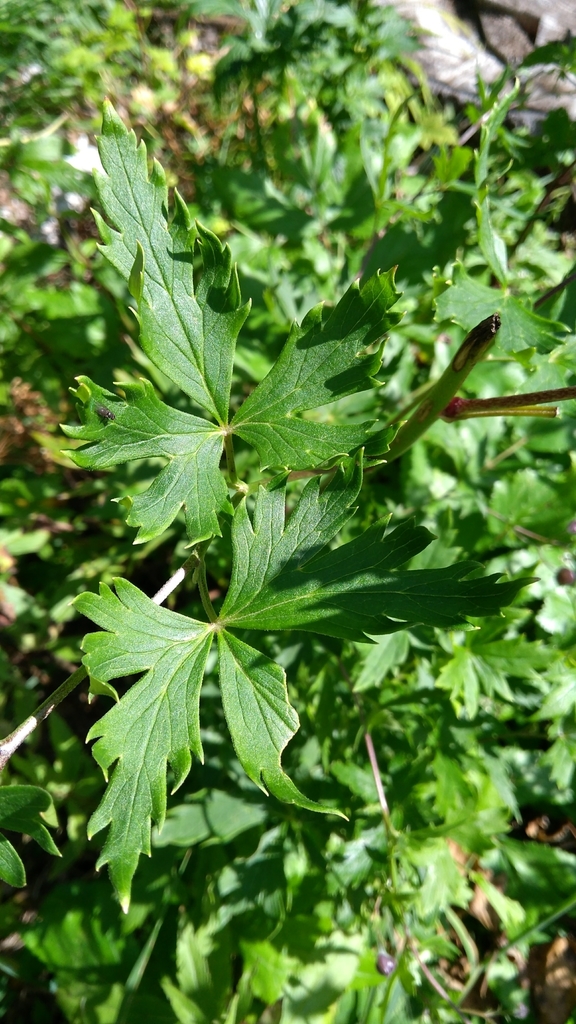
branched monkshood
Aconitum degenii
Aconitum degenii is a species of flowering plant in the buttercup family known by the common name branched monkshood .
From the article Aconitum degenii on Wikipedia (CC BY-SA), quoted section by section
Description
Aconitum degenii is a tall spindly erect to scandent forb which is perennial from rhizomes. It has divided leaves. The flowering period extends primarily from July to September. The inflorescence is paniculate and branched. The perigon is blue or purple. The helmet is about as high as it is wide or less high. The nectar leaves have a curved stem. The spur is slightly bent back. The plant reaches a stature height between 0.5 and 2.5 m. The pollination is done by insects (Bombus spec. and others). The fruits are pod-like follicles. Aconitum degenii is poisonous due to the presence of alkaloids like aconitine.
Subspecies. Currently 2 subspecies are accepted:
Aconitum degenii subsp. paniculatum (Arcang.) Mucher Aconitum degenii subsp. valesiacum (Gáyer) Mucher
== References ==
Range & habitat
This wildflower is native to Europe (south, south-east) where it grows in subalpine areas. Inhabited biotops include tall herbaceous vegetation and deciduous forests.
Wikipedia: “Distribution”
Where it lives
Recorded sightings
—
geo-referenced records in GBIF, from museums, herbaria and field observers.
Drag the globe to turn it. Dots are where records exist, not a range map; darker means more records.
In the stacks
Searching the stacks…
Every page naming Aconitum degenii in the Biodiversity Heritage Library →
This page is assembled live from iNaturalist, GBIF, Wikipedia, the Source Library and the Internet Archive. It is not yet part of the hand-edited codex. iNaturalist taxon 447962.