- Animals
- ›Arthropods
- ›Hexapods
- ›Insects
- ›Winged and Once-winged Insects
- ›Flies
- ›Brachyceran Flies
- ›Cyclorrhaphan Flies
- ›Schizophoran Flies
- ›Calyptrate Flies
- ›Bot Flies, Blow Flies, and Allies
- ›Tachinid Flies
- ›Exoristinae
- ›Eryciini
- ›Lespesia
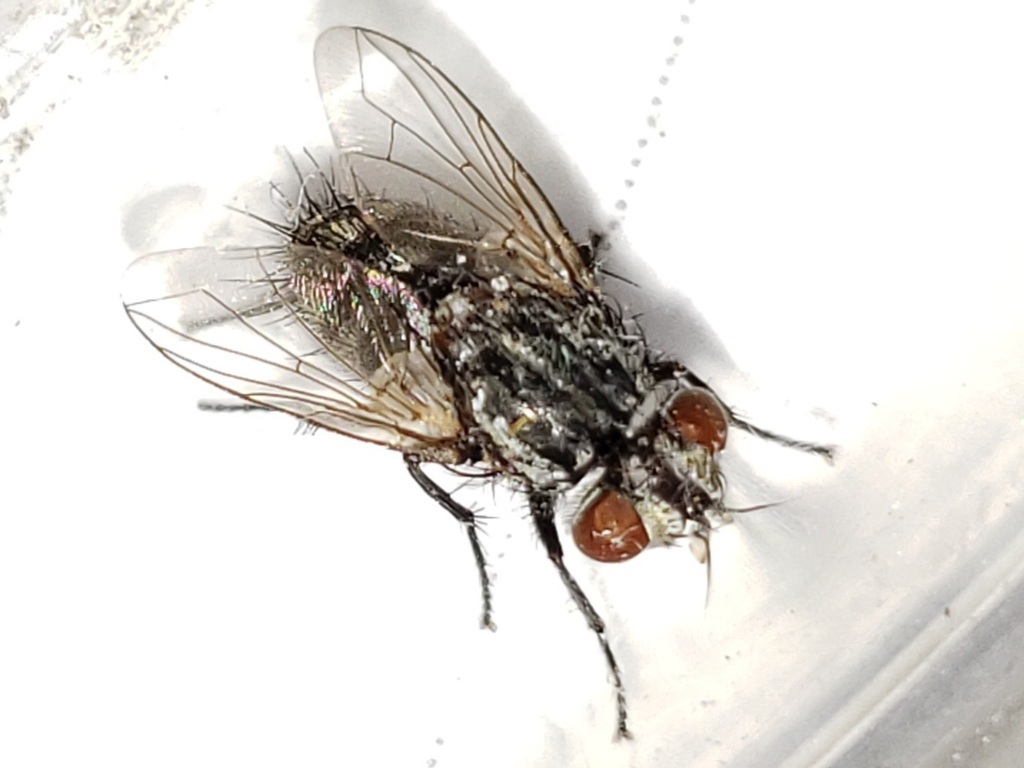
Lespesia archippivora
Lespesia archippivora is a species of tachinid fly, which, like all tachinids, are parasitoids of other arthropods. L. archippivora lives in the body of its host resulting in its death. This is not uncommon since it is estimated that about 10% of all insects are parasitoids. L. archippivora is a generalist and able to infect at least 25 lepidopteran species in addition to one species of Hymenoptera. It is common in North America and other species exist worldwide. One study suggests the species is bivoltine.
It is used as a biological control of a number of pests, such the army worm (Mythimna unipuncta), sugarcane leaf roller (Omiodes accepta), corn earworm (Heliothis zea), black cutworm (Agrotis ipsilon), and variegated cutworm (Peridroma saucia).
From the article Lespesia archippivora on Wikipedia (CC BY-SA), quoted section by section
What it does
Mating occurs within the first day after the fly emerged from its pupa stage. After mating, the female begins to locate a host. She acts quickly when she finds a host, ovipositing at the posterior end of the caterpillar. The female fly places relatively large eggs on the host. The maggot then hatches and burrows through the surface of the host. Total brood size varies, but typically ranges from 1-10 maggots per host. After infection, Lespesia archippivora maggots go through three larval instars, exit their hosts as a late stage larva and hide under soil substrate. While residing inside its host, the maggot moves freely. After 3 days, the fly larva adheres itself close to a spiracle (breathing tube) of the infected caterpillar. As the maggot continues to mature, it eventually consumes the internal contents of its host. The fly larva then leaves its host. The fly pupates and emerges as a mature fly approximately 10 to 14 days later. A mature female fly lays between 15 and 204 eggs in her lifetime.
Wikipedia: “Reproduction”
Listen
Looking for field recordings…
Where it lives
Recorded sightings
—
geo-referenced records in GBIF, from museums, herbaria and field observers.
Drag the globe to turn it. Dots are where records exist, not a range map; darker means more records.
In the stacks
Searching the stacks…
Every page naming Lespesia archippivora in the Biodiversity Heritage Library →
This page is assembled live from iNaturalist, GBIF, Wikipedia, the Source Library and the Internet Archive. It is not yet part of the hand-edited codex. iNaturalist taxon 449360.