- Animals
- ›Arthropods
- ›Hexapods
- ›Insects
- ›Winged and Once-winged Insects
- ›Ants, Bees, Wasps, and Sawflies
- ›Narrow-waisted Wasps, Ants, and Bees
- ›Ants, Bees, and Stinging Wasps
- ›Spider Wasps, Velvet Ants, and Allies
- ›Spider Wasps
- ›Pompilinae
- ›Anopliini
- ›Anoplius
- ›Arachnophroctonus
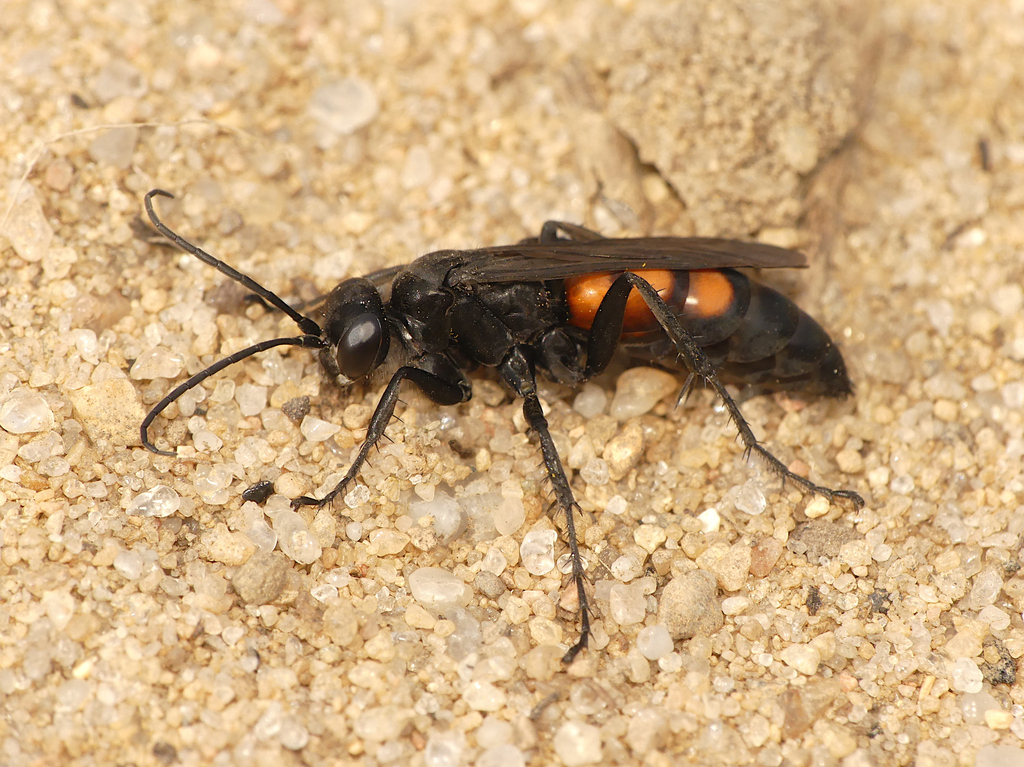
Black-banded Spider Wasp
Anoplius viaticus
Anoplius viaticus, commonly known as the black-banded spider wasp, is a species of spider wasp. These wasps are known as spider wasps because the females capture spiders to provide their offspring with food. The paralysed spider is cached in a burrow, the wasp lays an egg on it, and when this hatches, the developing wasp larva consumes the spider. This species is found in sandy heathland across most of Europe, and also the mountainous parts of eastern Africa and the temperate parts of South Africa.
From the article Anoplius viaticus on Wikipedia (CC BY-SA), quoted section by section
Description
A. viaticus is a large species of spider-hunting wasp and measures about 14 millimetres (0.55 in) in length. The head and thorax are black and the propodeum is fused to the thorax and bears erect black hairs. The first three tergites of the abdomen are red with black rear margins and the remainder of the abdomen is black. In Africa, the species is quite variable and Arnold described a number of varieties; in particular, the extent of the red colours on the abdomen varies, with the first two or three tergites of some specimens being entirely red or orange.
What it does
Adult A. viaticus feed on nectar from flowers. Wasps in this species predominantly prey on spiders from the wolf spider family Lycosidae, but they also take ground spiders (Gnaphosidae), grass spiders (Agelenidae), crab spiders (Thomisidae) and jumping spiders (Salticidae).
Wikipedia: “Diet”
Listen
Looking for field recordings…
Where it lives
Recorded sightings
—
geo-referenced records in GBIF, from museums, herbaria and field observers.
Drag the globe to turn it. Dots are where records exist, not a range map; darker means more records.
In the stacks
Searching the stacks…
Every page naming Anoplius viaticus in the Biodiversity Heritage Library →
This page is assembled live from iNaturalist, GBIF, Wikipedia, the Source Library and the Internet Archive. It is not yet part of the hand-edited codex. iNaturalist taxon 461636.