- Fungi Including Lichens
- ›Ascomycete Fungi
- ›Sac Fungi and Lichens
- ›Common Lichens
- ›Shield Lichens, Sunburst Lichens, Rosette Lichens, and Allies
- ›Sunburst Lichens and Allies
- ›sunburst lichens, firedots, and allies
- ›Xanthorioideae
- ›Polycauliona
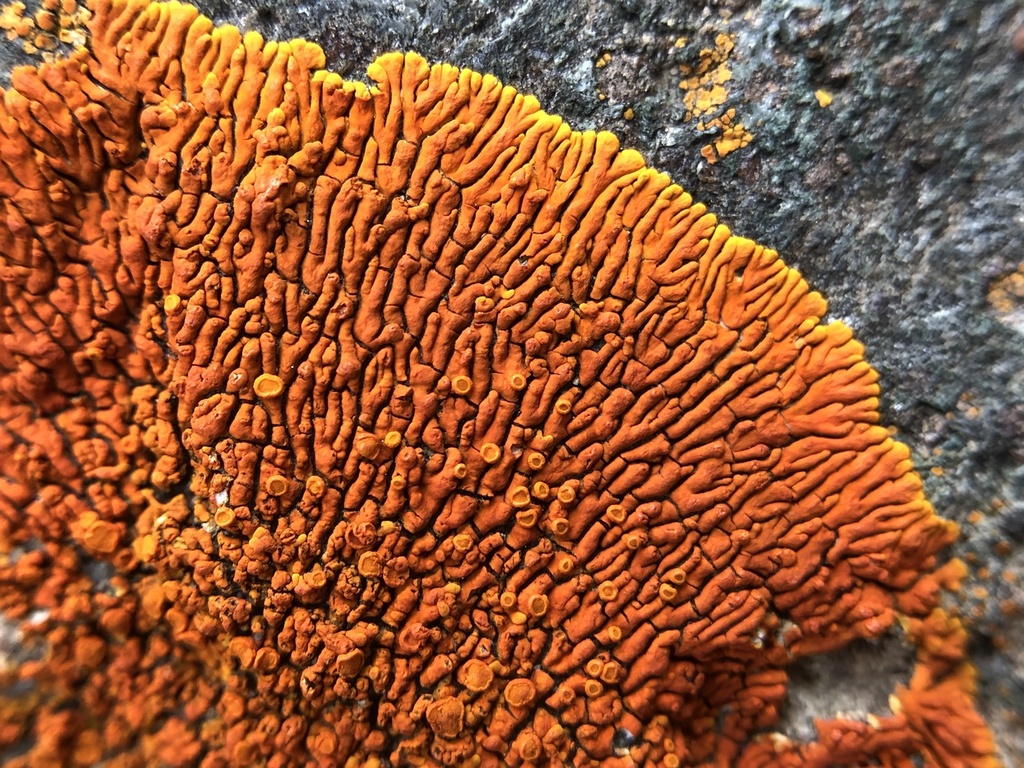
Flame Firedot Lichen
Polycauliona ignea
Igneoplaca is a genus in the subfamily Xanthorioideae of the family Teloschistaceae. It contains a single species, the crustose lichen Igneoplaca ignea.
From the article Igneoplaca on Wikipedia (CC BY-SA), quoted section by section
Description
Genus Igneoplaca is characterized by a crustose thallus, composed of red to orange lobes. Its cortical layer is paraplectenchymatous (fungal tissue with a cellular structure superficially like parenchyma of vascular plants), while its medulla is prosoplectenchymatous (fungal tissue with a structure superficially like collenchyma of vascular plants). Apothecia are lecanorine with a paraplectenchymatous true exciple. The lichen contains anthraquinones of the parietin chemosyndrome. Igneoplaca is similar to Calogaya, but that genus does not have a prosoplectenchymatous medulla.
Range & habitat
Igneoplaca ignea occurs in Baja Mexico and in southern California. It grows on rock in sunny areas, preferentially on acidic rock such as volcanic rock, schist, pebble, shale, and granite.
== References ==
Wikipedia: “Habitat and distribution”
Where it lives
Recorded sightings
—
geo-referenced records in GBIF, from museums, herbaria and field observers.
Drag the globe to turn it. Dots are where records exist, not a range map; darker means more records.
In the stacks
Searching the stacks…
Every page naming Polycauliona ignea in the Biodiversity Heritage Library →
This page is assembled live from iNaturalist, GBIF, Wikipedia, the Source Library and the Internet Archive. It is not yet part of the hand-edited codex. iNaturalist taxon 463828.