- Plants
- ›Vascular Plants
- ›flowering plants
- ›Dicots
- ›Sunflowers, Bellflowers, Fanflowers, and Allies
- ›Sunflowers, Daisies, Asters, and Allies
- ›Thistles and Allies
- ›Tarchonantheae
- ›Tarchonanthus
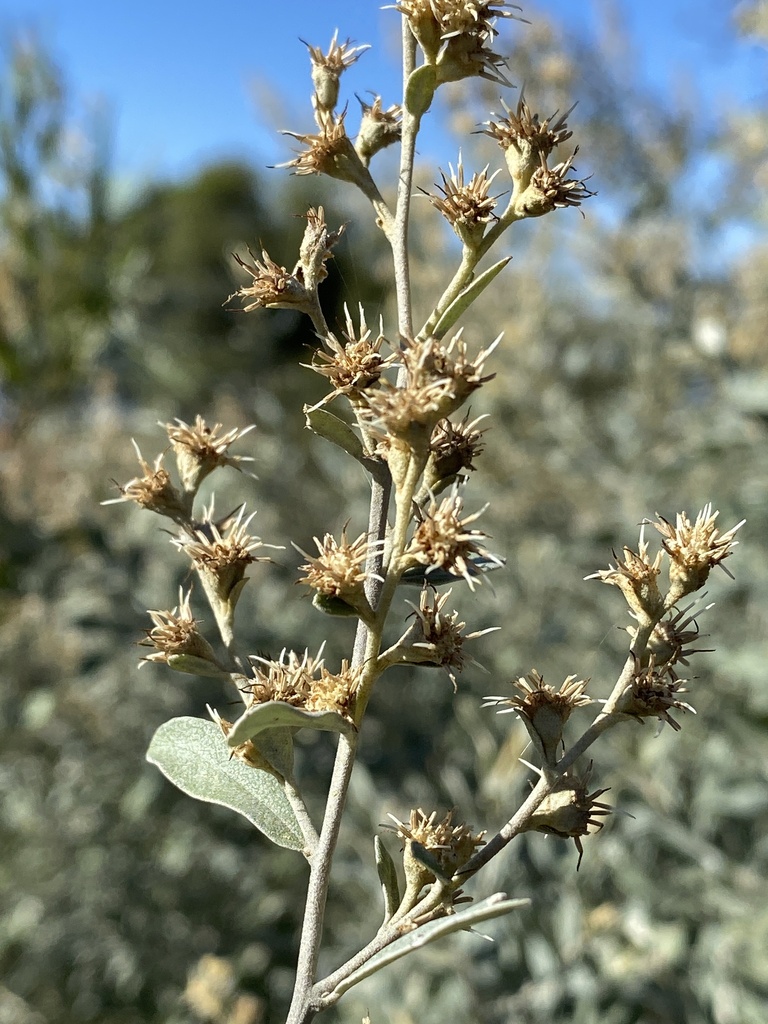
Wild Camphorbush
Tarchonanthus camphoratus
Tarchonanthus camphoratus (known as camphor bush for its scent, or leleshwa in Kenya), is a shrub or small tree which is widespread in Africa south of the Sahel, and in Yemen.
From the article Tarchonanthus camphoratus on Wikipedia (CC BY-SA), quoted section by section
Description
The camphor bush can reach up to 6 meters in height. The twigs and younger stems are white-felted, as are the undersides of the leaves. The upper leaf surface is dark olive-green. Bruised leaves smell strongly of camphor. Tarchonanthus camphoratus is dioecious. Flowers are usually present from December to May (in South Africa), with cream coloured panicles on a discoid head. Male flowering heads have several flowers whilst the female has only a few. The fruit is a dense and woolly achene.
At the table
Tarchonanthus camphoratus wood is fragrant, close-grained, attractive, durable and rich in aromatic oils. It is used as wood fuel and a source of charcoal. It is also used as a traditional building material, in horticulture, and in tribal papermaking. Leleshwa is also a source of aromatic oils used as fragrances. Its leaves are used by the Maasai to scent their homes and persons.
Wikipedia: “Cultivation and uses”
In medicine
Tarchonanthus camphoratus is used as a traditional remedy for respiratory illnesses. The species has wide range of local uses, including dental hygiene.
Wikipedia: “Medicinal use”
Where it lives
Recorded sightings
—
geo-referenced records in GBIF, from museums, herbaria and field observers.
Drag the globe to turn it. Dots are where records exist, not a range map; darker means more records.
In the stacks
Searching the stacks…
Every page naming Tarchonanthus camphoratus in the Biodiversity Heritage Library →
This page is assembled live from iNaturalist, GBIF, Wikipedia, the Source Library and the Internet Archive. It is not yet part of the hand-edited codex. iNaturalist taxon 474039.