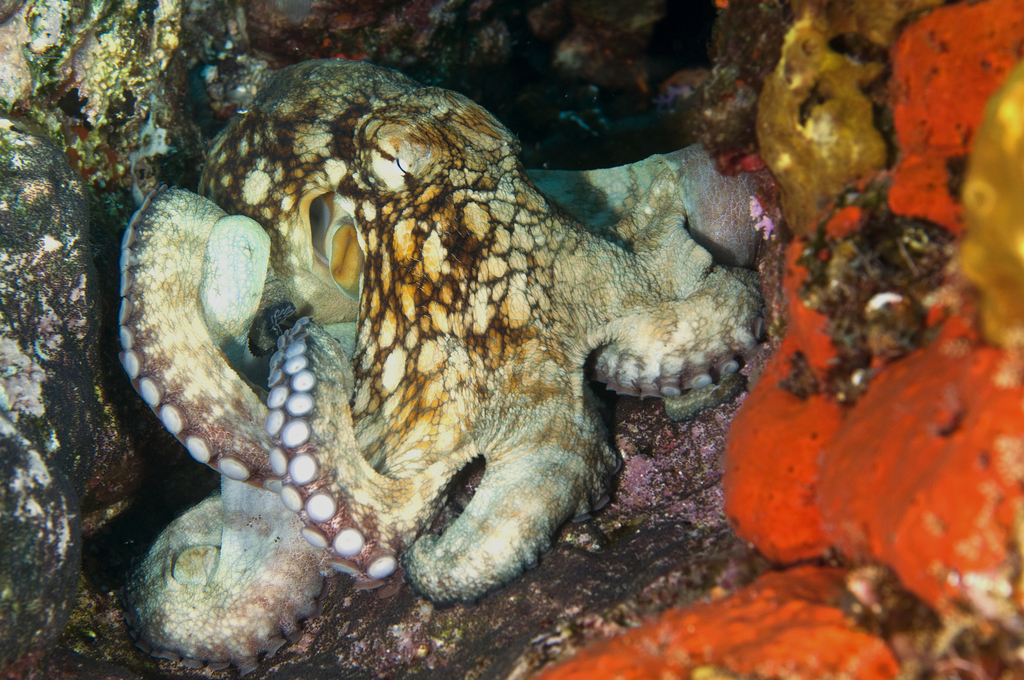
Octopuses
Octopoda
An octopus (pl.: octopuses or octopodes) is a soft-bodied, eight-limbed mollusc of the order Octopoda (, ok-TOP-ə-də). The order consists of some 300 species and is grouped within the class Cephalopoda with squids, cuttlefish, and nautiloids. Like other cephalopods, an octopus is bilaterally symmetric with two eyes and a beaked mouth at the centre point of the eight limbs. An octopus can radically deform its shape, enabling it to squeeze through small gaps. They trail their appendages behind them as they swim backwards. The siphon is used for respiration and locomotion (by water jet propulsion). Octopuses have a complex nervous system and excellent sight, and are among the most intelligent and behaviourally diverse invertebrates.
Octopuses inhabit various ocean habitats, including coral reefs, pelagic waters, and the seabed; some live in the intertidal zone and others at abyssal depths. Most species grow quickly, mature early, and are short-lived. In most species, the male uses a specially-adapted arm to deliver sperm directly into the female's mantle cavity, after which he becomes senescent and dies, while the female deposits fertilised eggs in a den and cares for them until they hatch, after which she also dies. They are predators and hunt crustaceans, bivalves, gastropods and fish. Strategies to defend themselves against their own predators include expelling ink, camouflage, and threat displays, the ability to jet quickly through the water and hide, and deceit. All octopuses are venomous, but only the blue-ringed octopuses are known to be deadly to humans.
2 branches of this order, most-observed first
See this branch on the Wheel of Life →

Where it lives
Recorded sightings
—
geo-referenced records in GBIF, from museums, herbaria and field observers.
Drag the globe to turn it. Dots are where records exist, not a range map; darker means more records.
In the stacks
Searching the stacks…
Every page naming Octopoda in the Biodiversity Heritage Library →
This page is assembled live from iNaturalist, GBIF, Wikipedia, the Source Library and the Internet Archive. It is not yet part of the hand-edited codex. iNaturalist taxon 47458.