
Cnidarians
Cnidaria
Cnidaria (/naɪˈdɛəriə/) is a phylum containing over 10,000 species of animals found exclusively in aquatic (freshwater and marine) environments: they are predominantly marine species. Their distinguishing feature is cnidocytes, specialized cells that they use mainly for capturing prey. Their bodies consist of mesoglea, a non-living jelly-like substance, sandwiched between two layers of epithelium that are mostly one cell thick. They have two basic body forms: swimming medusae and sessile polyps, both of which are radially symmetrical...
8 branches of this phylum, most-observed first

Sea Anemones and Corals
classAnthozoa

True Jellies
classScyphozoa

Hydrozoans
classHydrozoa

Stalked Jellies
classStaurozoa

Box Jellies
classCubozoa

Myxozoans
classMyxozoa
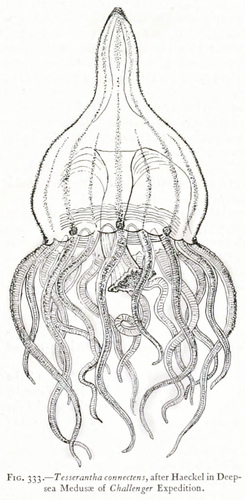
Tesseranthidae
familyTesseranthidae

Polypodiozoans
classPolypodiozoa
Where it lives
Recorded sightings
—
geo-referenced records in GBIF, from museums, herbaria and field observers.
Drag the globe to turn it. Dots are where records exist, not a range map; darker means more records.
In the old herbals & bestiaries

In the stacks
Searching the stacks…
Every page naming Cnidaria in the Biodiversity Heritage Library →
This page is assembled live from iNaturalist, GBIF, Wikipedia, the Source Library and the Internet Archive. It is not yet part of the hand-edited codex. iNaturalist taxon 47534.