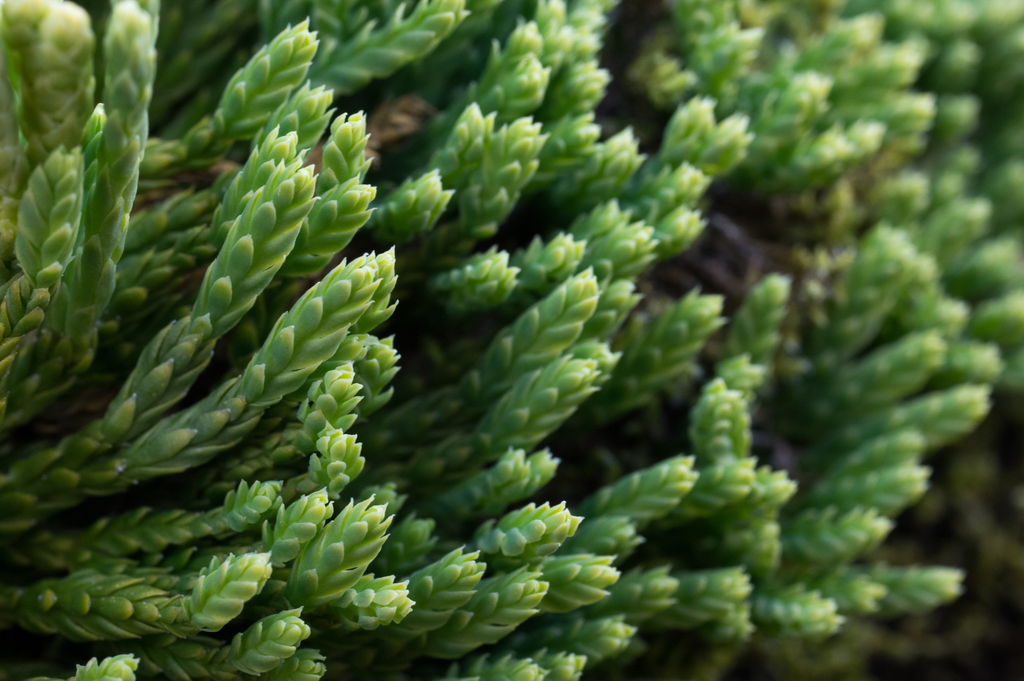
Lycophytes
Lycopodiopsida
Lycopodiopsida is a class of vascular plants also known as lycopsids, lycopods, or lycophytes. Members of the class are also called clubmosses, firmosses, spikemosses and quillworts. They have dichotomously branching stems bearing simple leaves called microphylls and reproduce by means of spores borne in sporangia on the sides of the stems at the bases of the leaves. Although living species are small, during the Carboniferous, extinct tree-like forms (Lepidodendrales) formed huge forests that dominated the landscape and contributed to coal deposits.
The nomenclature and classification of plants with microphylls varies substantially among authors. A consensus classification for extant (living) species was produced in 2016 by the Pteridophyte Phylogeny Group (PPG I), which places them all in the class Lycopodiopsida, which includes the classes Isoetopsida and Selaginellopsida used in other systems. (See Table 2.) Alternative classification systems have used ranks from division (phylum) to subclass. In the PPG I system, the class is divided into three orders, Lycopodiales, Isoetales and Selaginellales.
3 branches of this class, most-observed first

clubmosses and firmosses
orderLycopodiales

Spikemosses
orderSelaginellales

Quillwort order
orderIsoetales
Where it lives
Recorded sightings
—
geo-referenced records in GBIF, from museums, herbaria and field observers.
Drag the globe to turn it. Dots are where records exist, not a range map; darker means more records.
In the stacks
Searching the stacks…
Every page naming Lycopodiopsida in the Biodiversity Heritage Library →
This page is assembled live from iNaturalist, GBIF, Wikipedia, the Source Library and the Internet Archive. It is not yet part of the hand-edited codex. iNaturalist taxon 47623.