- Plants
- ›Vascular Plants
- ›flowering plants
- ›Dicots
- ›Gentians, Dogbanes, Madders, and Allies
- ›Dogbane Family
- ›milkweeds
- ›Asclepiadeae
- ›Asclepiadinae
- ›Asclepias
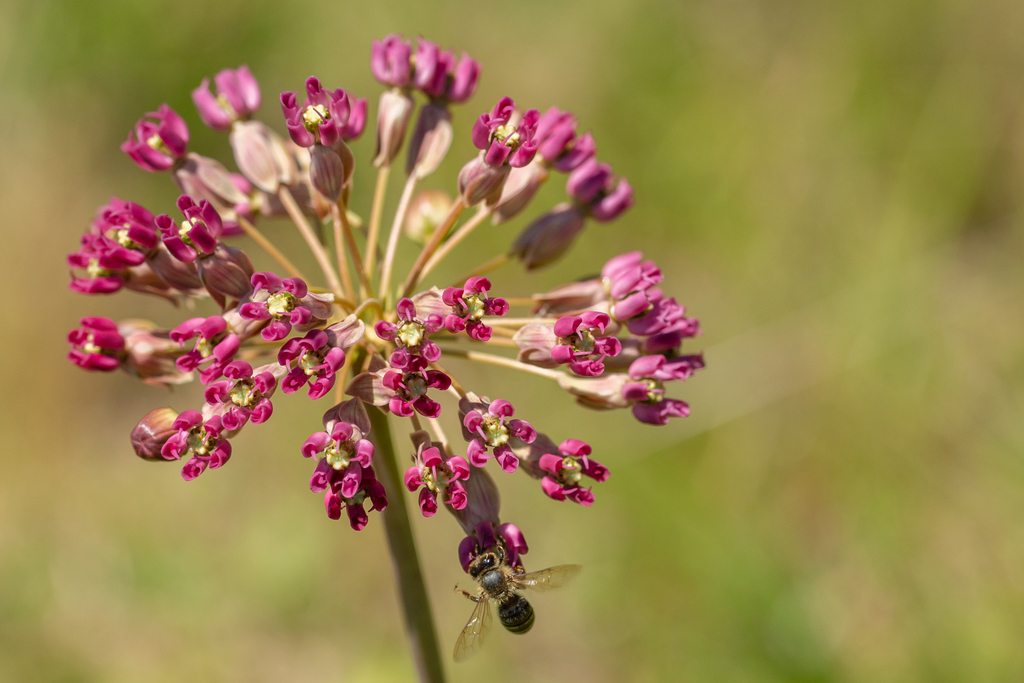
clasping milkweed
Asclepias amplexicaulis
Asclepias amplexicaulis, the blunt-leaved milkweed, clasping milkweed, or sand milkweed, is a species of flowering plant in the subfamily Asclepiadoideae (Apocynaceae). It is endemic to the United States, where it is mostly found east of the Great Plains. It grows in dry prairies, savannas, open woods, and fallow fields, usually in sandy soil.
From the article Asclepias amplexicaulis on Wikipedia (CC BY-SA), quoted section by section
Description
It grows 1–3 ft (0.30–0.91 m) high and produces flowers in the summer. The leaves of A. amplexicaulis are ovate to ovate-elliptic in shape, opposite, and most commonly found in pairs of 4 to 6. They are approximately 8 to 15 centimeters long and 4 to 8 centimeters wide. A. amplexicaulis' root system can reach between 45 and 60 centimeters in length and is relatively unbranched, with few lateral roots. This plant was eaten as food historically. However, it contains a poison dangerous to humans and livestock, so caution must be used if ingesting this plant.
What it does
A. amplexicaulis occurs in ecosystems prone to burning, such as longleaf pine flatwoods, and has been found to persist through repeated prescribed burns.
Wikipedia: “Fire Ecology”
Where it lives
Recorded sightings
—
geo-referenced records in GBIF, from museums, herbaria and field observers.
Drag the globe to turn it. Dots are where records exist, not a range map; darker means more records.
In the stacks
Searching the stacks…
Every page naming Asclepias amplexicaulis in the Biodiversity Heritage Library →
This page is assembled live from iNaturalist, GBIF, Wikipedia, the Source Library and the Internet Archive. It is not yet part of the hand-edited codex. iNaturalist taxon 47910.