- Animals
- ›Arthropods
- ›Hexapods
- ›Insects
- ›Winged and Once-winged Insects
- ›Beetles
- ›Water, Rove, Scarab, Long-horned, Leaf, and Snout Beetles
- ›Cucujiform Beetles
- ›Longhorn Beetles and Allies
- ›Longhorn Beetles
- ›Flower Longhorn Beetles
- ›Desmocerini
- ›Desmocerus
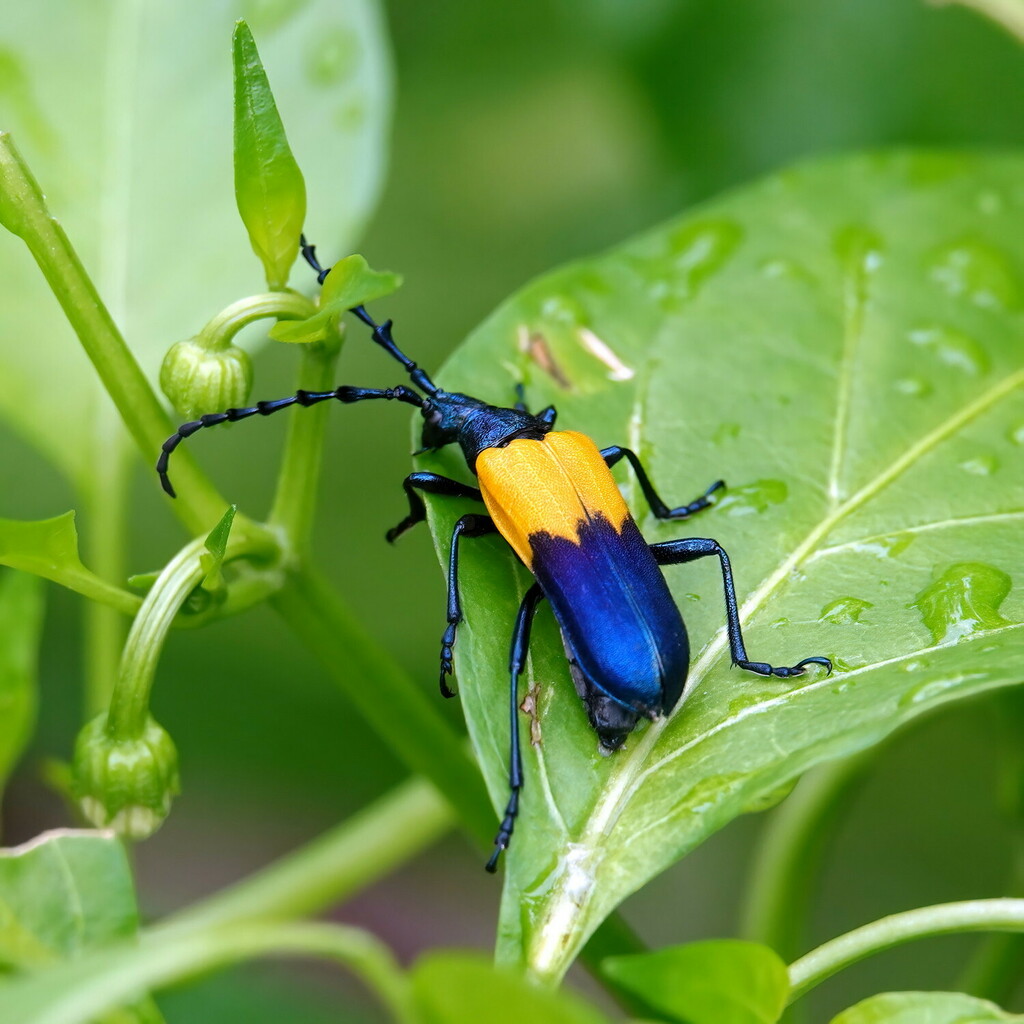
Eastern Elderberry Borer
Desmocerus palliatus
Desmocerus palliatus, the eastern elderberry borer, is a species of Cerambycidae that occurs in Eastern North America.
From the article Desmocerus palliatus on Wikipedia (CC BY-SA), quoted section by section
Description
The adult is 17 to 26 mm, mostly a shimmering dark blue, and the bases of the elytra are yellow to yellow-red. It is likely a mimic of beetles in the family Lycidae, as is the moth Lycomorpha pholus found in the same area.
Range & habitat
It ranges from Oklahoma, central North America, to parts of the southern Appalachian Mountains. They tend to be more abundant in the northern part of its range. They can be seen in swampy areas and near streams that support their host plant.
Wikipedia: “Range and habitat”
What it does
Eggs are laid near stems or at the base of the plant, the larvae then burrow their way into the stems and eat tunnels into the roots of the living plant. They can be seen between April and August.
Adult food Pollen Sambucus Larval food Sambucus
Wikipedia: “Life cycle”
Listen
Looking for field recordings…
Where it lives
Recorded sightings
—
geo-referenced records in GBIF, from museums, herbaria and field observers.
Drag the globe to turn it. Dots are where records exist, not a range map; darker means more records.
In the stacks
Searching the stacks…
Every page naming Desmocerus palliatus in the Biodiversity Heritage Library →
This page is assembled live from iNaturalist, GBIF, Wikipedia, the Source Library and the Internet Archive. It is not yet part of the hand-edited codex. iNaturalist taxon 47962.