- Fungi Including Lichens
- ›Ascomycete Fungi
- ›Sac Fungi and Lichens
- ›Leotiomycetes
- ›Helotiales
- ›Drepanopezizaceae
- ›Blumeriella
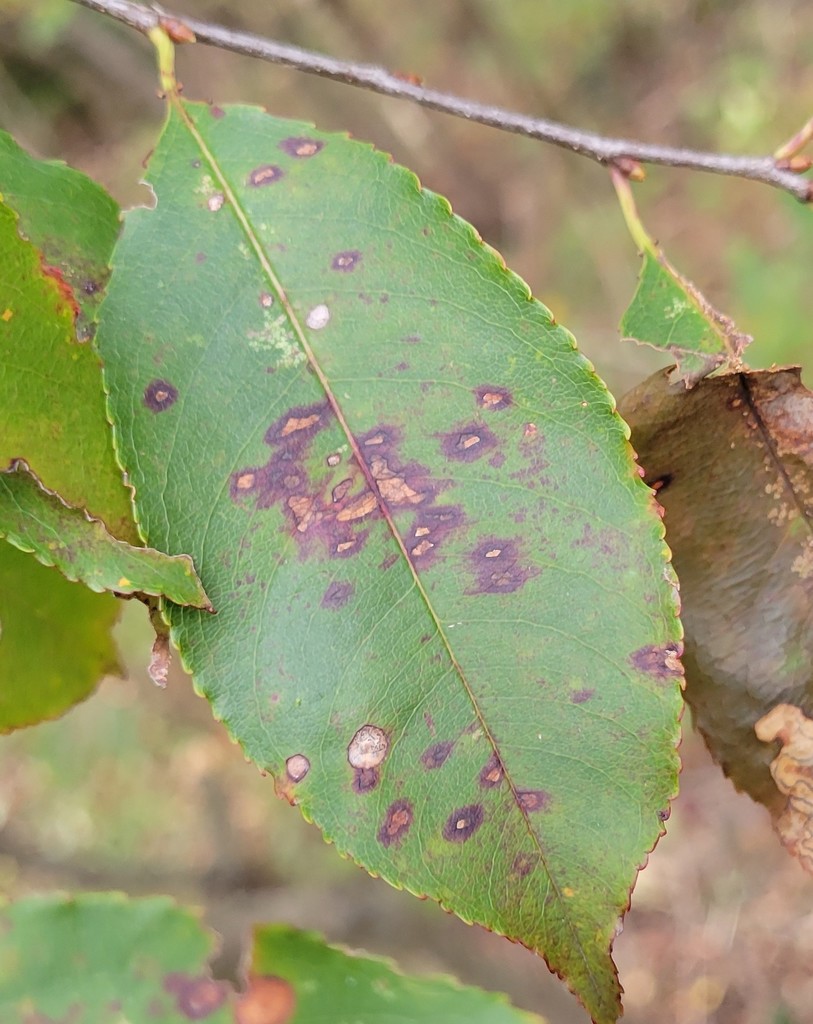
Blumeriella jaapii
Cherry leaf spot (Blumeriella jaapii) is a fungal disease which infects cherries and plums. Sweet, sour, and ornamental cherries are susceptible to the disease, being most prevalent in sour cherries. The variety of sour cherries that is the most susceptible are the English morello cherries. This is considered a serious disease in the Midwest, New England states, and Canada. It has also been estimated to infect 80 percent of orchards in the Eastern states. It must be controlled yearly to avoid a significant loss of the crop. If not controlled properly, the disease can dramatically reduce yields by nearly 100 percent. The disease is also known as yellow leaf or shothole disease to cherry growers due to the characteristic yellowing leaves and shot holes present in the leaves upon severe infection.
From the article Cherry leaf spot on Wikipedia (CC BY-SA), quoted section by section
What it does
This fungus overwinters in dead leaves on the ground. In early spring (at the time of petal fall), fungal fruiting bodies called apothecia develop in these leaves. Ascospores produced in the apothecia are forcibly discharged into the air starting at petal fall. They can start new infections in new, green leaves and serve as the primary inoculum in each new growing season. The ascospores can stick to the leaf and, given a film of water and optimal temperature, germinate within hours of adhesion. Upon germination, hyphae can grow into the leaf via stomata (natural openings) on the underside of the leaf. Hyphae cannot invade immature stomata very effectively. After invasion, the hyphae grow in the intercellular spaces in the leaf, killing and feeding on leaf tissues. Incubation times vary with available moisture and temperature. The small purple lesions can appear within 5 days if there are damp conditions and the temperature remains steady between 60–68 °F (16–20 °C), or up to 15 days in lower temperatures and drier conditions. Leaves become less susceptible to infection as they age. The first sign of disease may be on the suckers close to the ground. Sexual reproduction is associated with the primary infection cycle of cherry leaf spot. Infection levels in this primary cycle are low, but essential for the success of the pathogen. …
Wikipedia: “Sexual reproduction”
Where it lives
Recorded sightings
—
geo-referenced records in GBIF, from museums, herbaria and field observers.
Drag the globe to turn it. Dots are where records exist, not a range map; darker means more records.
In the stacks
Searching the stacks…
Every page naming Blumeriella jaapii in the Biodiversity Heritage Library →
This page is assembled live from iNaturalist, GBIF, Wikipedia, the Source Library and the Internet Archive. It is not yet part of the hand-edited codex. iNaturalist taxon 479622.