- Plants
- ›Vascular Plants
- ›flowering plants
- ›Dicots
- ›Sunflowers, Bellflowers, Fanflowers, and Allies
- ›Sunflowers, Daisies, Asters, and Allies
- ›Asteroideae
- ›Coreopsis and allies
- ›Cosmos
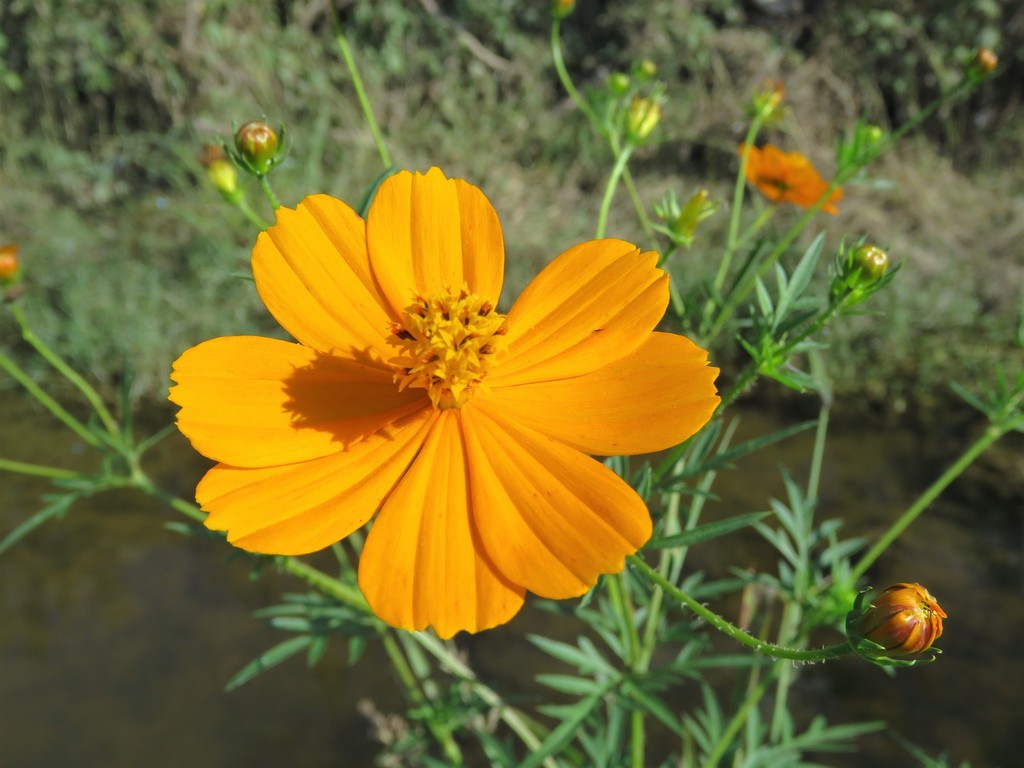
Yellow Cosmos
Cosmos sulphureus
Cosmos sulphureus is a species of flowering plant in the sunflower family Asteraceae, also known as sulfur cosmos and yellow cosmos. It is native to Mexico, Central America, and northern South America, and naturalized in other parts of North and South America as well as in Europe, Asia, and Australia. It was introduced into Asia from Mexico via the Manila-Acapulco galleon trade.
This plant was declared invasive by the United States Southeast Exotic Pest Plant Council in 1996. The flowers of all Cosmos attract birds and butterflies, including the monarch butterfly.
From the article Cosmos sulphureus on Wikipedia (CC BY-SA), quoted section by section
Description
This species of Cosmos is considered a half-hardy annual, although plants may re-appear via self-sowing for several years. Its foliage is opposite and pinnately divided. The plant height varies from 1–7 feet (30–210 cm).
How it is grown
Growth characteristics of this plant include:
Germination takes between 7 and 21 days at the optimal temperature of 75 degrees Fahrenheit; flowering begins between 50 and 60 days after germination It prefers a soil pH between 6.0 and 8.5, reflecting its native habitat in the alkaline regions of Central America Flowering is best in full sun, although partial shade is tolerated The plant is tolerant to drought after germination, and is seldom subject to insect or disease damage; this vigor is attested by its status as a pest in some areas of the United States
Wikipedia: “Cultivation”
Where it lives
Recorded sightings
—
geo-referenced records in GBIF, from museums, herbaria and field observers.
Drag the globe to turn it. Dots are where records exist, not a range map; darker means more records.
In the stacks
Searching the stacks…
Every page naming Cosmos sulphureus in the Biodiversity Heritage Library →
This page is assembled live from iNaturalist, GBIF, Wikipedia, the Source Library and the Internet Archive. It is not yet part of the hand-edited codex. iNaturalist taxon 48651.