- Plants
- ›Vascular Plants
- ›flowering plants
- ›Dicots
- ›Sunflowers, Bellflowers, Fanflowers, and Allies
- ›Sunflowers, Daisies, Asters, and Allies
- ›Thistles and Allies
- ›Cardueae
- ›Knapweeds and Allies
- ›Centaurea
- ›Cyanus
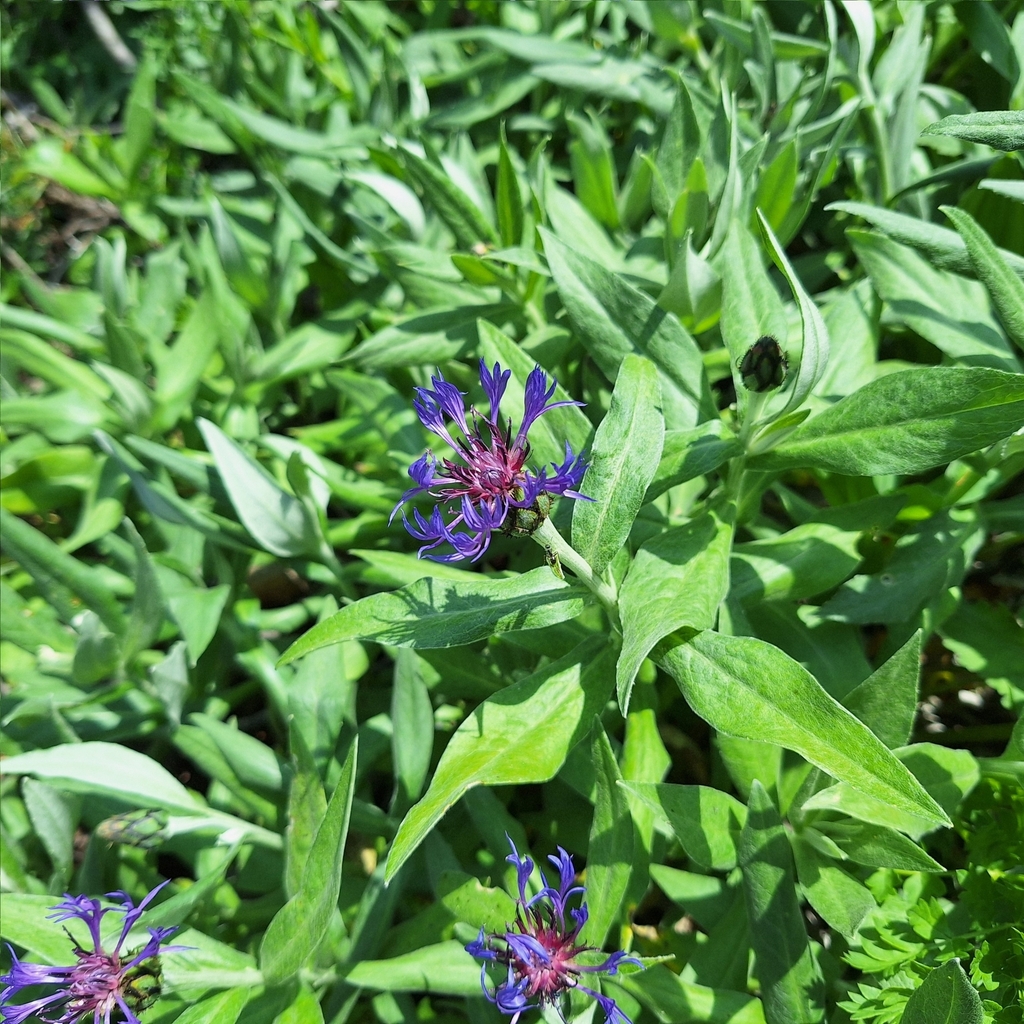
Centaurea mollis
Centaurea montana, the perennial cornflower, mountain cornflower, bachelor's button, montane knapweed or mountain bluet, is a species of flowering plant in the family Asteraceae, endemic to Europe. It is widespread and common in the more southerly mountain ranges of Europe, but is rarer in the north. It escapes from gardens readily, and has thereby become established in the British Isles, Scandinavia and North America. This plant has become an invasive species in British Columbia, Canada.
Centaurea montana grows in meadows and open woodland in the upper montane and sub-alpine zones, in basic areas. It grows to 30–70 centimetres (12–28 in) tall, and flowers mainly from May to August.
Where it lives
Recorded sightings
—
geo-referenced records in GBIF, from museums, herbaria and field observers.
Drag the globe to turn it. Dots are where records exist, not a range map; darker means more records.
In the stacks
Searching the stacks…
Every page naming Centaurea mollis in the Biodiversity Heritage Library →
This page is assembled live from iNaturalist, GBIF, Wikipedia, the Source Library and the Internet Archive. It is not yet part of the hand-edited codex. iNaturalist taxon 488702.