- Animals
- ›Arthropods
- ›Hexapods
- ›Insects
- ›Winged and Once-winged Insects
- ›Cockroaches and Termites
- ›Typical Cockroaches and Termites
- ›Termites
- ›Higher Termites
- ›fungus-growing termites
- ›Odontotermes
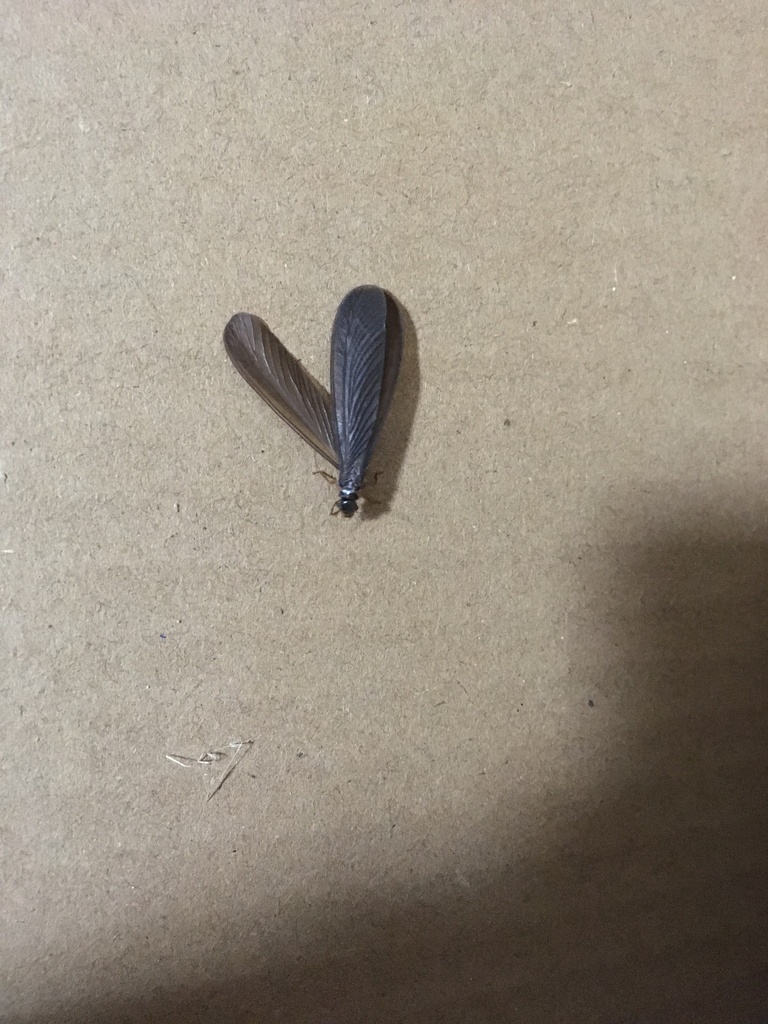
Black-winged Subterranean Termite
Odontotermes formosanus
Odontotermes formosanus is a species of fungus-growing termite in the family Termitidae. It is native to southeastern Asia and was first described from Taiwan (then called Formosa). This termite cultivates a symbiotic fungus in a special chamber in the nest. Workers and soldiers gather vegetable detritus which they bring back to the colony, chewing the material to a pulp to make a suitable substrate on which to grow the fungus.
From the article Odontotermes formosanus on Wikipedia (CC BY-SA), quoted section by section
Range & habitat
Odontotermes formosanus has a widespread distribution in southeastern Asia, its range including Japan, Taiwan, China, Vietnam, Thailand, Myanmar and India. It is a common subterranean species and is a pest of forests, plantations and crops. It also forms nests in earthen dams, and can cause dams and dykes to collapse, as well as doing damage to the pipework. It should not be confused with the worldwide invasive species Coptotermes formosanus.
Wikipedia: “Distribution and habitat”
What it does
Like other members of the subfamily Macrotermitinae, Odontotermes formosanus have a symbiosis with a fungus in the genus Termitomyces which they cultivate in the nest. The older termites leave the nest to forage for suitable materials to use as substrate for the fungus. Younger workers remain in the nest where they chew up plant material brought in by the foragers, which becomes mixed with asexual spores of the fungus and bacteria in their gut. The resulting faeces are then deposited on the fungal comb. Older parts of the comb are then eaten by the termites. The termites travel as far as 35 m (115 ft) from the nest in their search for suitable materials to collect for their fungus comb. Searching is initiated by workers, or sometimes soldiers, which leave the nest area to forage in the open, often at night. The first explorers travel slowly and in due course returns to the nest, whether or not they have found food. The searching worker repeatedly touches the tip of its abdomen to the substrate to lay down a pheromone trail to guide other termites. The secretion produced contains two chemicals mixed together, and by varying the proportions of each chemical deposited, the explorers can provide extra information to the recipient termites, which are following the trail. When a suitable source is found, a circular gallery is built around it to ease its collection. …
Wikipedia: “Ecology”
Listen
Looking for field recordings…
Where it lives
Recorded sightings
—
geo-referenced records in GBIF, from museums, herbaria and field observers.
Drag the globe to turn it. Dots are where records exist, not a range map; darker means more records.
In the stacks
Searching the stacks…
Every page naming Odontotermes formosanus in the Biodiversity Heritage Library →
This page is assembled live from iNaturalist, GBIF, Wikipedia, the Source Library and the Internet Archive. It is not yet part of the hand-edited codex. iNaturalist taxon 492045.