- Animals
- ›Arthropods
- ›Hexapods
- ›Insects
- ›Winged and Once-winged Insects
- ›Antlions, Lacewings, and Allies
- ›Antlions, Owlflies, and Allies
- ›Antlions, Owlflies, and Allies

Antlions and Owlflies
Myrmeleontidae
The antlions are a group of about 2,000 species of insect in the neuropteran family Myrmeleontidae. They are known for the predatory habits of their larvae, which mostly dig pits to trap passing ants or other prey. In North America, the larvae are sometimes referred to as doodlebugs because of the marks they leave in the sand. The adult insects are less well known due to their relatively short lifespans in comparison with the larvae. Adults, sometimes known as antlion lacewings, mostly fly at dusk or just after dark and may be mistakenly identified as dragonflies or damselflies.
Antlions have a worldwide distribution. The greatest diversity occurs in the tropics, but a few species are found in cold-temperate locations, one such being the European Euroleon nostras. They most commonly occur in dry and sandy habitats where the larvae can easily excavate their pits, but some larvae hide under debris or ambush their prey among leaf litter.
4 branches of this family, most-observed first

Myrmeleontinae
subfamilyMyrmeleontinae

Owlflies
subfamilyAscalaphinae

Nemoleontinae
subfamilyNemoleontinae
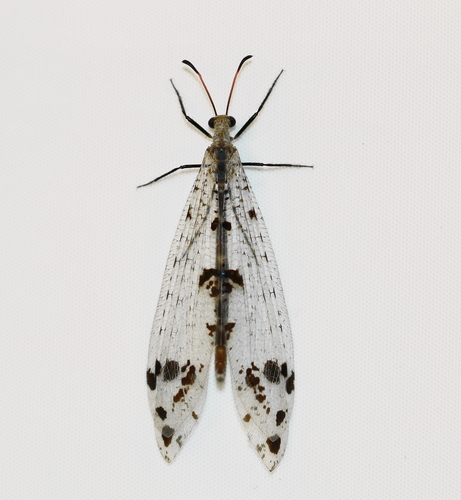
Dendroleontinae
subfamilyDendroleontinae
Where it lives
Recorded sightings
—
geo-referenced records in GBIF, from museums, herbaria and field observers.
Drag the globe to turn it. Dots are where records exist, not a range map; darker means more records.
In the stacks
Searching the stacks…
Every page naming Myrmeleontidae in the Biodiversity Heritage Library →
This page is assembled live from iNaturalist, GBIF, Wikipedia, the Source Library and the Internet Archive. It is not yet part of the hand-edited codex. iNaturalist taxon 49358.