- Plants
- ›Vascular Plants
- ›flowering plants
- ›Dicots
- ›Heathers, Balsams, Primroses, and Allies
- ›Lecythis Family
- ›Grias
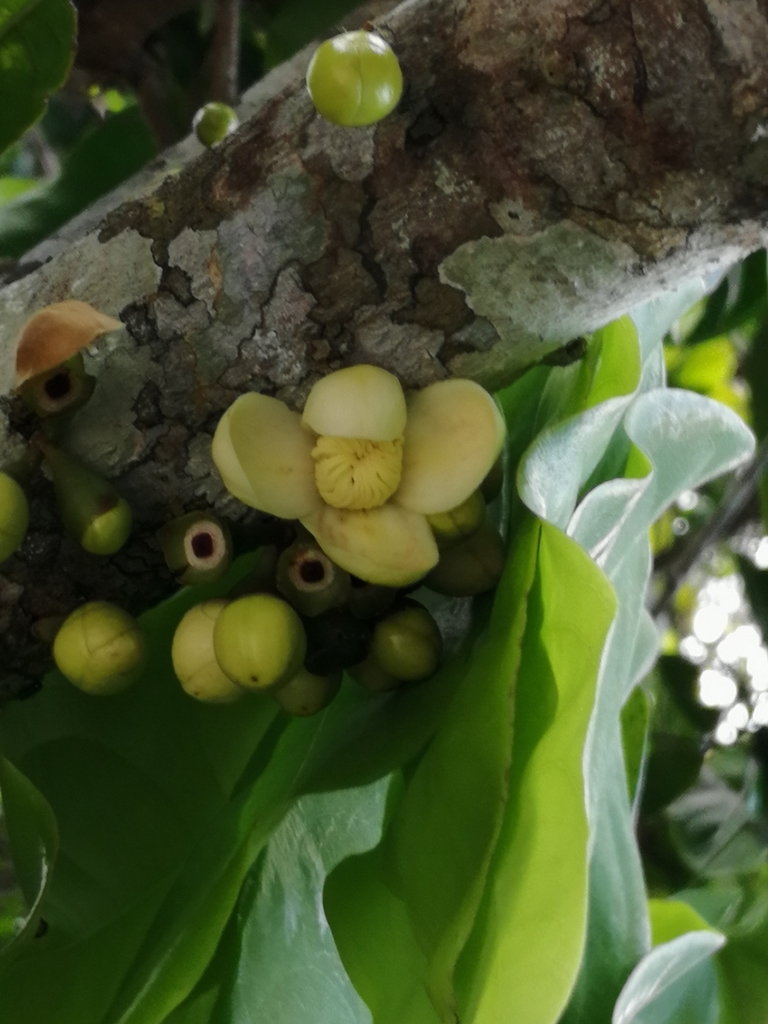
Grias cauliflora
Grias cauliflora, the anchovy pear, (also called the river pear) is an evergreen fruit tree native to Jamaica, Central America, and Colombia. It is often found near rivers or marshes in large colonies. It belongs to the Lecythidaceae (Brazil nut) family.
The edible nuts grow clumped together in large, round, woody and extremely hard seed pods the size of a large grapefruit. The meat of the seed (the "nut") is very rich in oil and grows from 7 to 9 cm long and 2 to 4 cm in diameter. The tree has fragrant yellow flowers about 5 cm across and grows to a height of about 15 m (50 feet). The anchovy pear tree bears spear-shaped, glossy leaves produced in palm-like tufts that reach an average length of 90 cm. The edible, brown, berrylike fruits for which it is cultivated for pickling are not related to the common pear. The fruit has a taste similar to that of the mango.
Where it lives
Recorded sightings
—
geo-referenced records in GBIF, from museums, herbaria and field observers.
Drag the globe to turn it. Dots are where records exist, not a range map; darker means more records.
In the stacks
Searching the stacks…
Every page naming Grias cauliflora in the Biodiversity Heritage Library →
This page is assembled live from iNaturalist, GBIF, Wikipedia, the Source Library and the Internet Archive. It is not yet part of the hand-edited codex. iNaturalist taxon 495664.