- Plants
- ›Vascular Plants
- ›flowering plants
- ›Dicots
- ›sandalwoods, mistletoes, and allies
- ›sandalwood family
- ›viscaceous mistletoes
- ›Phoradendron
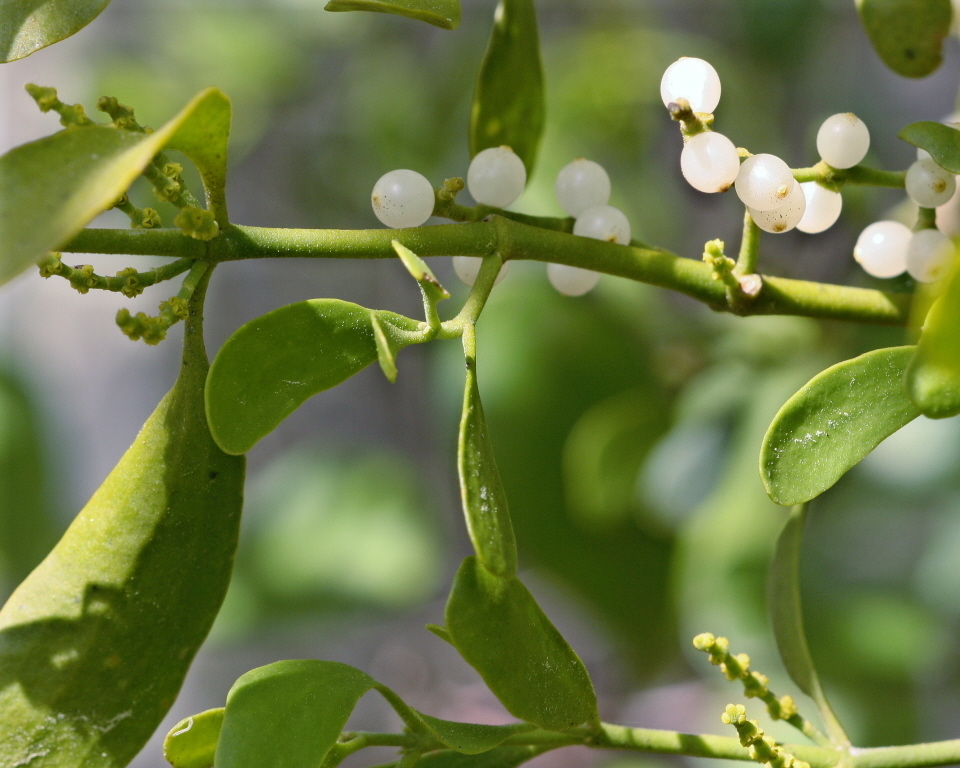
American Mistletoe
Phoradendron leucarpum
Phoradendron leucarpum is a species of mistletoe in the Viscaceae family. Its common names include American mistletoe, eastern mistletoe, hairy mistletoe and oak mistletoe. It is native to Mexico and the continental United States. It is hemiparasitic, living in the branches of trees. The berries are white and 3–6 millimeters (0.12–0.24 in). It has opposite leaves that are leathery and thick.
Ingesting the berries can cause "stomach and intestinal irritation with diarrhea, lowered blood pressure, and slow pulse". This shrub can grow to 1 meter (3.3 ft) by 1 meter (3.3 ft).
From the article Phoradendron leucarpum on Wikipedia (CC BY-SA), quoted section by section
What it does
Over 60 species of trees are hosts to P. leucarpum, especially trees in the genera of Acer (maple), Fraxinus (ash), Juglans (walnuts), Nyssa, Platanus (plane trees), Populus (poplars), Quercus (oaks), Salix (willows), and Ulmus (elms).
Wikipedia: “Ecology”
In human culture
Phoradendron leucarpum is used in North America as a surrogate for the similar European mistletoe Viscum album, in Christmas decoration and associated traditions (such as "kissing under the mistletoe"), as well as in rituals by modern druids. It is commercially harvested and sold for those purposes. Phoradendron leucarpum is the floral emblem for the state of Oklahoma. The state had no official flower, leaving mistletoe as the assumed state flower until the Oklahoma Rose was so designated in 2004.
Wikipedia: “Culture and tradition”
Where it lives
Recorded sightings
—
geo-referenced records in GBIF, from museums, herbaria and field observers.
Drag the globe to turn it. Dots are where records exist, not a range map; darker means more records.
In the stacks
Searching the stacks…
Every page naming Phoradendron leucarpum in the Biodiversity Heritage Library →
This page is assembled live from iNaturalist, GBIF, Wikipedia, the Source Library and the Internet Archive. It is not yet part of the hand-edited codex. iNaturalist taxon 49668.