- Plants
- ›Vascular Plants
- ›flowering plants
- ›Dicots
- ›myrtles, evening primroses, and allies
- ›bushwillow family
- ›Combretum
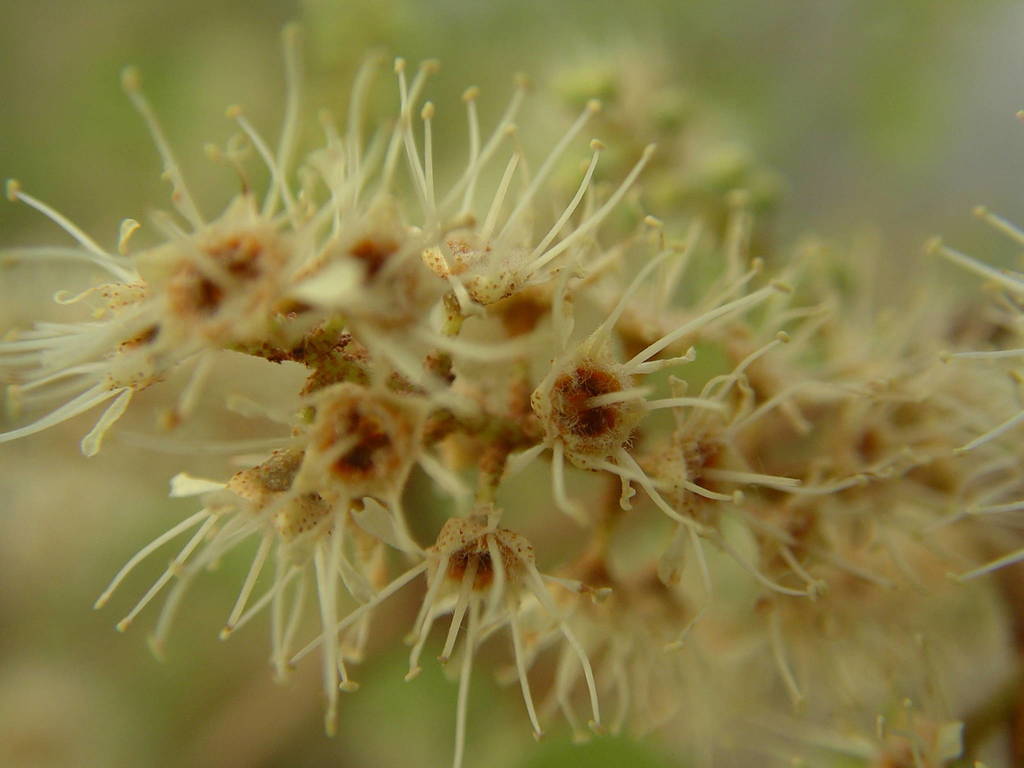
Combretum micranthum
Combretum micranthum is a species of flowering plant in the family Combretaceae. It is a shrub known as kinkeliba in Guinea, Benin, Burkina Faso, Senegal, Mali and the Gambia across multiple regional dialects, where it is often found in tiger bush and on hills in West Africa. It is used for making tea and has uses in traditional medicine, and is used by many West African Muslims during Ramadan to break their fast. The name kinkeliba is believed to come from the Fulani language. It is referred to as sekhew in the Wolof language and ŋɔlɔbɛ in the Bambara language.
From the article Combretum micranthum on Wikipedia (CC BY-SA), quoted section by section
At the table
The branches are quite strong, and are a useful material for building stools, beds, tool handles. A tea made by steeping the leaves in boiling water is a traditional tonic drink in tropical savannah countries such as Senegal, Mali and Burkina Faso. Among West African Muslims, especially Wolofs, Fulas, and Mandinkas, the leaves, bark, and twigs of kinkeliba are harvested and sold in bundles during the dry season leading up to and during the month of Ramadan. Kinkiliba is used daily to brew a strong tea that is mixed with sugar and milk and is drunk with bread at sundown as a means of breaking the daily fast. A decoction of the root is used in West Africa for Guinea worm infestation.
Wikipedia: “Uses”
In medicine
A 2024 study reported diverse phytochemicals in C. micranthum, including flavonoids and other polyphenols, alkaloids, fatty acids, terpenoids, steroids, and carbohydrates.
Wikipedia: “Phytochemicals”
Where it lives
Recorded sightings
—
geo-referenced records in GBIF, from museums, herbaria and field observers.
Drag the globe to turn it. Dots are where records exist, not a range map; darker means more records.
In the stacks
Searching the stacks…
Every page naming Combretum micranthum in the Biodiversity Heritage Library →
This page is assembled live from iNaturalist, GBIF, Wikipedia, the Source Library and the Internet Archive. It is not yet part of the hand-edited codex. iNaturalist taxon 496744.