- Fungi Including Lichens
- ›Entomophthoromycota
- ›Entomophthoromycetes
- ›Insect Destroyers
- ›Ancylistaceae
- ›Conidiobolus
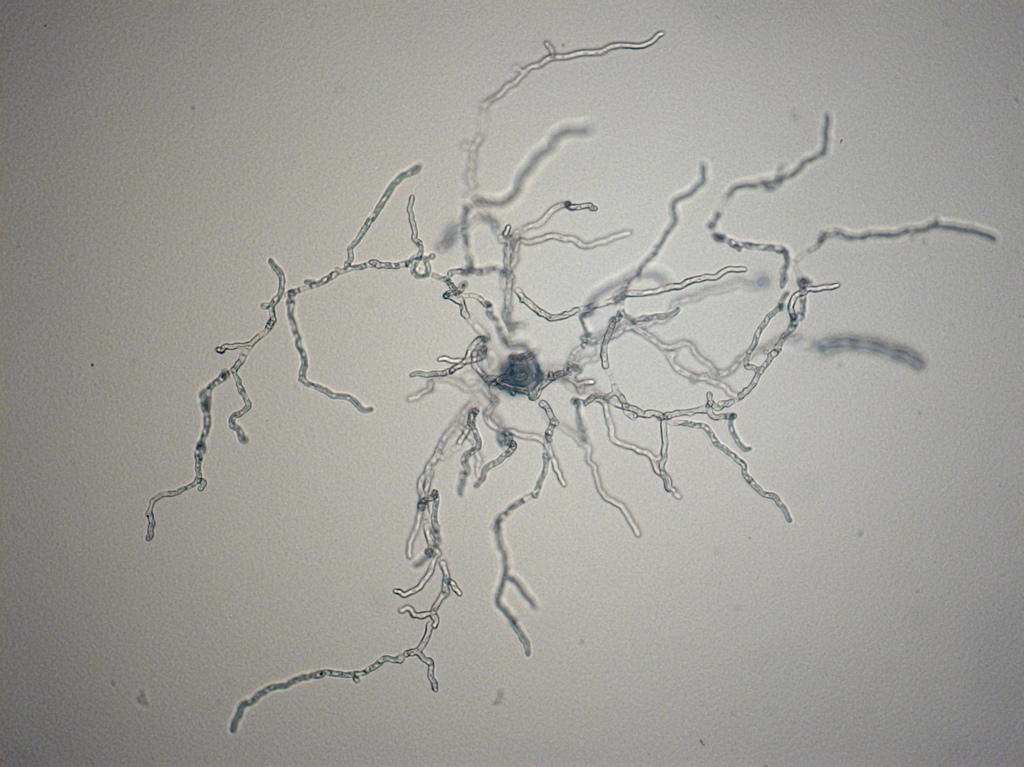
Conidiobolus coronatus
Conidiobolus coronatus is a saprotrophic fungus, first described by Costantin in 1897 as Boudierella coronata. Though this fungus has also been known by the name Entomophthora coronata, the correct name is Conidiobolus coronatus. C. coronatus is able to infect humans, and animals, and the first human infection with C. coronatus was reported in Jamaica in 1965.
From the article Conidiobolus coronatus on Wikipedia (CC BY-SA), quoted section by section
Range & habitat
Conidiobolus coronatus is an inhabitant of soil around the world, possessing a tropical and universal distribution. Due to its saprophytic nature,C. coronatus is mainly found on decaying and dead leaves.
Wikipedia: “Habitat and ecology”
Where it lives
Recorded sightings
—
geo-referenced records in GBIF, from museums, herbaria and field observers.
Drag the globe to turn it. Dots are where records exist, not a range map; darker means more records.
In the stacks
Searching the stacks…
Every page naming Conidiobolus coronatus in the Biodiversity Heritage Library →
This page is assembled live from iNaturalist, GBIF, Wikipedia, the Source Library and the Internet Archive. It is not yet part of the hand-edited codex. iNaturalist taxon 498724.