- Plants
- ›Vascular Plants
- ›flowering plants
- ›Dicots
- ›carrots, ivies, and allies
- ›carrot family
- ›Apioideae
- ›Selineae
- ›Angelica
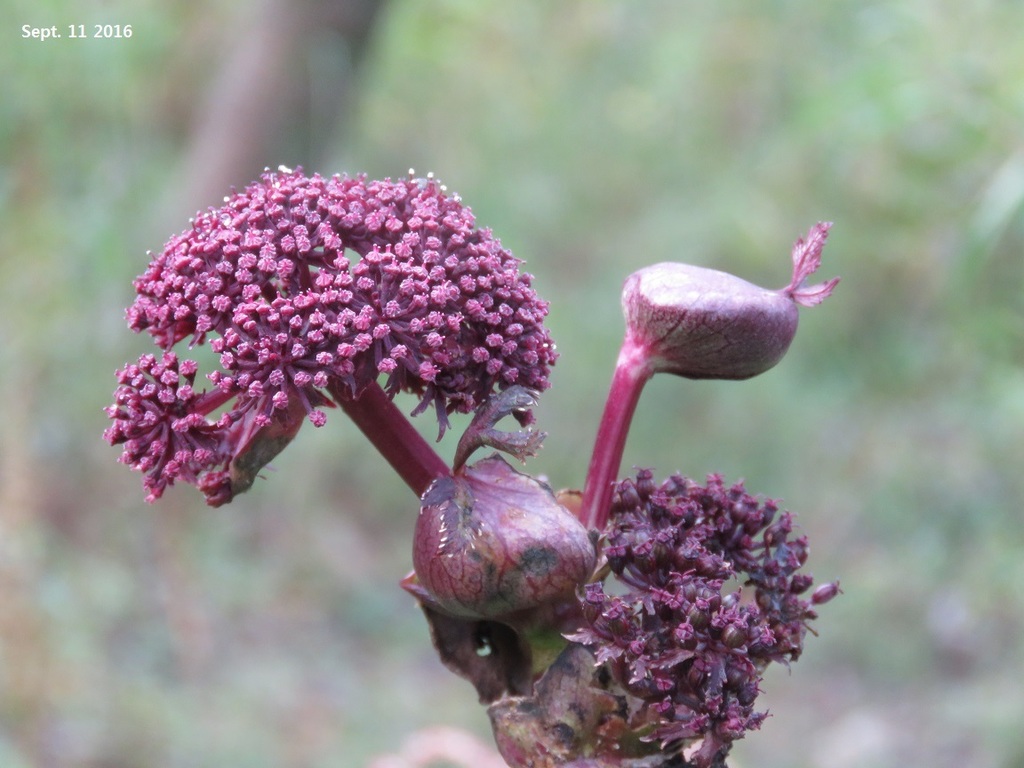
Korean angelica
Angelica gigas
Angelica gigas, also called Korean angelica, giant angelica, purple parsnip, and dangquai, is a monocarpic biennial or short lived perennial plant from Korea and China. It inhabits forests, grasslands and banks of streams. The roots are used in traditional Chinese medicine.
From the article Angelica gigas on Wikipedia (CC BY-SA), quoted section by section
Description
Angelica gigas is a stout plant that is 1 to 2 meters high with deep thick roots and a purplish, ribbed stem. It has deeply dissected, very big, broad, pointy leaves. The plant is a biennial that flowers in the months of July to August in dark purple umbels and selfseeds abundantly when the seeds have ripened.
At the table
In Korea its root has been traditionally used as a folk medicine for the relief of menstrual pain and for anemia.
Wikipedia: “Medicinal uses”
How it is grown
Giant angelica prefers moist soil and full sun or semishade. The plant is best propagated through seeds in the spring or through transplantation of selfseeded seedlings.
Wikipedia: “Cultivation”
Where it lives
Recorded sightings
—
geo-referenced records in GBIF, from museums, herbaria and field observers.
Drag the globe to turn it. Dots are where records exist, not a range map; darker means more records.
In the stacks
Searching the stacks…
Every page naming Angelica gigas in the Biodiversity Heritage Library →
This page is assembled live from iNaturalist, GBIF, Wikipedia, the Source Library and the Internet Archive. It is not yet part of the hand-edited codex. iNaturalist taxon 500270.