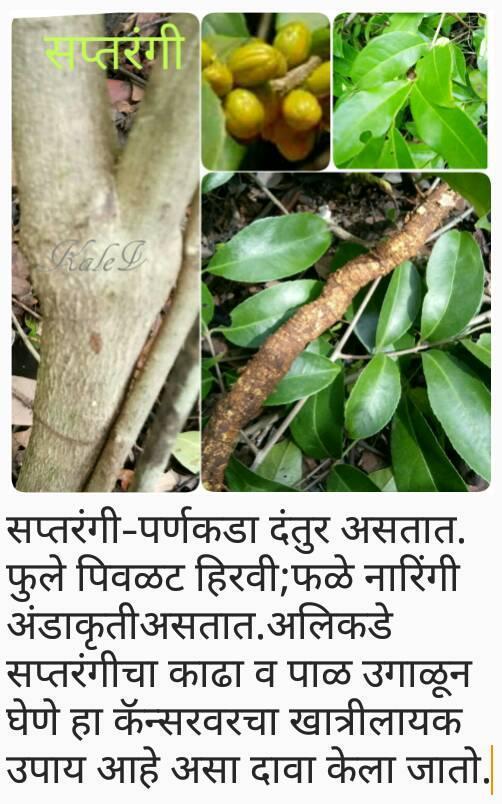
Salacia oblonga
Salacia oblonga is a strangling shrub native to India and Sri Lanka. In traditional medicines it is used for the treatment of diabetes. A study showed its extract may be beneficial for type 2 diabetes after a high-carbohydrate meal. Another study suggested that 1000 mg of salacia oblonga extract following a meal after 12 hours of fasting could reduce blood glucose levels, while a dosage of 750 mg extract showed no impact.
From the article Salacia oblonga on Wikipedia (CC BY-SA), quoted section by section
Description
Oblong leaf salacia is a climbing shrub with densely warty branchlets. Leaves are oblong, green, veined, and borne on stalks up to 1 cm long. The flowers are green-yellow, appearing in March through May, that yield orange-red berries. It grows primarily in evergreen and semi-evergreen forests.
In medicine
Oblong leaf salacia is described as a treatment for diabetes in the traditional medical systems of India and Sri Lanka. The closely related species Salacia reticulata and Salacia chinesis are also used for people with diabetes.
Wikipedia: “Traditional medicine”
Where it lives
Recorded sightings
—
geo-referenced records in GBIF, from museums, herbaria and field observers.
Drag the globe to turn it. Dots are where records exist, not a range map; darker means more records.
In the stacks
Searching the stacks…
Every page naming Salacia oblonga in the Biodiversity Heritage Library →
This page is assembled live from iNaturalist, GBIF, Wikipedia, the Source Library and the Internet Archive. It is not yet part of the hand-edited codex. iNaturalist taxon 500520.