 NL·0214
Herbarium of the Nature Library
- Name
- Aquila adalberti
- Family
- Accipitridae
- Native to
- Endemic to the Iberian Peninsula (central and southwestern Spain, southern Portugal); has occasionally bred in Morocco
- Habitat
- Mediterranean woodland, Dehesa, Wetland edge
On eBird ↗
Spanish Eagle
Live sightings near you, the range map, bar charts of when it is seen, and Macaulay Library photos and recordings.
Spanish imperial eagle
Aquila adalberti
Also calledÁguila imperial ibérica (Spanish) · Águia-imperial-ibérica (Portuguese) · Spanischer Kaiseradler (German) · Aigle ibérique (French) · Adalbert's eagle (English)
A dark, powerful eagle with brilliant white shoulder patches, found only in the Iberian Peninsula. Rescued from near-extinction in the 1970s, it has become one of Europe's great conservation recoveries, though it remains Vulnerable.
The Spanish imperial eagle, Spanish eagle, Iberian imperial eagle or Adalbert's eagle is a species of eagle native to the Iberian Peninsula. The binomial commemorates Prince Adalbert of Bavaria. Due to its distinct "epaulettes", old literature often referred to this species as the white-shouldered eagle. Wikipedia
What it can do
- iSpecialises on rabbits, and its breeding success tracks rabbit numbers
- iiBuilds large stick nests in cork oaks and pines
- iiiAdults hold territories year-round
- ivYoung birds wander widely across Iberia before settling
In the field
Field marks
- aVery dark brown body with a pale golden-buff crown and nape
- bBold white patches on the shoulders and the leading edge of the wing
- cGrey tail with a broad dark terminal band
- dJuveniles pale tawny-buff with dark flight feathers
- Voice
- A deep, barking 'owk-owk-owk'.
- Not to be confused with
- Eastern imperial eagle (eastern Europe, Central Asia) has smaller white shoulder patches and no white leading edge. Golden eagle has a longer tail and lacks white shoulders. Juveniles resemble young eastern imperial eagles but are unstreaked.
- Where to see it
- Doñana National Park, Monfragüe, Sierra de Andújar and Montes de Toledo in Spain; Alentejo in Portugal.
- When
- Resident
Listen
Looking for field recordings…
Life & habits
- Diet
- Mainly European rabbits; also hares, partridges, pigeons, ducks and carrion
- Habitat
- Open oak woodland (dehesa), Mediterranean scrub, pine forest near marshes
- Size
- 72–85 cm; wingspan 177–220 cm; 2.5–4.8 kg
Pairs soar together over their territory with undulating display flights in late winter.
Where it lives
Recorded sightings
—
geo-referenced records in GBIF, from museums, herbaria and field observers.
Native range
Endemic to the Iberian Peninsula (central and southwestern Spain, southern Portugal); has occasionally bred in Morocco
Drag the globe to turn it. Dots are where records exist, not a range map; darker means more records.
In the old herbals & bestiaries
No plate in the Source Library names this exact species, so these show its closest relatives as the old naturalists drew them: same genus, or the same kind of animal. Click a plate to read the page it came from, with translation.

History of Animals, Book I: On Viviparous Quadrupeds
Relative · Conrad Gessner · 1554 · p.377

Ornithology
Relative · Ulisse Aldrovandi · 1599 · p.267

François Bouchard — Recueil de cent-trente-trois oiseaux des plus belles especes (1775)
Relative · François Bouchard · 1775 · p.12

Ornithologiae: de avibus historiae libri XII
Relative · Ulisse Aldrovandi · 1599 · p.251

François Bouchard — Recueil de cent-trente-trois oiseaux des plus belles especes (1775)
Relative · François Bouchard · 1775 · p.6
In the stacks
Searching the stacks…
Every page naming Aquila adalberti in the Biodiversity Heritage Library →
Marginalia
It was named in 1861 by the German ornithologist Christian Ludwig Brehm in honour of Prince Adalbert of Bavaria, and it became a symbol of Spanish conservation through the protection of Doñana.
Curiosity
Electrocution on power lines and illegal poison baits were its main killers; retrofitting dangerous pylons has been central to its recovery from a few dozen pairs.
Kinship
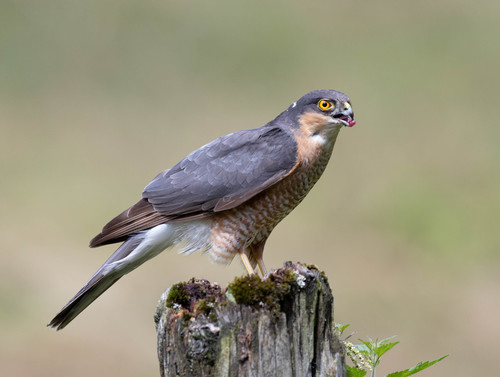
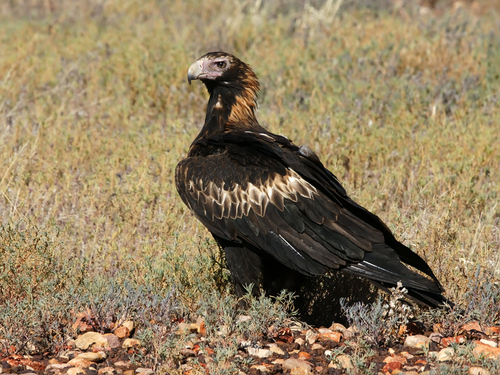
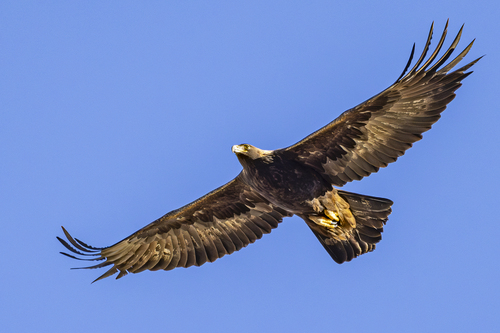

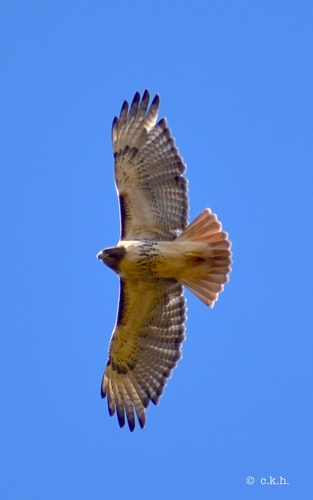

Fact-checked: 2 corrections made to this sheet. Photographs: iNaturalist contributors under the licences shown. Records: GBIF.org. Historical plates: Source Library (CC BY-SA 4.0; originals public domain). Summary text: Nature Library editors and Wikipedia (CC BY-SA). Medicinal and edibility notes are historical and educational, not advice. iNaturalist taxon 5081.