- Animals
- ›Chordates
- ›Vertebrates
- ›Birds
- ›Cranes, Rails, and Allies
- ›Rails, Gallinules, and Coots
- ›Mustelirallus
On eBird ↗
Colombian Crake
Live sightings near you, the range map, bar charts of when it is seen, and Macaulay Library photos and recordings.
Colombian Crake
Mustelirallus colombianus
The Colombian crake (Mustelirallus colombianus) is a species of bird in the subfamily Rallinae of the rail, crake, and coot family Rallidae. It is found in Colombia, Ecuador, and Panama.
From the article Colombian crake on Wikipedia (CC BY-SA), quoted section by section
Description
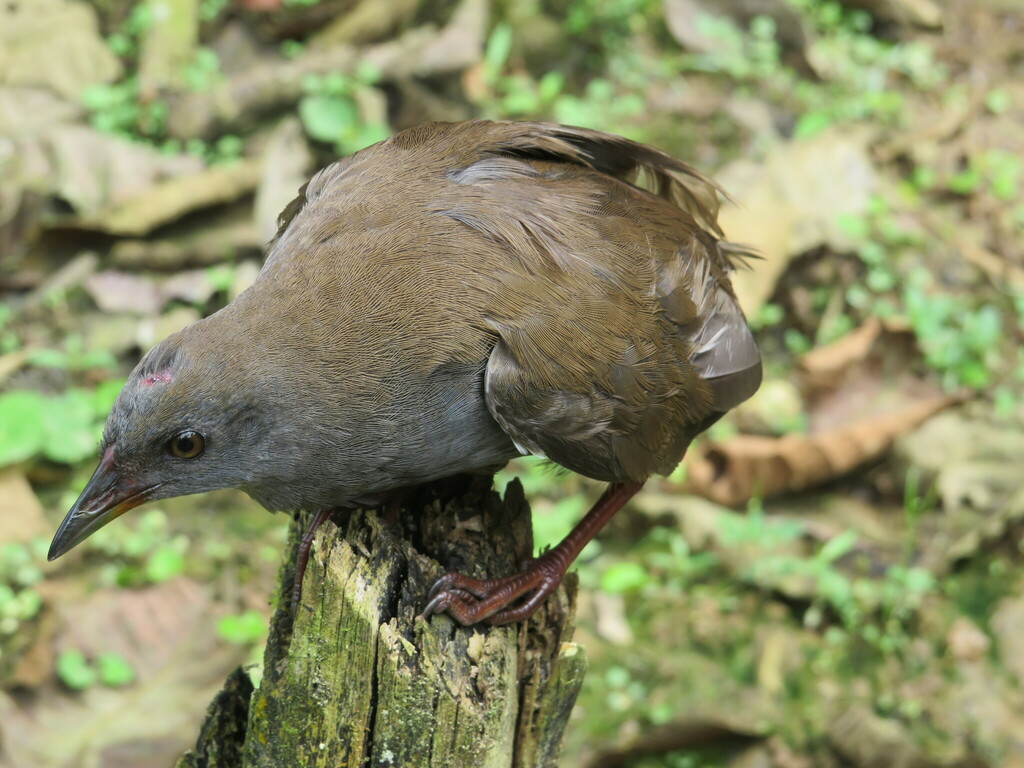
The Colombian crake is 18 to 20 cm (7.1 to 7.9 in) long. The sexes are alike. The nominate subspecies has a brown crown, nape, and upperparts including the tail. Its throat is white and its face, throat, and breast are gray. Its flanks, belly, and vent are cinnamon. M. c. ripleyi is similar but significantly darker.
Range & habitat
The nominate subspecies of Colombian crake is found from northern Colombia south into northwestern Ecuador. M. c. ripleyi is found from central Panama into northwestern Colombia's Chocó Department. There are few records of the species and the exact boundaries of the two subspecies' ranges are not known. The species inhabits wet to moist landscapes such as marshes, swamps, savanna, and the brushy edges of forest; not all of these have water bodies. In elevation it ranges from sea level to 2,100 m (6,900 ft).
Wikipedia: “Distribution and habitat”
What it does
Nothing is known about the Colombian crake's feeding habits or diet. They are assumed to be similar to those of its closest relative, the paint-billed crake. That species forages in soil, leaf litter, and standing water, and at dawn and dusk has been noted feeding in open areas next to dense vegetation. It is known to eat invertebrates including Diplopoda and Coleoptera and also seeds.
Wikipedia: “Feeding”
Listen
Looking for field recordings…
Where it lives
Recorded sightings
—
geo-referenced records in GBIF, from museums, herbaria and field observers.
Drag the globe to turn it. Dots are where records exist, not a range map; darker means more records.
In the stacks
Searching the stacks…
Every page naming Mustelirallus colombianus in the Biodiversity Heritage Library →
This page is assembled live from iNaturalist, GBIF, Wikipedia, the Source Library and the Internet Archive. It is not yet part of the hand-edited codex. iNaturalist taxon 508908.