- Plants
- ›Vascular Plants
- ›flowering plants
- ›Dicots
- ›Heathers, Balsams, Primroses, and Allies
- ›primrose family
- ›Cape Myrtle subfamily
- ›Lysimachia
- ›Nummularia
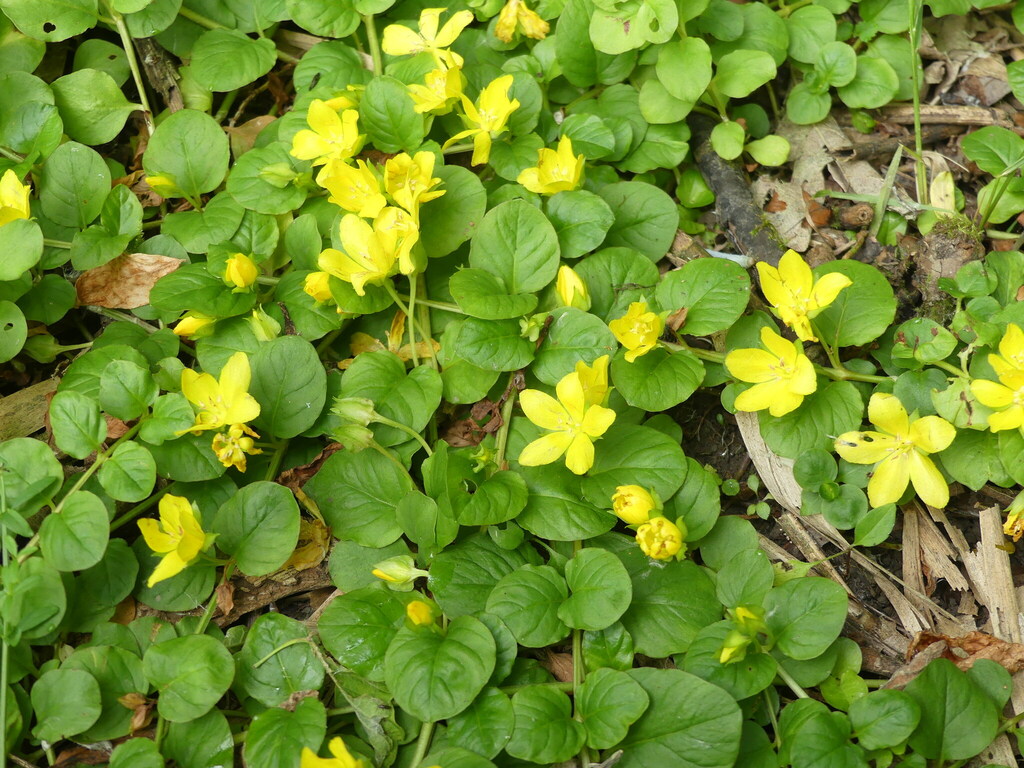
creeping Jenny
Lysimachia nummularia
Lysimachia nummularia (syn. Lysimachia zawadzkii Wiesner) is a species of flowering plant in the family Primulaceae. Its common names include creeping jenny, moneywort, herb twopence and twopenny thot.
From the article Lysimachia nummularia on Wikipedia (CC BY-SA), quoted section by section
Description
It is a vigorous, prostrate, evergreen perennial growing to 5 cm (2 in) in height and spreading rapidly and indefinitely by stem-rooting. It has rounded leaves arranged in opposite pairs, and cup-shaped yellow flowers 2 cm in diameter, in summer. It is particularly associated with damp or even wet areas, though in cultivation it will tolerate drier conditions. It is hardy, surviving lows of −15 °C (5 °F) (RHS H5).
Range & habitat
It is native to Europe, but has been introduced to North America, where it is considered an invasive species in some areas. It aggressively spreads in favorable conditions, such as low wet ground or near ponds. It can be weeded by hand, if all stems and stem fragments are removed, to prevent the stems from rooting and regrowing.
Wikipedia: “Distribution”
How it is grown
The cultivar 'Aurea' (golden creeping Jenny) has yellow leaves, and is somewhat less aggressive than the undomesticated species. It is cultivated as an ornamental plant, for groundcover where the range of its growth can be limited. It is also suitable as a bog garden or aquatic marginal plant. It has gained the Royal Horticultural Society's Award of Garden Merit.
Wikipedia: “Cultivation”
In human culture
The Latin specific epithet nummularia means "like a coin", referring to the shape of the leaves; hence the common names, such as "moneywort", which also references coins.
Wikipedia: “Etymology”
Where it lives
Recorded sightings
—
geo-referenced records in GBIF, from museums, herbaria and field observers.
Drag the globe to turn it. Dots are where records exist, not a range map; darker means more records.
In the old herbals & bestiaries


In the stacks
Searching the stacks…
Every page naming Lysimachia nummularia in the Biodiversity Heritage Library →
This page is assembled live from iNaturalist, GBIF, Wikipedia, the Source Library and the Internet Archive. It is not yet part of the hand-edited codex. iNaturalist taxon 51809.