- Animals
- ›Arthropods
- ›Hexapods
- ›Insects
- ›Winged and Once-winged Insects
- ›Flies
- ›Nematoceran Flies
- ›Mosquitoes and Midges
- ›Culicoidea
Mosquitoes
Culicidae
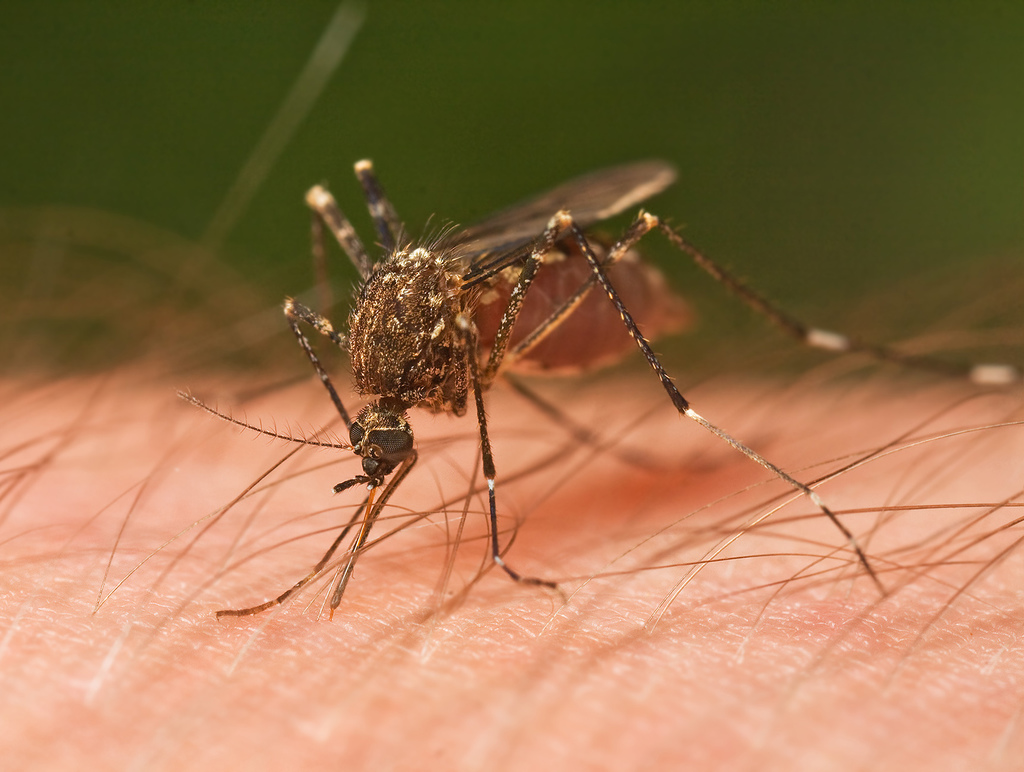
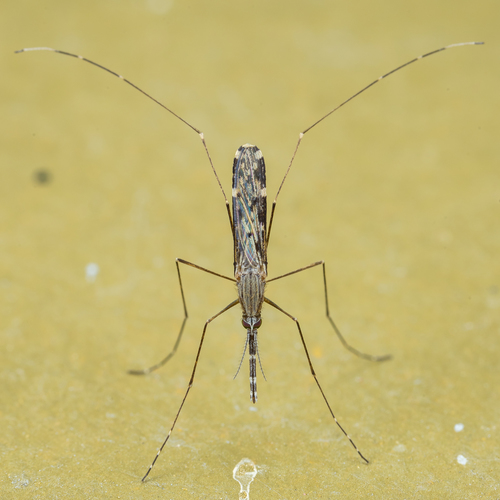
Mosquitoes, the Culicidae, are a family of small flies consisting of 3,600 species. The word mosquito (formed by mosca and diminutive -ito) is Spanish and Portuguese for little fly. Mosquitoes have a slender, segmented body, one pair of wings, three pairs of long hair-like legs, and a specialized, highly elongated set of mouthparts forming a proboscis, adapted for piercing and sucking. All mosquitoes drink nectar from flowers; females of many species have adapted to also drink blood. The group diversified during the Cretaceous period. Evolutionary biologists view mosquitoes as micropredators, small animals that parasitise larger ones by drinking their blood without immediately killing them. Medical parasitologists view mosquitoes as vectors of disease, carrying protozoan parasites or bacterial or viral pathogens from one host to another.
The mosquito lifecycle consists of four stages: egg, larva, pupa, and adult. Eggs are laid on the water surface; they hatch into motile larvae that feed on aquatic algae and organic material. These larvae are important food sources for many freshwater animals, such as dragonfly nymphs, many fish, and some birds. Adult females of many species have mouthparts adapted to pierce the skin of a host and feed on blood of a wide range of vertebrate hosts, and some invertebrates, primarily other arthropods. Some species only produce eggs after a blood meal.
2 branches of this family, most-observed first
See this branch on the Wheel of Life →
Where it lives
Recorded sightings
—
geo-referenced records in GBIF, from museums, herbaria and field observers.
Drag the globe to turn it. Dots are where records exist, not a range map; darker means more records.
In the stacks
Searching the stacks…
Every page naming Culicidae in the Biodiversity Heritage Library →
This page is assembled live from iNaturalist, GBIF, Wikipedia, the Source Library and the Internet Archive. It is not yet part of the hand-edited codex. iNaturalist taxon 52134.