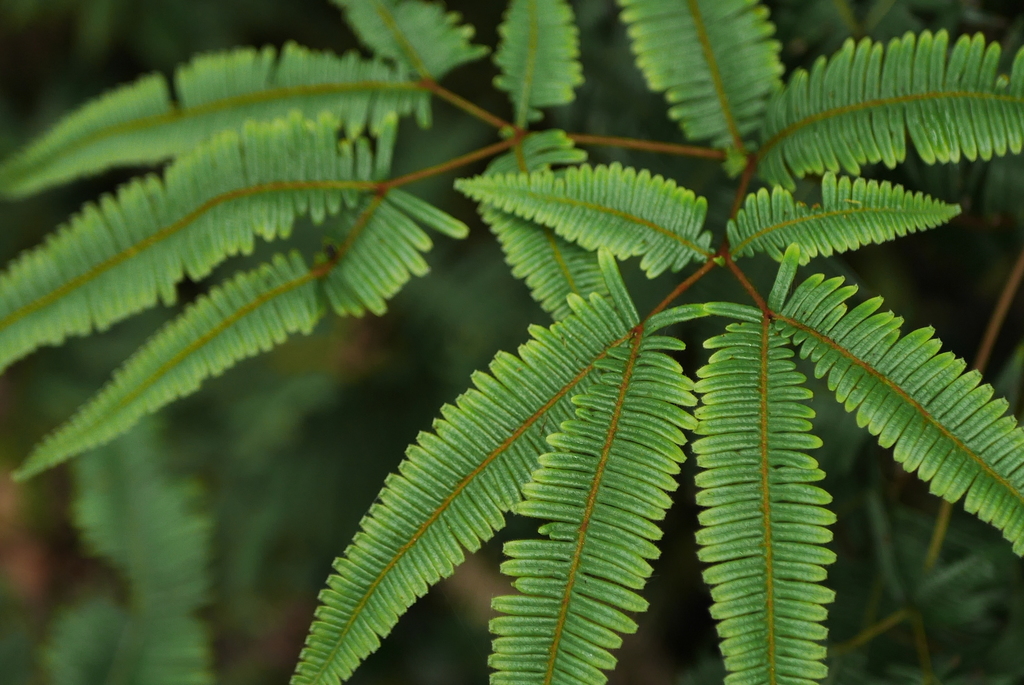
false staghorn fern
Dicranopteris linearis
Dicranopteris linearis is a common species of fern known by many common names, including Old World forked fern, uluhe (Hawaiian), and dilim (Filipino). It is one of the most widely distributed ferns of the wet Old World tropics and adjacent regions, including Polynesia and the Pacific. In parts of the New World tropics its niche is filled by its relative, Dicranopteris pectinatus.
This rhizomatous fern spreads via cloning, spreading along the ground and climbing on other vegetation, often forming thickets 3 metres deep or more. The stem grows from the rhizome, branches at a 45° angle, and forms fronds that continue to bud and branch. In this way the growth can continue for a long distance as the plant forms a mat, grows over itself in layers, and spreads. When climbing, the leafy branches can reach over 6 metres long and can climb 10 meters high when supported by a tree. The ultimate segments of the leaves are linear in shape, up to 7 centimeters long by a few millimeters wide. The undersides are hairy and sometimes waxy. It can also reproduce via spores.
Where it lives
Recorded sightings
—
geo-referenced records in GBIF, from museums, herbaria and field observers.
Drag the globe to turn it. Dots are where records exist, not a range map; darker means more records.
In the stacks
Searching the stacks…
Every page naming Dicranopteris linearis in the Biodiversity Heritage Library →
This page is assembled live from iNaturalist, GBIF, Wikipedia, the Source Library and the Internet Archive. It is not yet part of the hand-edited codex. iNaturalist taxon 52492.